The Most Durable Wood Types for Custom Outdoor Planter Boxes
The Most Durable Wood Types for Custom Outdoor Planter Boxes
I always drill into my new crew members: if you don’t fix the soil grading and moisture management first, every plant you put in the ground—or every custom planter you build—is just expensive compost waiting to happen. I have seen too many homeowners drop five figures on custom carpentry only to have the bottom fall out of their boxes three years later because they used standard dimensional pine from a big-box store. You cannot fight biology with hope. You fight it with chemistry and engineering. Custom outdoor planter boxes are essentially high-pressure containers for a corrosive, wet environment. Soil is a biological engine that wants to consume organic matter. If your wood choice is weak, the soil will eat the box from the inside out. We are talking about lignin breakdown, fungal hyphae infiltration, and the relentless cycle of expansion and contraction that shreds wood fibers at the cellular level.
Selecting the Right Timber for High-Moisture Environments
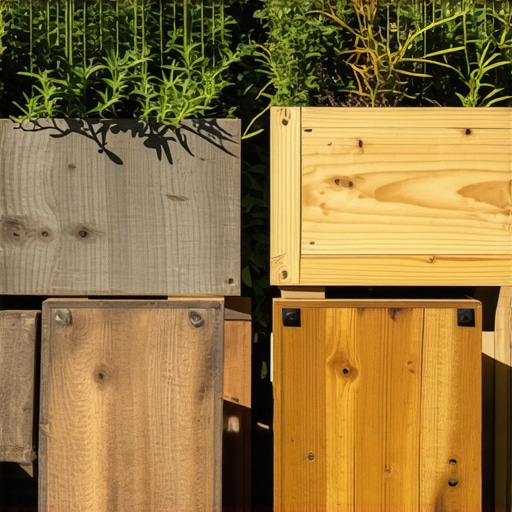
The most durable wood types for custom outdoor planter boxes are Ipe, Western Red Cedar, and Black Locust because of their high density and natural extractives that resist decay and fungal attack. Selecting the right species ensures structural stability under the constant hydrostatic pressure of saturated soil and prevents premature rot in the wood’s heartwood.
“Heartwood of certain species contains extractives that are toxic to fungi, providing natural decay resistance that far exceeds sapwood performance.” – USDA Forest Products Laboratory
When we talk about durability, we are measuring the wood’s ability to resist the enzymatic breakdown triggered by soil-borne microbes. It is not just about the wood getting wet; it is about the wood staying wet while being pressed against nutrient-rich organic matter. That is a recipe for a rot-fest if you choose the wrong material.
The Hierarchy of Wood Durability for Planters
Before you pick up a saw, you need to understand that not all lumber is created equal. We look at the Janka hardness scale and the natural tannin content. Here is how the top contenders stack up against the elements.
| Wood Species | Janka Hardness | Avg. Lifespan (Direct Soil Contact) | Primary Benefit |
|---|---|---|---|
| Ipe (Brazilian Walnut) | 3,680 lbf | 25+ Years | Virtually rot-proof; fire-rated as high as concrete. |
| Western Red Cedar | 350 lbf | 10-15 Years | Natural thujaplicins resist rot; lightweight. |
| Black Locust | 1,700 lbf | 20+ Years | Extremely high tannin content; local to North America. |
| Teak | 1,150 lbf | 20+ Years | High silica and oil content; stays stable. |
Ipe is the gold standard, but it is a nightmare to work with. It will dull your blades in minutes and it sinks in water. But if you want a planter that will outlast your mortgage, that is the one. Cedar is the more common choice, but you have to ensure you are getting 100% heartwood. Sapwood cedar is worthless in a garden bed. It will rot in three seasons. Don’t let a contractor tell you otherwise.
How long do cedar planter boxes last?
To determine how long cedar planter boxes last, you must account for the heartwood content and soil contact, with high-quality Western Red Cedar typically lasting 10 to 15 years before structural failure. Proper drainage and internal liners can extend this lifespan by preventing direct microbial colonization of the wood fibers.
“A planter box doesn’t fail because of the wood alone; it fails because of the hydrostatic pressure and trapped moisture that accelerate cellulose degradation.” – Hardscape Engineering Axiom
You must provide an exit for the water. If the box sits in a puddle of its own drainage, the base will fail regardless of the species.
The Engineering of a Professional Planter Box
Building a box is not just about four walls and a bottom. You have to account for the weight. Wet soil weighs approximately 100 pounds per cubic foot. A large 4×4 planter can easily hold a ton of material. If you don’t use 304 or 316-grade stainless steel fasteners, the tannins in woods like Cedar or Ipe will corrode the screws, leading to ‘tannin bleed’ streaks and eventually, structural collapse. Don’t use galvanized nails. They won’t hold up. Use structural screws with a high shear strength. [image] This image demonstrates the proper spacing for drainage holes and the application of a dimpled membrane liner to protect the wood. You need a gap between the soil and the wood. I always use a heavy-duty HDPE liner. It keeps the moisture in the soil and out of the grain. This is non-negotiable for longevity. It is the difference between a 5-year box and a 20-year box. Don’t skip this.
Can you use pressure-treated wood for vegetables?
The modern question of whether you can use pressure-treated wood for vegetables depends on the chemical treatment type, as modern ACQ (Alkaline Copper Quat) is considered safe for food crops by most agricultural extensions. However, for maximum safety and to avoid any chemical leaching into the root zone, using a polyethylene liner is the professional standard. I personally prefer natural rot-resistant woods for edible gardens. Why take the risk when Black Locust exists? It is as hard as nails and won’t leach anything into your tomatoes. It is the pragmatic choice for the serious horticulturalist.
The Pro-Contractor Installation Checklist
Follow these steps to ensure your custom boxes don’t become expensive firewood within a few years:
- Select Heartwood Only: Avoid any boards with light-colored sapwood edges.
- Use Stainless Steel Hardware: Prevent corrosion and wood staining from high tannin levels.
- Install a Dimpled Liner: Create an air gap between the wet soil and the wood walls.
- Elevate the Base: Use ‘feet’ or spacers to ensure the bottom of the box is not sitting on a damp patio or soil.
- Drill Oversized Drainage: 1-inch holes every 12 inches, covered with geotextile fabric to prevent clogging.
If the box doesn’t breathe, it dies. Wood needs to dry out. Even the most durable species like Teak or Ipe need air circulation on at least one side to prevent the buildup of anaerobic bacteria. This is why I always elevate my builds. A one-inch air gap under the box can double its life. It’s a simple fix that most ‘mow-and-blow’ guys never even think about.
Maintenance and the Myth of ‘Set it and Forget it’
People think because they bought Ipe, they never have to touch it. Wrong. UV rays will bleach any wood to a silver-gray. If you want to maintain that deep brown aesthetic, you need a high-quality UV-inhibiting oil. But don’t use film-forming stains. They will peel. Use penetrating oils. They soak into the fibers and move with the wood. Once a year, check your drainage. Stick a rod down through the soil to make sure the holes aren’t plugged with root mats. If the water stops moving, the rot starts winning. It is that simple. Landscaping is a battle against entropy. You win by choosing the right materials and respecting the physics of water. Anything less is just a waste of good lumber.
![4 Heat-Proof Perennials That Won't Wilt in 2026 [Zone 7]](https://lawnmajesty.com/wp-content/uploads/2026/05/4-Heat-Proof-Perennials-That-Wont-Wilt-in-2026-Zone-7.jpeg)