How to Build a Natural Privacy Fence Using Only Bamboo
Why Most Bamboo Privacy Fences Become Property Line Lawsuits
Building a natural privacy fence with bamboo requires a deep understanding of rhizome morphology, soil compaction, and HDPE root barriers to prevent invasive spreading and structural failure. Success depends on selecting the correct species (clumping vs. running) and preparing a 24-inch deep containment system that directs growth upward rather than outward.
I always drill into my new crew members: if you don’t fix the soil grading and containment first, every plant you put in the ground is just expensive compost. Last year, we had to excavate a project where a DIYer planted Yellow Groove bamboo without a barrier. In three years, it had cracked their neighbor’s pool decking and shot up through the asphalt of the driveway. Bamboo is a grass on steroids. If you don’t respect its biological drive to colonize, it will own your property. Most homeowners see a ‘pretty screen’ at the nursery; I see a biological engine that requires engineering to keep it in check. We aren’t just planting; we are installing a living wall that must be managed with the same precision as a concrete retaining wall.
The Critical Selection: Clumping vs. Running Species
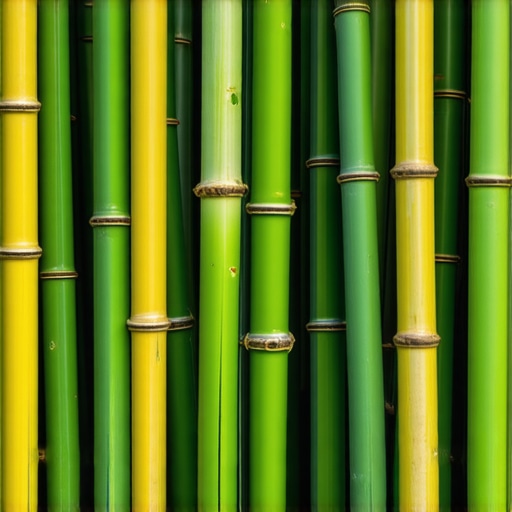
Choosing between clumping (sympodial) and running (monopodial) bamboo determines the long-term maintenance and legal liability of your landscape design. Clumping bamboo grows in tight, predictable circles, while running bamboo utilizes aggressive underground rhizomes that can travel 15 feet in a single season if not contained by a 60-mil HDPE barrier.
“Bamboo species in the running category are notorious for spreading beyond their intended boundaries; therefore, mechanical barriers are mandatory for urban installations.” – Texas A&M AgriLife Extension
If you have a narrow side yard, you want clumping varieties like Bambusa multiplex. These stay in a neat footprint. If you have a massive acreage and want a forest fast, you look at runners like Phyllostachys, but only if you have the budget for serious containment. Don’t buy from big-box stores. Their labels are often wrong. Go to a specialized nursery where they know the difference between a 15-foot dwarf and a 40-foot giant. It matters when the wind starts blowing at 40 mph and that bamboo starts leaning toward your house.
The Engineering of Containment
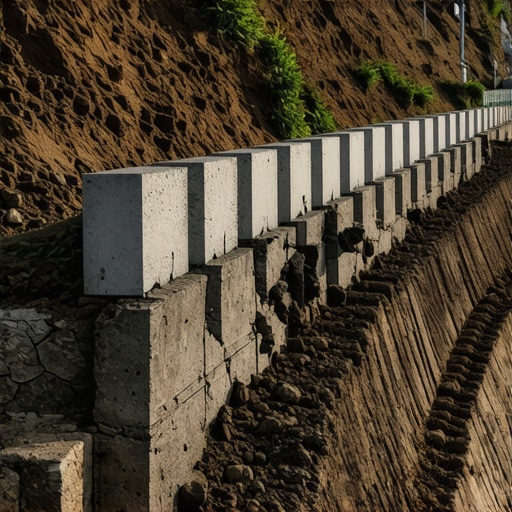
You need to think about hydrostatic pressure and soil aeration when you dig your trench. We dig 24 inches deep. We install a 60-80 mil high-density polyethylene barrier. We don’t just drop it in flat. We angle it 15 degrees outward at the top. Why? Because when a rhizome hits that barrier, you want it to be directed upward so you can see it and snip it. If the barrier is vertical or angled inward, the rhizome will dive under the bottom. That is a system failure. You also need to leave 2 inches of the barrier above the soil line. It looks like a plastic lip. It’s ugly to some, but it’s the only way to catch the ‘jumpers.’ Cover it with mulch if you must, but don’t bury it under soil. Soil provides a bridge for the rhizome to cross over.
Step-by-Step Installation Protocol
Installing a bamboo screen involves excavating a continuous trench, amending the soil pH to a slightly acidic 6.0-7.0, and ensuring nitrogen-rich fertilization to support rapid biomass production. You must treat the installation like a hardscaping project, focusing on the density of the base and the integrity of the containment walls before a single culm touches the dirt.
| Feature | Clumping Bamboo | Running Bamboo | Synthetic Fencing |
|---|---|---|---|
| Growth Rate | Moderate | Explosive | Instant |
| Root Type | U-shaped Rhizome | Long Horizontal Runners | None |
| Barrier Needed? | No (Recommended) | Yes (Mandatory) | No |
| Max Height | 10-25 feet | 20-50+ feet | 6-8 feet |
The Soil Microbiome and Nutrient Load
Bamboo is a nitrogen hog. I see people plant these in dead, compacted clay and wonder why the leaves turn yellow. You need organic matter. We mix 30% compost with the native soil. We also check for drainage. While bamboo likes water, it hates wet feet. If your site has standing water, you are going to get root rot. We install a 4-inch perforated French drain at the bottom of the trench if the clay is too heavy. This is the difference between a professional install and a hack job. We use a high-nitrogen slow-release fertilizer, usually something like a 10-5-5 or 18-6-12. If you use a standard weed-and-feed from a big-box store, the herbicides will kill the bamboo. It’s a grass. Remember that. [image_placeholder_1]
“Successful establishment of bamboo in hardscape environments depends entirely on the management of soil moisture and the prevention of rhizome escape into sub-base materials.” – International Society of Arboriculture (ISA) Guidelines
How much modified gravel do I need for a bamboo base?
In most planting applications, you don’t use modified gravel unless you are creating a decorative ‘rock mulch’ layer or improving drainage in a planter box. For a standard 20-foot screen in heavy clay, use 2-3 inches of clean 57 stone at the bottom of the trench to prevent anaerobic conditions at the root flare.
What is the best time of year to plant a bamboo fence?
Early spring is the optimal window. You want the plant to have a full growing season to establish its rhizome network before the first hard freeze. In warmer climates like USDA Zone 8 or 9, you can plant in the fall, but you must ensure consistent irrigation. Bamboo never truly goes dormant; it just slows down. If the roots dry out in winter, the plant dies.
The Maintenance Checklist: Keeping the Wall Dense
A bamboo privacy fence is not ‘set it and forget it.’ Without regular thinning and nutrient management, the interior of the grove will die off due to lack of light, leaving you with a brown, twiggy mess instead of a green screen. Use the following checklist to ensure longevity.
- Annual Thinning: Remove culms older than 5 years to allow light into the center.
- Rhizome Pruning: Check the 2-inch barrier lip every spring for escapees.
- Irrigation Check: Ensure drip lines are clear; bamboo needs 1 inch of water per week.
- Mulching: Apply 3 inches of wood chips to retain moisture and regulate soil temperature.
- Topping: If the bamboo gets too tall, you can ‘hedge’ it. It will not grow taller from that point, but it will get bushier.
The Foreman’s Final Word on Density
Don’t overplant. A 3-gallon pot of bamboo looks small today, but in three years, it will be 4 feet wide. Space them 3 to 5 feet apart. If you cram them in, they will compete for nutrients and you’ll end up with a stunted, sickly screen. Patience is a tool in landscaping. Give the roots room to breathe within the barrier. Use a sharp spade to check the edges twice a year. If you find a rhizome hitting the plastic, snip it. It takes ten minutes. If you wait five years, it takes a backhoe. Do it right the first time. Dig deep. Seal the seams of your barrier with stainless steel strips and bolts. Don’t use tape. Tape fails. Steel holds. That’s the difference between a fence and an infestation.
![Building a 2026 Modern Wood Fence [Budget DIY]](https://lawnmajesty.com/wp-content/uploads/2026/09/Building-a-2026-Modern-Wood-Fence-Budget-DIY.jpeg)
![Build a $100 2026 Pea Gravel Fire Pit [Weekend DIY]](https://lawnmajesty.com/wp-content/uploads/2026/05/Build-a-100-2026-Pea-Gravel-Fire-Pit-Weekend-DIY.jpeg)