The Best Way to Level a Bumpy Backyard for a Play Set
The Best Way to Level a Bumpy Backyard for a Play Set
I recently got called out to tear up a $30,000 patio that was sinking because the previous contractor failed to address the sub-grade properly. It was a structural autopsy. When I pulled up the pavers, I found three inches of uncompacted sand sitting on top of organic topsoil. The organic matter had rotted, the soil had compressed, and the entire hardscaping project had turned into a dangerous, uneven mess. This is the exact same failure I see when homeowners try to install a play set on a bumpy yard without proper site preparation. A play set is a dynamic load. It swings, it shifts, and it puts focused PSI on small contact points. If your yard is bumpy, you don’t just have a cosmetic issue; you have a safety liability. Proper landscaping and hardscaping principles are required to create a foundation that will not shift over time.
The Critical Physics of Sub-Grade Compaction
To level a bumpy backyard, you must understand that uncompacted soil will settle at different rates, leading to structural racking of the play set frame. You cannot simply dump topsoil into low spots and expect it to hold weight. Topsoil is filled with air pockets and organic matter. When you place a heavy wooden play set on top, the weight forces the air out, and the soil sinks. You must remove the vegetation and the top layer of organic material before you even think about leveling. This is the difference between a hack job and professional lawn care and site prep. Every project starts with excavation, not addition.
“A retaining wall doesn’t fail because of the stone; it fails because of the water trapped behind it.” – Hardscape Engineering Axiom
Site Analysis: Calculating the Grade and Drainage
Before you pick up a shovel, you need to conduct a site analysis to determine the percent of slope across the intended play area. Most garden design plans ignore the invisible flow of water. If you level a spot but don’t account for how water moves across the yard, you will inadvertently create a pond. Use a laser level or a high-tension string line to measure the rise over the run. If the grade exceeds 1 inch of drop for every 10 feet, you are dealing with a slope that requires a cut-and-fill operation rather than simple surface smoothing. You must mark your high and low points using survey stakes to ensure your final base is perfectly horizontal.
How much modified gravel do I need for a patio base?
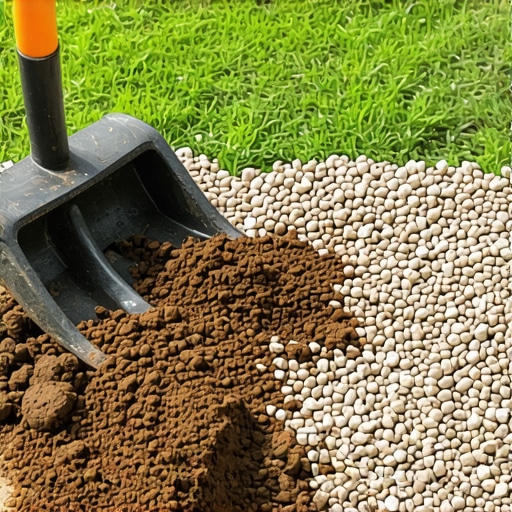
To calculate the volume of aggregate needed for a stable base, multiply the square footage by the intended depth (minimum 4 inches) and divide by 27 to get cubic yards. For a standard play set base, I recommend using Modified 2A stone or 3/4-inch crushed limestone with fines. This material compacts into a nearly concrete-like surface while still allowing for minimal moisture migration. Never use pea gravel as a leveling base; it acts like ball bearings and will never stabilize under the weight of the play set posts.
The Step-by-Step Leveling Process
Do not skip these steps. Your children’s safety depends on the structural integrity of the ground. It will rot if you place wood directly on moist, uneven soil. Follow this protocol:
- Mark the Perimeter: Use marking paint to outline the safety zone, which should extend 6 feet beyond the play set in all directions.
- Excavate the High Spots: Always cut into the high side of the slope rather than just filling the low side. This keeps the structure on undisturbed soil.
- Install a Geotextile Fabric: Lay down a heavy-duty non-woven landscape fabric to prevent the gravel from migrating into the sub-soil.
- Apply the Base Material: Spread your modified gravel in 2-inch lifts.
- Mechanical Compaction: Use a plate compactor. The tamper should literally bounce off the compacted base when you reach the target density.
| Material Type | Compaction Rating | Drainage Capability | Recommended Depth |
|---|---|---|---|
| Topsoil | Poor | Low | Not Recommended |
| Modified 2A Gravel | Excellent | Medium | 4 to 6 Inches |
| Clean #57 Stone | Good | High | 4 Inches |
| Play Sand | None | Moderate | 6 Inches (Surface Only) |
“Proper compaction of the sub-grade is the most critical element in any exterior construction project, ensuring that the load-bearing capacity of the soil meets the design requirements of the structure.” – ICPI Hardscape Standards
Horticultural Impact and Soil Health
When you level a section of your yard, you are fundamentally changing the soil microbiology in that zone. By compacting a base for a play set, you are creating an impermeable area where turf grass cannot grow. You must manage the edges of this area to prevent hydrostatic pressure from eroding the surrounding lawn care zones. I often see homeowners level a spot and then wonder why the grass five feet away is dying. It is usually because they diverted the natural sheet flow of water directly onto the root flares of nearby trees. Always maintain a 2 percent pitch away from any structures to ensure proper runoff.
Can I level a yard without a retaining wall?
If the grade change is more than 6 inches across the span of the play set, you must install a timber or stone border to act as a mini-retaining wall. This prevents the leveled material from washing away during heavy rain. A simple 4×4 pressure-treated timber border, secured with 18-inch rebar spikes, is usually sufficient. Without a border, the edges of your leveled area will slough off, leaving the play set legs unsupported. Don’t skip this. It will fail.