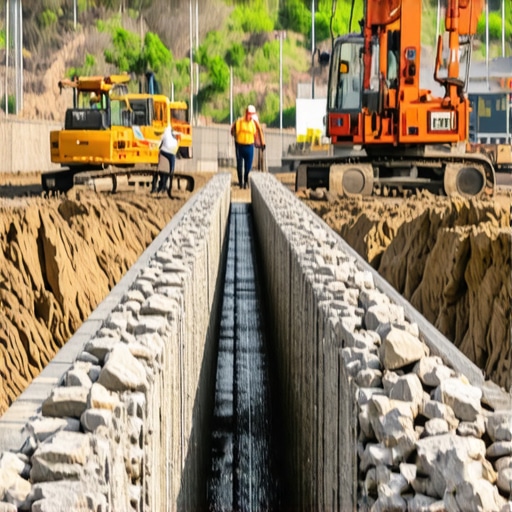
![Repairing 2026 Cracked Concrete Patios [DIY Fix]](https://lawnmajesty.com/wp-content/uploads/2026/06/Repairing-2026-Cracked-Concrete-Patios-DIY-Fix.jpeg)
Repairing 2026 Cracked Concrete Patios [DIY Fix]
Repairing 2026 Cracked Concrete Patios [DIY Fix]
I recently got called out to tear up a $30,000 patio that was sinking because the previous contractor thought two inches of uncompacted pea gravel was an adequate base. It was not. Within fourteen months, the hydrostatic pressure from a poorly diverted downspout turned that base into a soup of shifting silt. The result was a series of jagged, vertical displacement cracks that no amount of cosmetic patching could hide. If you are staring at a crack in your 2026 patio, you are not looking at a surface problem. You are looking at a failure of the sub-grade or a misunderstanding of concrete physics. Landscaping is civil engineering on a domestic scale. If you do not respect the soil, the soil will eventually reclaim your investment. This guide focuses on the technical reality of concrete repair, moving beyond the DIY fluff you find at big-box stores.
The Physics of Concrete Failure in Modern Hardscaping
Concrete cracks occur when tensile stress exceeds the material’s internal strength, often due to differential settlement or thermal expansion. In 2026, climate-driven soil shifts require high-movement sealants and proper sub-grade drainage to prevent hairline fractures from becoming total structural collapses. Do not ignore them. The fracture is a gateway for moisture to reach the sub-base. Once water enters, the freeze-thaw cycle begins its work. The ice expands with a force of roughly 30,000 PSI. Your concrete slab, which likely has a compressive strength of only 3,500 to 4,000 PSI, stands no chance against that internal pressure. You must seal the breach before the next seasonal shift.
| Material Type | Tensile Strength (PSI) | Flexibility | Best Use Case |
|---|---|---|---|
| Epoxy Injection | 7,000+ | Low | Structural bonding of dormant cracks |
| Polyurethane Sealant | 2,500 | High | Expansion joints and moving cracks |
| Acrylic Latex Fill | 400 | Medium | Cosmetic surface hairline filling |
| Cementitious Patch | 3,000 | Zero | Deep holes with no expected movement |
“The structural integrity of any slab-on-grade is 90% dependent on the compaction of the non-frost-susceptible base material.” – American Concrete Institute (ACI) Manual
How do I know if my patio crack is structural?
Identify structural cracks by checking for vertical displacement or widths exceeding one-quarter inch, which indicate that the sub-grade compaction has failed or the soil has undergone significant subsidence. If one side of the crack is higher than the other, you have a settlement issue that requires more than just a surface filler. You may need to look into mud-jacking or polyurethane foam injection to level the slab before attempting a DIY surface fix. If the crack is thin and level, it is likely a shrinkage crack from the initial curing process or minor thermal movement.
The Forensic Repair Process: Step-by-Step
To repair a concrete crack effectively, you must increase the surface area for the bonding agent and ensure the aperture is free of microscopic debris. Use a 4-inch angle grinder with a diamond-tuck point blade to ‘V-groove’ the crack. This is the part where most homeowners fail. You cannot just smear goop over the top. You have to cut into the concrete. Create a channel at least a half-inch deep. This allows the sealant to create a mechanical bond with the sound concrete walls. If the crack is deep, you must use a closed-cell backer rod. This prevents three-sided adhesion. Sealants need to stretch. If they stick to the bottom of the crack as well as the sides, they will tear when the concrete moves. Don’t skip this. Use a shop vac to remove every speck of dust. If you leave dust, the sealant will bond to the dust, not the slab.
- Angle grinder with diamond blade for V-grooving
- Heavy-duty wire brush for sidewall cleaning
- High-pressure air compressor or shop vac
- Two-part structural epoxy or elastomeric polyurethane sealant
- Closed-cell backer rod (correctly sized for the gap)
- Isopropyl alcohol for final surface decontamination
“A retaining wall doesn’t fail because of the stone; it fails because of the water trapped behind it.” – Hardscape Engineering Axiom
What is the best temperature to repair concrete?
The optimal temperature for applying concrete repair epoxies and polyurethane sealants is between 50 and 80 degrees Fahrenheit, as extreme heat causes rapid evaporation of solvents and cold temperatures inhibit the chemical curing process. If it is too hot, the material will skin over before it can penetrate the pores of the concrete. If it is too cold, the viscosity increases, making it impossible to get a smooth finish. Monitor the dew point. If moisture is condensing on the slab, your bond will fail. Concrete is a sponge. It holds water long after the surface looks dry.
Understanding the Microscopic Reality of Adhesion
When you apply a bonding agent, you are relying on the formation of C-S-H (Calcium Silicate Hydrate) gel or the mechanical interlocking of polymers within the concrete’s pore structure. Most modern concrete contains fly ash or slag, which changes the alkalinity. You need a sealant that is chemically compatible with high-pH environments. For 2026 standards, we are moving toward self-healing crystalline admixtures, but for a DIY fix, a high-modulus epoxy is your best bet for structural stability. Epoxy has a higher tensile strength than the concrete itself. When it cures, the slab becomes a monolithic unit again. However, if the slab is still moving, epoxy will just cause a new crack to form half an inch to the side. In those cases, use polyurethane. It is the bridge that moves with the earth. It is pragmatic. It works. Check your grading while you are at it. If your lawn care routine involves heavy watering near the slab edge, you are saturating the sub-base. Force the roots of your turf to chase water deeper by watering infrequently and deeply. This keeps the soil moisture levels consistent under your hardscaping. Consistent moisture means less soil expansion and fewer cracks. It is all connected. Soil science is the foundation of every garden design. Stop treating your patio like a separate entity from your yard. It is all one biological and mechanical system. Maintain a five-year sealing schedule to protect the surface from salt and carbonation. This prevents spalling. Do the work now or pay me to jackhammer it out later. The choice is yours.
![Build a $250 Stone Retaining Wall [DIY 2026]](https://lawnmajesty.com/wp-content/uploads/2026/06/Build-a-250-Stone-Retaining-Wall-DIY-2026.jpeg)

![Build a $500 Natural Stone Retaining Wall [2026 DIY]](https://lawnmajesty.com/wp-content/uploads/2026/06/Build-a-500-Natural-Stone-Retaining-Wall-2026-DIY.jpeg)