
Fix 2026 Soil Acidity with This $15 Lime Application
Fix 2026 Soil Acidity with This $15 Lime Application
The grass is yellowing, the moss is encroaching, and your fertilizer doesn’t seem to do a damn thing. You are looking at a chemical stalemate. When soil pH drops below 6.0, the very chemistry of the earth turns against your turf. Nutrients like nitrogen and phosphorus become chemically locked, bound to soil particles where roots cannot reach them. You are essentially throwing money into a pit every time you spread fertilizer on acidic ground. To fix this for the 2026 season, you need to start the neutralization process now. Soil chemistry does not change overnight. It is a slow, ionic exchange that requires moisture, time, and the right calcium source.
The Agronomic Reality of Soil Acidity
Soil acidity is neutralized by applying calcitic or dolomitic lime, which reacts with hydrogen ions to raise the pH level. A typical $15 bag of lime can treat 5,000 square feet, unlocking nitrogen, phosphorus, and potassium for healthier turfgrass growth in the 2026 season.
I recently got called out to a property where a homeowner was in a full panic. They had torched their entire front lawn by applying a massive dose of hydrated lime during a 90 degree July heatwave. They didn’t test the soil; they just saw moss and assumed they needed to ‘sweeten’ the dirt. The result was a chemical burn that decimated the microbial life in the top two inches of the soil profile. We had to excavate the dead thatch and wait six months for the salt index to stabilize. This is why we test. This is why we don’t guess. If you don’t understand the Cation Exchange Capacity (CEC) of your soil, you are just playing a very expensive game of trial and error. Acidic soil isn’t just ‘bad dirt’; it is a high concentration of hydrogen ions that physically prevents the plant from drinking. At a pH of 5.0, nearly 50 percent of your nitrogen application is wasted. It just leaches away into the groundwater because the plant’s biology is suppressed by aluminum toxicity, a common side effect of low pH environments.
“Soil pH is a measure of the acidity or alkalinity of the soil. A pH of 7.0 is neutral, while values below 7.0 are acidic. Most turfgrasses prefer a pH between 6.0 and 7.0 for optimal nutrient availability.” – Penn State Agricultural Extension
The $15 fix isn’t a miracle cure: it is basic chemistry. You can buy a 40 pound bag of pelletized calcitic lime at any local farm supply or landscaping center for roughly that price. This bag contains calcium carbonate. When water hits those pellets, they dissolve and release carbonate ions. These ions find the hydrogen ions that make your soil acidic and convert them into water and carbon dioxide. It is a literal cleaning of the soil’s chemical palate. However, if your soil is heavy clay, you have a higher ‘buffering capacity.’ This means the clay particles hold onto acid more tightly than sandy soil does. You might need 100 pounds per 1,000 square feet for clay, whereas 25 pounds might suffice for a sandy loam. This is why a $20 soil test is the most important tool in your shed. Without it, you are blind.
Calcitic vs. Dolomitic: Choosing the Right Amendment
Lime selection depends on your soil’s magnesium levels, as dolomitic lime contains both calcium and magnesium, while calcitic lime is primarily calcium carbonate. Choosing the wrong one can skew your base saturation ratios, leading to soil compaction or nutrient imbalances that attract weeds.
| Lime Type | Composition | Best Use Case | Reaction Speed |
|---|---|---|---|
| Calcitic Lime | Calcium Carbonate | Low pH, High Magnesium soils | Moderate (6-12 months) |
| Dolomitic Lime | Calcium and Magnesium Carbonate | Low pH, Low Magnesium (Sandy soils) | Slow (8-12 months) |
| Pelletized Lime | Compressed fines with binder | Standard residential spreaders | Fastest dissolution |
| Hydrated Lime | Calcium Hydroxide | Professional use only (high burn risk) | Instantaneous |
If you have heavy red clay, you likely already have plenty of magnesium. Adding dolomitic lime there is a mistake: it will make the clay even tighter, stickier, and harder for roots to penetrate. You want calcitic lime to help ‘flocculate’ or loosen those clay particles. Conversely, if you are on the coast with sandy soil, your magnesium is likely leaching away, and dolomitic is your best friend. Every decision must be backed by the data from your soil report. Don’t let the guy at the big box store tell you ‘lime is lime.’ It isn’t.
“A lawn care program is only as strong as its foundation. If the soil pH is neglected, the efficacy of all other inputs, including water and fertilizer, is significantly diminished.” – Agronomy Manual of Standards
How much lime do I need for a 5000 square foot lawn?
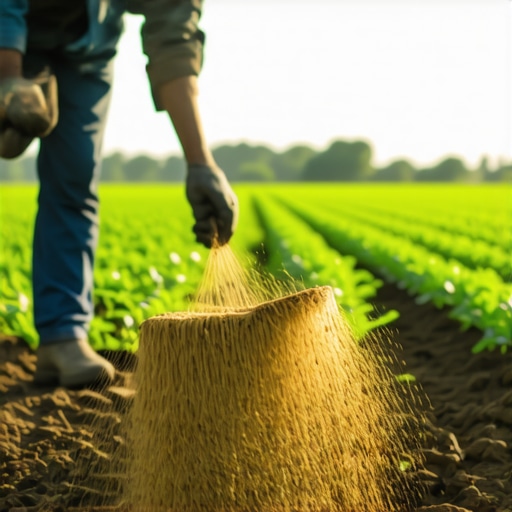
The average 5,000 square foot lawn with a pH of 5.5 requires approximately 200 to 250 pounds of pelletized lime to reach a target pH of 6.5. This equates to four or five 50-pound bags. Always split applications if the requirement exceeds 50 pounds per 1,000 square feet in a single pass to avoid smothering the turf crown. Ground limestone is heavy. It requires a broadcast spreader with a large gate opening. Do not use a drop spreader unless you want to spend four hours walking back and forth. You want a consistent, overlapping pattern to ensure no ‘acid strips’ are left in the wake of your application.
When is the best time to apply lime to grass?
The absolute best time to apply lime is in the fall or very early spring when the ground is subject to freeze and thaw cycles. These cycles help pull the lime particles deeper into the soil profile through a process called ‘frost heaving.’ Since lime is not highly soluble, it moves very slowly: about one inch per year. Applying it now ensures that by the peak growing season of 2026, the chemistry has actually shifted at the root zone level. If you wait until summer 2026 to fix a 2026 problem, you have already lost the battle. The heat of summer is the worst time for lime. The grass is already stressed by evapotranspiration. Adding a caustic mineral on top of it is asking for trouble.
The Step-by-Step Soil Recovery Checklist
To successfully remediate acidic soil without damaging your existing landscaping, follow this structured operational protocol. Precision is more important than volume.
- Step 1: Core Aeration. Pull 3-inch plugs to create direct pathways for the lime to reach the subsoil.
- Step 2: Soil Testing. Take 10 samples from across the yard at a 4-inch depth and mix them in a plastic bucket.
- Step 3: Calculate the Load. Read the ‘Lime Recommendation’ section of your lab report: do not guess.
- Step 4: Calibration. Calibrate your spreader to deliver exactly the poundage required per 1,000 square feet.
- Step 5: Application. Apply in a cross-hatch pattern (North-South then East-West) for total coverage.
- Step 6: Irrigation. Water the lawn with at least 0.5 inches of water immediately to move the dust off the leaf blades.
- Step 7: Monitoring. Re-test the soil in 6 months. pH shifts are slow and may require a second application.
One final word of advice from someone who has spent two decades digging in the dirt: stop watering your lawn every day. Most homeowners with acidic soil also have shallow root systems because they water for 10 minutes every morning. This keeps the top half-inch of soil moist and acidic, while the roots never dive deep to find minerals. You want deep, infrequent watering. Exactly one inch per week, delivered in one or two heavy sessions. This forces the roots to chase the water down into the soil where the lime is doing its work. It makes the plant resilient. It makes the lawn a professional grade landscape rather than a patch of weeds. Do the work now. Your 2026 self will thank you when the neighbors are wondering why your grass is a deep, dark green while theirs is struggling to survive the spring thaw.
{“@context”:”https://schema.org”,”@type”:”Article”,”headline”:”Fix 2026 Soil Acidity with This $15 Lime Application”,”author”:{“@type”:”Person”,”name”:”Veteran Horticulturist”},”datePublished”:”2025-05-15″,”description”:”A professional guide to fixing soil acidity using lime, focusing on soil chemistry, application rates, and long-term lawn health.”},{“@context”:”https://schema.org”,”@type”:”HowTo”,”name”:”How to Apply Lime to Fix Soil pH”,”step”:[{“@type”:”HowToStep”,”text”:”Conduct a professional soil test to determine current pH and magnesium levels.”},{“@type”:”HowToStep”,”text”:”Aerate the lawn to allow lime to penetrate the root zone.”},{“@type”:”HowToStep”,”text”:”Select calcitic or dolomitic lime based on the test results.”},{“@type”:”HowToStep”,”text”:”Spread the lime at the recommended rate using a broadcast spreader.”},{“@type”:”HowToStep”,”text”:”Water the lawn to activate the chemical neutralization process.”}]}
![Why Your 2026 Grass Seed Isn't Growing [3 Critical Mistakes]](https://lawnmajesty.com/wp-content/uploads/2026/05/Why-Your-2026-Grass-Seed-Isnt-Growing-3-Critical-Mistakes.jpeg)
![Why Your 2026 Grass Seed Kills Your Budget [Fix]](https://lawnmajesty.com/wp-content/uploads/2026/06/Why-Your-2026-Grass-Seed-Kills-Your-Budget-Fix.jpeg)