Stop 2026 Lawn Compaction: Why You Need Core Aeration
Stop 2026 Lawn Compaction: Why You Need Core Aeration
If your lawn feels like a parking lot after a light rain, you don’t have a grass problem; you have a soil physics problem. Soil compaction is the silent killer of high-end landscapes, acting as a physical barrier that prevents gaseous exchange and hydraulic conductivity within the root zone. Without intervention, your turf is effectively suffocating in a tomb of high bulk density clay.
The Invisible Suffocation: Understanding Soil Compaction
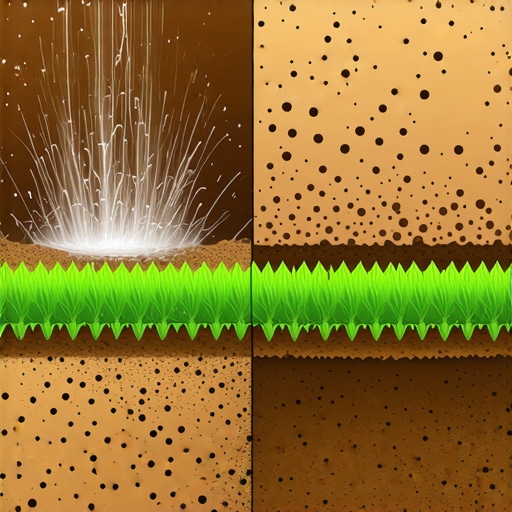
Soil compaction occurs when the macropore space in the soil profile is collapsed, significantly increasing the soil’s bulk density and preventing the movement of oxygen, water, and nutrients to the root system. This physical state leads to shallow rooting, increased disease susceptibility, and the eventual death of the turfgrass stand.
I always drill into my new crew members: if you don’t fix the soil grading and density first, every plant you put in the ground is just expensive compost. I remember a site in 2022 where a client spent twelve grand on premium sod, only to have it turn into a yellowing mess within six months. They blamed the sod farm. I took a penetrometer to the site and couldn’t even get past two inches. The previous contractor had run heavy skid-steers over the yard while the soil was wet, basically turning the clay into a brick. We had to rip it all out. If you don’t respect the soil structure, the soil won’t respect your budget. Don’t skip the prep work. It is the difference between a legacy landscape and a temporary green patch.
The Science of Bulk Density and Pore Space
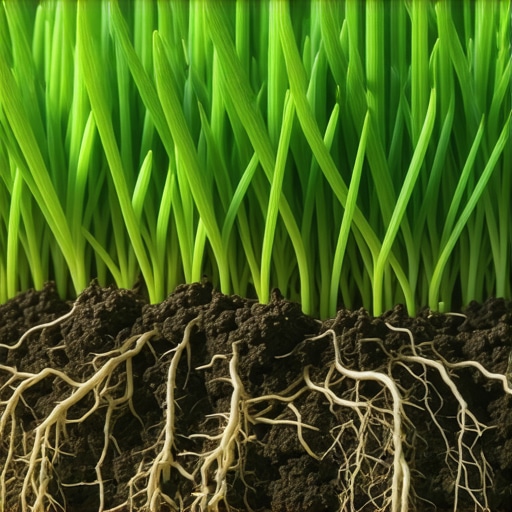
To understand why your yard is failing, you have to look at the microscopic reality of the dirt. Ideal soil is composed of 50% solids and 50% pore space. That pore space is divided into macropores (which hold air) and micropores (which hold water). When you walk on the lawn, or run a mower over it, you are crushing those macropores. In heavy clay soils, the bulk density can quickly rise above 1.6 g/cm³, at which point root penetration becomes physically impossible. The roots literally cannot exert enough pressure to move the soil particles aside. This is why we see ‘pancake roots’ that grow horizontally just under the thatch layer rather than diving deep for moisture.
“Soil compaction is one of the most common causes of turfgrass decline. It limits the amount of oxygen available to roots and restricts the drainage of excess water, leading to anaerobic conditions.” – Penn State Center for Turfgrass Science
How do I know if my lawn is compacted?
Take a standard 12-inch flathead screwdriver. If you cannot push it at least 6 inches into the soil with moderate hand pressure when the ground is moist, your bulk density is too high. You might also notice water pooling in high-traffic areas or areas where the grass remains thin despite heavy fertilization. This isn’t a nutrient deficiency; it’s a delivery failure. The fertilizer is sitting on top because the soil is too tight to let it in.
The Core Aeration Mechanics: Engineering a Recovery
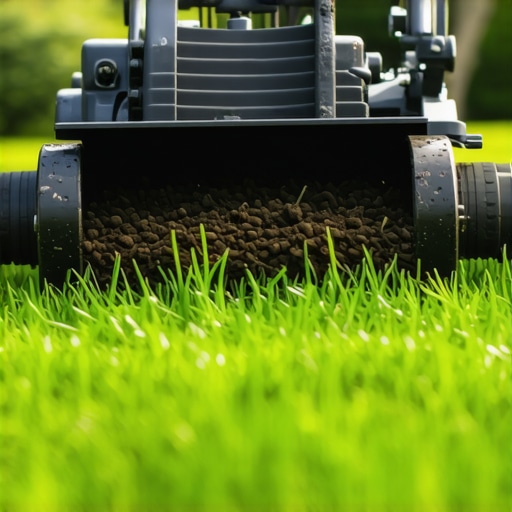
Core aeration is the process of using a mechanical aerator to extract soil cylinders—typically 0.5 to 0.75 inches in diameter and 3 to 4 inches deep—from the turf. This physically reduces soil density and creates immediate pathways for oxygen diffusion and water infiltration directly into the rhizosphere.
Don’t fall for the spike aerator scam. Spike aerators do not remove soil; they push it aside. By pushing the soil to the side to create a hole, you are actually increasing the compaction around the walls of that hole. You need to remove material. We call this ‘plugging.’ By removing a plug, you allow the surrounding soil to expand into the void, naturally loosening the entire profile over time. The plugs should be left on the surface. They contain beneficial microbes and clay-breaking organisms that will break down and filter back into the thatch layer, aiding in organic matter decomposition.
[image_placeholder_1]
| Feature | Spike Aeration | Core Aeration (The Standard) |
|---|---|---|
| Action | Compresses soil sideways | Removes 3-4 inch soil plugs |
| Effect on Bulk Density | Increases local compaction | Decreases overall density |
| Oxygen Exchange | Minimal | Significant / Immediate |
| Root Growth Benefit | Negligible | High – Deep root stimulation |
| Thatch Management | None | Promotes microbial breakdown |
Engineering the Recovery: NPK and Microbial Kickstarts
Once the cores are pulled, the clock starts. You have a 48-hour window where the ‘veins’ of the earth are open. This is when we apply soil amendments. If your pH is off, this is the time to add calcitic lime. If your organic matter is low, we top-dress with a fine compost. The goal is to get these materials into the holes, not just sitting on top of the grass. We focus on the NPK ratio (Nitrogen, Phosphorus, Potassium). For recovery, we want a slow-release nitrogen to support leaf growth and a phosphorus-heavy starter to encourage the roots to colonize the new voids. But be careful. If you dump high-salt synthetic fertilizers into those holes, you risk root burn. We use bridge products that combine organic poultry waste with synthetic urea to feed both the plant and the soil microbes.
“A retaining wall doesn’t fail because of the stone; it fails because of the water trapped behind it. Similarly, a lawn fails because of the air trapped out of it.” – Hardscape Engineering Axiom
When is the best time for core aeration?
For cool-season grasses like Tall Fescue or Kentucky Bluegrass, the only time to aerate is fall (September to October). The soil is warm, but the air is cooling, which is perfect for root development. For warm-season grasses like Bermuda or Zoysia, you aerate in late spring when the grass is entering its peak growth phase. If you aerate a dormant lawn, you’re just opening the door for weed seeds like Poa Annua to take over. Timing is everything. Don’t fight the biological clock of your specific cultivar.
The 2026 Lawn Restoration Protocol
- Site Survey: Flag all irrigation heads, shallow utility lines (811), and invisible dog fences. A commercial aerator will shred a 1-inch PVC pipe like it’s paper.
- Moisture Prep: Water the lawn deeply 24 hours before aeration. The tines need to penetrate at least 3 inches. Dry clay will just snap the machine’s tines.
- The Pattern: Pass over the area twice in a cross-hatch pattern. You want at least 20 to 40 holes per square foot.
- Overseeding: Use a slice-seeder or broadcast high-quality, endophyte-enhanced turf seed immediately after pulling cores.
- Top-dressing: Apply 1/4 inch of screened leaf compost. This fills the holes with high-CEC (Cation Exchange Capacity) material.
The Hardscape Connection: Drainage and Hydrostatic Pressure
As a hardscape foreman, I see the damage compaction does to more than just grass. Compacted soil around a patio or retaining wall increases hydrostatic pressure. When the soil can’t absorb water, that water has to go somewhere. Usually, it goes under your pavers or behind your walls. This leads to heaving during freeze-thaw cycles. By maintaining an aerated, porous lawn adjacent to your hardscaping, you’re creating a natural ‘sponge’ that protects your $50,000 investment. Every part of the yard is connected. You can’t have a stable wall if you have a swamp for a lawn. Fix the soil, fix the site. It will rot if you ignore the drainage. Don’t skip the core aeration.
![Why Fertilizer Alone Won't Fix Your Yellow Fescue [Soil Secrets]](https://lawnmajesty.com/wp-content/uploads/2026/05/Why-Fertilizer-Alone-Wont-Fix-Your-Yellow-Fescue-Soil-Secrets.jpeg)