Fixing 2026 Large Brown Patches in Tall Fescue Lawns
The Anatomy of Turf Failure: Why Your Tall Fescue is Dying in 2026
Large brown patches in Tall Fescue are primarily caused by the fungal pathogen Rhizoctonia solani, which thrives when night temperatures exceed 65°F and leaf blades remain wet for more than 10 hours. Successful remediation requires improving soil drainage, reducing high-nitrogen inputs during summer, and applying professional-grade fungicides like Azoxystrobin to stop the mycelium from consuming the turf crown.
A homeowner called me in a panic after they completely torched their front lawn by applying a heavy 32-0-4 synthetic fertilizer during a humid 95-degree heatwave. They thought they were ‘feeding’ the lawn; in reality, they were setting a buffet for the fungus. Within 72 hours, 4,000 square feet of what used to be a decent yard turned into a graveyard of slimy, straw-colored circles. This was not a simple ‘dry spot.’ It was a chemical nightmare. The nitrogen forced a flush of succulent growth that the Rhizoctonia pathogen sliced through like a hot knife through butter. I had to explain that you cannot fertilize your way out of a fungal outbreak. In fact, you are just fueling the fire. We had to perform a deep core aeration just to get oxygen back into the root zone and flush the soil profile to lower the salt index. It was a costly lesson in horticultural patience.
“A lawn does not struggle because of a lack of chemicals; it struggles because the soil biology has been compromised by improper cultural practices and poor drainage.” – Agronomy Field Manual 4th Edition
The Forensic Diagnosis: Identifying the Smoke Ring
Before you go buying a pallet of sod, you need to understand what you are looking at. Brown patch (Rhizoctonia solani) manifests as circular areas ranging from a few inches to several feet in diameter. The key indicator is the ‘smoke ring’ – a dark, grayish-black border at the edge of the patch that is most visible in the early morning dew. This is the active mycelium. If you look closely at the leaf blades, you will see tan lesions with dark brown borders. This is not the same as drought stress. Drought stress makes the grass turn a dull bluish-gray and the blades will fold. Brown patch kills the tissue. If you pull on the grass and it lifts easily from the stolons, you are dealing with rot, not thirst. Stop the irrigation immediately. Over-watering is the fastest way to kill Tall Fescue in the transition zone.
How much water does tall fescue need in summer?
Tall fescue requires exactly 1 inch of water per week, delivered in one or two deep sessions rather than daily light mists. Watering every day creates a shallow root system and keeps the canopy permanently damp, which is the primary catalyst for fungal growth. I tell my crews to use tuna cans to measure the output. If you are watering at 6:00 PM, you are inviting death. Only water between 4:00 AM and 8:00 AM so the sun can dry the leaf blades quickly.
[image_placeholder_1]
What is the best fungicide for brown patch in fescue?
The most effective treatment for Rhizoctonia in 2026 is a rotating application of Azoxystrobin and Propiconazole. Using a single active ingredient leads to pathogen resistance. You must apply these at a preventative rate before the humidity spikes. Once the brown patches are visible, you are in a curative mode, which is twice as expensive and half as effective. We use granular applications for long-term residual control and liquid sprays for immediate contact knockdown of the mycelium. Always check your soil pH before application; if your pH is outside the 6.2 to 6.8 range, the grass is already stressed and less responsive to treatment.
| Metric | Optimal Range | Fungal Risk Level |
|---|---|---|
| Soil pH | 6.2 – 7.0 | High if below 5.8 |
| Nitrogen (Summer) | 0 lbs per 1k sq ft | High if above 0.5 lbs |
| Cutting Height | 3.5 – 4.5 inches | High if scalped below 3″ |
| Compaction (PSI) | Below 200 | High if above 300 |
The 2026 Remediation Checklist
- Cease all Nitrogen fertilization: Do not apply N until the night temperatures drop below 60°F in the fall.
- Adjust Mowing Height: Set your deck to at least 4 inches. Taller grass has deeper roots and shades the soil, keeping the crown cooler.
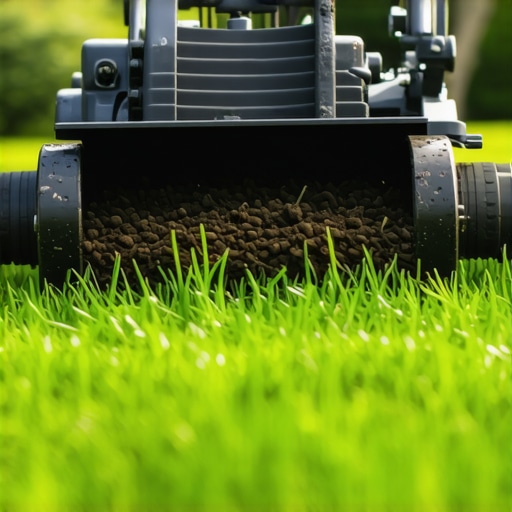
- Core Aeration: Extract 3-inch plugs to break the surface tension and improve gas exchange in the soil.
- Fungicide Rotation: Apply Group 11 and Group 3 fungicides every 14 to 28 days depending on humidity levels.
- Soil Testing: Send a sample to your local agricultural extension to check Cation Exchange Capacity (CEC).
“Soil compaction is the silent killer of Tall Fescue, as it restricts the movement of water and oxygen, leading to anaerobic conditions that favor fungal pathogens.” – Penn State Extension Turfgrass Management
Hardscaping and Drainage: The Engineering Fix
If you have a recurring brown patch in the same spot every year, it is not a grass problem; it is a grading problem. I often see this near patios or retaining walls where the hardscape contractor did not install a proper French drain or failed to account for hydrostatic pressure. Water pools at the edge of the pavers, saturating the fescue roots. You need to inspect the pitch of your yard. If the grade is moving water toward the lawn instead of away from the foundation, you will never fix the fungus with a spray bottle. We often have to install 4-inch perforated HDPE pipe wrapped in filter fabric and buried in #57 clean stone to move that water out of the turf zone. It is basic civil engineering applied to your backyard. If the soil stays soggy for more than 4 hours after a rain, your drainage has failed.
The 2026 Maintenance Cycle
Maintaining fescue in the current climate requires a shift in mindset. You are not growing a carpet; you are managing a biological system. In the fall, you must overseed with ‘Endophyte-enhanced’ turf-type tall fescue varieties. These have a symbiotic relationship with fungi that actually help the plant resist pests and heat stress. Clean your mower blades after every cut. If you mow through a fungal patch and then mow the rest of the yard, you are effectively a biological warfare agent spreading spores across your entire property. Wash the deck with a 10% bleach solution if you see signs of disease. It sounds like overkill until you have to spend three grand on new sod. Don’t be the homeowner who ignores the science. Respect the biology of the blade.

![Stop 2026 Lawn Patchiness with This $30 Seed Hack [Fix]](https://lawnmajesty.com/wp-content/uploads/2026/05/Stop-2026-Lawn-Patchiness-with-This-30-Seed-Hack-Fix.jpeg)
![Stop 2026 Nitrogen Burn on Yellow Fescue [3-Step Fix]](https://lawnmajesty.com/wp-content/uploads/2026/05/Stop-2026-Nitrogen-Burn-on-Yellow-Fescue-3-Step-Fix.jpeg)