Stop 2026 Boxwood Dieback with This $15 Pruning Hack
The Anatomy of a Dying Boxwood: A Forensic Autopsy
To stop 2026 boxwood dieback, you must execute thinning cuts using sanitized bypass pruners to increase interior airflow by 30%. This $15 investment in isopropyl alcohol and manual labor prevents Cylindrocladium buxicola spores from germinating in the high-humidity micro-climate of the inner canopy. Most homeowners walk out to their front yard and see a yellowing Buxus sempervirens and assume it needs more water or a handful of 10-10-10 fertilizer. They are wrong. When I perform a forensic autopsy on a failed landscape, I usually find a ‘meatballed’ shrub—a plant that has been sheared into a tight, dense orb for five years straight. This creates a shell of foliage so thick that light and air cannot penetrate. The interior becomes a stagnant, humid incubator for fungal pathogens. I always drill into my new crew members: if you don’t fix the airflow and soil grading first, every plant you put in the ground is just expensive compost. I’ve seen $50,000 estates decimated because a ‘mow-and-blow’ crew used dirty shears to hedge every plant into a geometric shape, effectively suffocating the plant’s vascular system. The dieback you see isn’t just bad luck; it is a structural failure of the plant’s micro-environment. We are dealing with microscopic warfare. Cylindrocladium buxicola, the fungus behind boxwood blight, produces sticky spores that hitchhike on dirty tools, animal fur, and splashing raindrops. Once they land in that dark, wet interior of a sheared boxwood, they germinate in hours. The plant’s stomata, the tiny pores it uses for gas exchange, become blocked. The xylem and phloem—the plant’s internal plumbing—begin to shut down. This is why you see ‘flagging,’ where entire branches turn straw-colored and die while the rest of the plant looks fine. For now.
“A boxwood’s greatest enemy is a lack of interior transpiration. Without airflow, the humidity levels within the canopy can remain at 100% for days after a rain event, providing the perfect vector for fungal germination.” – Agricultural Extension Agronomy Manual
The $15 Solution: Thinning vs. Shearing
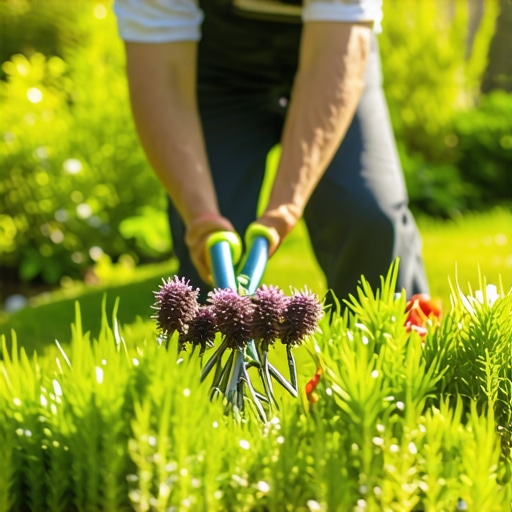
The hack isn’t a chemical. It’s a technique called ‘thinning,’ and the only cost is a $10 bottle of 70% isopropyl alcohol and a $5 spray bottle. You likely already own the bypass pruners. Stop shearing the outside. Instead, you need to reach into the canopy and remove 10% to 15% of the interior branches. This creates ‘chimneys’ for air to move through. When the wind blows, it should move the inner leaves, not just hit a wall of green. I call it the ‘reaching hand’ method. If you can’t reach your hand into the center of the boxwood without hitting a wall of twigs, the plant is at risk. We use the alcohol to dip our blades between every single plant. If you prune a sick plant and then move to a healthy one without sanitizing, you are the vector. You are the one killing your landscape. The mechanics of the cut matter too. You want to make your cut about 6 to 8 inches deep into the canopy, just above a lateral branch. This redirects the plant’s growth hormones (auxins) and prevents that ‘flush’ of dense growth at the tips that creates the suffocation problem in the first place.
| Disease/Issue | Primary Cause | Visual Identifier | The Fix |
|---|---|---|---|
| Boxwood Blight | Fungal Spores | Black stem cankers, rapid leaf drop | Extreme thinning & sanitation |
| Volutella Blight | Wounds/Stress | Pinkish/Orange spore masses under leaves | Pruning dead wood in dry weather |
| Root Rot (Phytophthora) | Poor Drainage | Yellowing, wilting, soggy roots | Fix soil grading/Drainage |
| Winter Bronzing | Desiccation | Orange/Bronze foliage in spring | Anti-desiccants and windbreaks |
Why Your Soil pH is Killing Your Boxwoods
Soil chemistry is the foundation of plant immunity. Boxwoods prefer a soil pH between 6.5 and 7.2. If your soil is too acidic (common in regions with heavy pine needles or oak leaves), the plant cannot uptake essential micronutrients like magnesium or calcium, regardless of how much fertilizer you throw at it. This weakens the cell walls, making them an easy target for fungal hyphae to penetrate. I see contractors dumping ‘acid-loving’ fertilizer on boxwoods because they confuse them with hollies. It’s a death sentence. You need a soil test, not a guess. If you aren’t measuring the pH, you aren’t landscaping; you’re gambling with your mortgage. We often see ‘hidden’ dieback caused by high hydrostatic pressure in the soil. If your boxwoods are planted at the bottom of a slope or near a downspout, the ‘perched water table’ in the soil suffocates the roots. Roots need oxygen just as much as they need water. In saturated soil, the oxygen is displaced, the roots drown, and the opportunistic fungi move in. It’s a systemic collapse starting from the bottom up.
“Soil compaction and improper pH are the primary physiological stressors that predispose Buxus species to secondary opportunistic pathogens.” – ICPI Hardscape & Softscape Standards
How much should I prune off my boxwoods?
You should never remove more than 20% of the total foliage in a single season. For the $15 hack, aim for 10% to 15% focused exclusively on the interior ‘congested’ areas. This is not about shaping; it is about ventilation. Focus on removing the crossing or rubbing branches first. These create wounds that act as entry points for disease. Use your bypass pruners to reach deep. If you see ‘dead zones’—areas where the leaves have already fallen off inside—that is your target. Open those areas up to the light. Within two seasons, you’ll see new, healthy growth inside the plant, making it more resilient to the 2026 dieback cycles predicted by current horticultural models.
What is the best time of year to prune boxwoods?
Timing is everything. Never prune in the late fall. This stimulates new growth that won’t have time to ‘harden off’ before the first hard freeze, leading to massive tip burn and dieback. The best time for the thinning hack is late winter or very early spring, just before the first flush of growth. If you missed that window, early summer is your second-best bet, provided you aren’t in a record-breaking heatwave. Pruning during a drought adds unnecessary stress. Always check the forecast; you want at least 48 hours of dry weather after pruning to allow the ‘wounds’ to callous over before they are hit by rain-borne spores. It’s a game of moisture management. Controlling the moisture is controlling the disease.
- Sanitize bypass pruners with 70% isopropyl alcohol before starting.
- Remove 10-15% of interior branches to increase light penetration.
- Check soil pH to ensure it sits between 6.5 and 7.2.
- Clear away all fallen leaf debris from the base of the plant; this is where spores over-winter.
- Avoid overhead irrigation; water at the base of the plant only.
Landscape maintenance is an engineering discipline. You are managing a biological system within a physical environment. If you treat your boxwoods like furniture that just needs a haircut, they will fail. If you treat them like a living vascular system that requires oxygen, proper pH, and sterile conditions, they will thrive for decades. The $15 hack isn’t about being cheap; it’s about being smart. It’s about using science to beat the ‘meatball’ cutters who are ruining the neighborhood one yard at a time. Clean your tools. Open up the canopy. Stop the rot before it starts. It’s that simple.