Fix 2026 Backyard Flooding with This $200 Swale
Why Most Backyard Drainage Projects Fail Before the First Shovel Hits the Dirt
A swale is a shallow, broad drainage ditch designed to redirect stormwater runoff by utilizing a specific 1% to 4% grade. It prevents backyard flooding by slowing water velocity and encouraging soil infiltration or directing it to a catch basin or French drain. I always drill into my new crew members: if you don’t fix the soil grading first, every plant you put in the ground is just expensive compost. Most guys want to start with the pretty stuff, like the river rock or the perennials. That is a rookie mistake. If the hydrology is wrong, your landscape is nothing more than a very expensive swamp. I have spent 25 years fixing ‘landscaped’ yards where the owner paid ten grand for a patio that now sits under four inches of standing water because the contractor did not understand hydrostatic pressure or the gravity-fed flow of liquid. Water is the most patient engineer on the planet; it will find the path of least resistance every single time. If that path leads to your foundation, you are looking at a thirty-thousand-dollar structural repair rather than a two-hundred-dollar earthwork project.
The Apprentice Lesson: Soil Grading is Non-Negotiable
When I train a foreman, we start with a transit level and a pile of dirt. I show them how clay-heavy soil, common in many residential developments, acts like a concrete slab during a heavy rain event. Without a designed swale, that water has nowhere to go. It sits. It suffocates the root zone of your turf. It creates an anaerobic environment where fungus and root rot thrive. You do not need a degree in civil engineering to fix this, but you do need to respect the math of the land. We are looking for a parabolic profile, not a V-shape. A V-shaped ditch erodes at the bottom. A parabolic swale spreads the energy of the water, allowing the soil microbiology to actually do its job of filtering pollutants before the water hits the local water table.
“A retaining wall doesn’t fail because of the stone; it fails because of the water trapped behind it.” – Hardscape Engineering Axiom
The Science of the Swale: Calculating Your Slope and Flow
To successfully redirect backyard flooding, you must calculate a minimum 2 percent slope, which equates to a one-quarter-inch drop for every foot of horizontal distance. This ensures positive drainage away from foundations and hardscapes. Most DIYers eyeball it. Do not eyeball it. Get a line level or a rotating laser level. If your yard is flat, you are going to have to create the pitch through excavation. This is where the labor comes in. We are talking about moving cubic yards of earth. One cubic yard of wet soil weighs roughly 2,700 pounds. This is not a ‘light afternoon’ project. It is a calculated structural modification of your property. You also need to understand Manning’s Roughness Coefficient, which basically tells us how much the surface of your swale (grass versus stone) will slow down the water. Grass is ‘rougher’ and slows water more, which is great for infiltration. Stone is ‘smoother’ and moves water faster, which is what you want if you need to get that volume out of the yard quickly during a 100-year storm event.
How much modified gravel do I need for a patio base?
While this project focuses on the swale, many homeowners ask this because they are integrating the drainage with a new install. You typically need 6 inches of compacted 2A modified stone for a standard pedestrian walkway or patio, which requires calculating the square footage multiplied by the depth and dividing by 27 to get your cubic yardage. If your swale feeds into a patio area, you must ensure that the subgrade compaction is at least 95 percent Standard Proctor Density. If the base is soft, the water from your swale will find its way under the pavers, causing heaving and settling during the freeze-thaw cycles. Do not skip the plate compactor rental. If the machine does not literally bounce off the ground because the stone is so tight, you are not done yet.
| Material | Estimated Cost | Purpose | Longevity |
|---|---|---|---|
| River Rock (1-3 inch) | $60 – $90 /ton | Erosion control and aesthetics | High |
| Non-Woven Geotextile | $0.50 /sq ft | Separates soil from stone | Permanent |
| Native Seed/Sod | $30 – $50 | Stabilizes banks and filters water | Seasonal Growth |
| 811 Utility Marking | Free | Safety and legal compliance | Essential |
Execution: The $200 DIY Swale Build Process
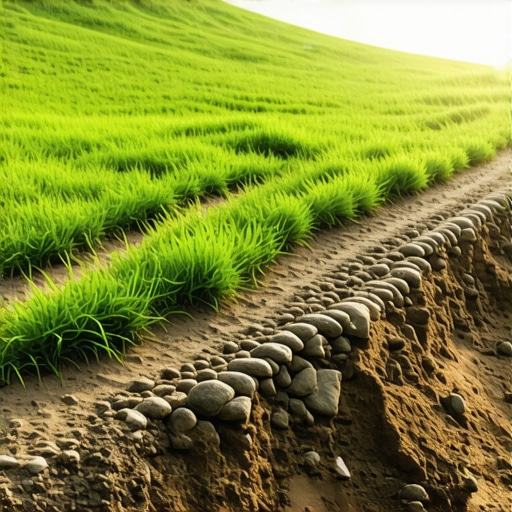
Building a functional swale for under $200 requires manual labor and strategic material sourcing, focusing on excavation depth and stabilization using native plantings or rip-rap stone. Start by calling 811. I have seen guys hit gas lines because they thought they were only digging six inches deep. Soil moves. Utilities settle. Call the number. Once clear, mark your path with marking paint. Avoid sharp 90-degree turns; water does not like to turn corners. It wants to go straight. Soft, sweeping curves prevent the water from jumping the bank of your swale during a heavy downpour.
The Step-by-Step Drainage Checklist
- Identify the termination point (a woods line, a street drain, or a rain garden).
- Use a transit level to mark the 1-2% grade across the entire run.
- Remove the sod layer using a manual or gas-powered sod cutter to preserve the topsoil.
- Excavate the parabolic channel, ensuring the center is the lowest point.
- Install non-woven geotextile fabric if you are using stone to prevent sediment contamination.
- Layer 3 inches of river rock or 4 inches of shredded hardwood mulch (though mulch may float).
- Plant deep-rooted native grasses on the banks to prevent bank failure.
“Soil compaction is the enemy of infiltration; a compacted yard is effectively an impervious surface like asphalt.” – Penn State Agricultural Extension
How do I know if my soil is too compacted?
If you can’t push a screwdriver six inches into the ground when the soil is moist, your bulk density is too high. This is common in new builds where heavy machinery has crushed the pore space in the soil. Before building your swale, you might need to core aerate the surrounding turf grass. If the soil is basically hardpan clay, your swale needs to be wider and shallower to allow for more surface area contact. This increases the evapotranspiration rate and helps the yard dry out faster after the rain stops. Never ignore the cation exchange capacity of your soil either; healthy soil with high organic matter will absorb significantly more water than the dead ‘dirt’ found in most suburban backyards.
The Critical Details: Plants and Maintenance
The biggest mistake I see with swales is planting the wrong species. You need ‘toe-in’ plants that can handle wet feet but also tolerate the dry spells in between. Think Carex (Sedges) or Juncus (Rushes). Their root systems act like biological rebar, holding the soil in place even when the water velocity hits 5 feet per second. Avoid invasive species or high-maintenance ornamentals that cannot handle the nitrogen loads often found in backyard runoff. After the first year, your maintenance should be minimal. Clear out fallen leaves and debris. If you see scouring (bare dirt where the water has ripped away the lining), you need larger rip-rap stone at that specific point of impact. It is a feedback loop. Listen to what the water is telling you. If it is jumping the bank, the swale is too shallow. If it is sitting and smelling, the grade is too flat. This is not garden design; this is hydro-logical management. Take it seriously, and your basement will stay dry for the next twenty years. Stick to the plan. Do not get distracted by the fancy plants at the big-box store. Soil, grade, and physics first. Always.
![Build a $100 2026 Pea Gravel Fire Pit [Weekend DIY]](https://lawnmajesty.com/wp-content/uploads/2026/05/Build-a-100-2026-Pea-Gravel-Fire-Pit-Weekend-DIY.jpeg)