Fix 2026 Lawn Grubs with This One Milky Spore Hack
The Forensic Autopsy of a Grub-Damaged Lawn
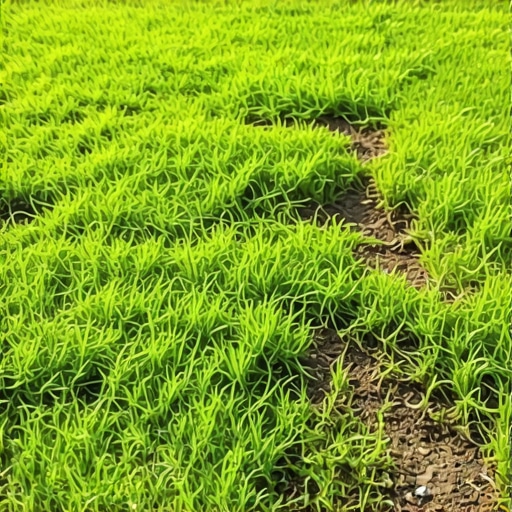
To identify 2026 lawn grubs, you must perform a **soil plug extraction** to measure **larval density**, looking for more than ten **C-shaped larvae** per square foot before applying **Milky Spore** (Paenibacillus popilliae) to ensure the bacterial colony has enough hosts to survive. Most homeowners see a brown patch and immediately dump 10-10-10 fertilizer on it, thinking they are helping. They aren’t. I recently walked onto a property where the owner had spent four thousand dollars on high-nitrogen synthetics trying to ‘outgrow’ what they thought was drought. In reality, they were feeding the grubs. The tender, nitrogen-flushed roots were like a buffet for the Japanese Beetle larvae. By the time I arrived, you could literally peel the turf back like a cheap piece of used carpet. There was no root structure left. The soil was a graveyard of wasted chemicals and salt-burn. I told him straight: you can’t fertilize your way out of a biological invasion. You have to engineer the soil to become a hostile environment for the pest, not a luxury resort. We had to strip the dead organic matter, recalibrate the pH from a stagnant 5.2 up to a 6.8, and start a three-year biological colonization process. It was an expensive lesson in ignoring soil biology for the sake of a quick green fix. You don’t just ‘fix’ a lawn; you manage an ecosystem.
The 2026 Outlook: Why Traditional Pesticides Are Failing
The 2026 season is showing increased resistance to standard neonicotinoids like imidacloprid due to improper application timing and decades of over-use in residential landscapes. Grubs are the larval stage of various beetles, primarily the Japanese Beetle, and they feed on the root tissue of your turf grass during two specific windows. If you miss those windows, you are just throwing money into the dirt. Most ‘mow-and-blow’ outfits will tell you to just spread some granules and call it a day. That is negligence. Effective pest management requires understanding the **instar stages** of the larvae.
“Milky spore disease is most effective when applied to large, contiguous areas of turf to prevent re-infestation from adjacent untreated properties.” – USDA Agricultural Research Service
This isn’t a one-and-done chemical kill. This is biological warfare. You are introducing a bacterium that specifically targets the gut of the beetle larvae. When the grub eats the spore, the bacteria multiply inside it, eventually killing the host and releasing billions of new spores back into the soil. It is a self-perpetuating cycle that can last for fifteen to twenty years if established correctly. If your soil is too acidic or too compacted, those spores will never colonize. They will just sit there, dormant and useless.
How do I know if I have grubs or just dry spots?
To differentiate between **grub damage** and **drought stress**, perform the **tug test** by grabbing a handful of grass and pulling upward: if the turf lifts away from the soil like a rug with no resistance, you have a **larval infestation** that has consumed the root system. Drought-stressed grass will stay firmly rooted but will be brittle and brown. If you see crows, skunks, or raccoons digging ‘V’ shaped divots in your yard, they are hunting for the protein-rich grubs. They are doing you a favor by identifying the hotspots, even if they are tearing up the grass in the process. Don’t trap the skunk; kill the grubs.
The Milky Spore Life Cycle: Paenibacillus popilliae Explained
The success of **Paenibacillus popilliae** depends on a concept called **horizontal transmission**, where the death of one infected grub leads to the infection of dozens more in the immediate area. This bacterium is highly specific. It won’t hurt your kids, your dogs, or the honeybees. But it is a slow burn. You won’t see results in forty-eight hours like you would with a neurotoxin like Dylox. It takes a full season for the spores to begin spreading and up to three years for the ‘milky’ infection to reach peak density in your soil profile.
“Effective biological control of Popillia japonica requires a minimum of 3 to 5 years for Paenibacillus popilliae to reach peak concentration in the soil profile.” – Cornell University Entomology
If you use a heavy insecticide at the same time you apply milky spore, you are sabotaging yourself. You need the grubs alive long enough to eat the spores and die naturally to spread the bacteria. If you kill all the grubs with chemicals, the milky spore has no host and the colony fails. You have to be patient enough to let the biology work.
The Core Aeration Hack for Immediate Spore Colonization
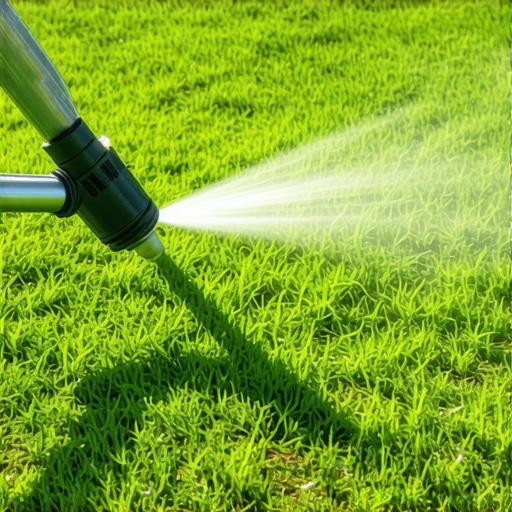
The ‘one hack’ that actually changes the game for 2026 is the **Core Aeration Injection Method**, which bypasses the **thatch layer** and places the **milky spore powder** directly into the **root zone** where larvae reside. Most instructions tell you to drop a teaspoon of powder every four feet in a grid. That works, eventually. But if you have a thick layer of thatch, those spores can get hung up and degraded by UV light before they ever hit the soil. Here is what we do on high-end installs: we run a heavy-duty core aerator over the lawn first, pulling 3-inch plugs. Then, we apply the milky spore. This ensures the powder falls directly into the holes, reaching the sub-surface immediately. We then follow up with a light top-dressing of composted leaf mulch. This protects the bacteria and provides the organic carbon needed for a healthy soil food web. It’s not just about the powder; it’s about the delivery system. If the tamper isn’t bouncing off the soil, you haven’t compacted your base enough for hardscapes, and if your aerator isn’t pulling deep cores, you aren’t getting your biologicals deep enough.
Engineering the Soil for Bacterial Success
Soil chemistry is the foundation of any successful **lawn care** program. If your pH is below 6.0, the bacterial activity in your soil slows down significantly. Bacteria prefer a slightly acidic to neutral environment. We use **calcitic lime** to bring the pH up because it reacts faster than standard dolomitic lime. Also, consider your drainage. If your yard stays ponded and anaerobic, the milky spore will rot and die. You need well-drained, aerobic soil. If you have heavy clay, you need to be aggressive with aeration and gypsum applications to break up those clay bonds. You are building a subterranean city for beneficial bacteria. Treat it like an engineering project. Measure your square footage, calculate your application rates, and check your soil moisture levels. The spores need moisture to move, but they don’t want to swim.
What is the best time of year to apply milky spore?
The optimal time for **milky spore application** is in **late summer or early fall** when the **soil temperature** is consistently between **60 and 70 degrees Fahrenheit**, as this coincides with the peak feeding activity of the **first-instar larvae**. Applying in the spring is less effective because the older, larger grubs are preparing to pupate and stop feeding, meaning they won’t ingest the spores. Timing is everything in horticulture.
Comparison of Grub Control Methods
| Method | Target Speed | Longevity | Environmental Impact |
|---|---|---|---|
| Dylox (Trichlorfon) | 24-48 Hours | 7-10 Days | High / Toxic to Aquatics |
| Merit (Imidacloprid) | 2-4 Weeks | 3-4 Months | Moderate / Bee Hazard |
| Milky Spore | 1-3 Years | 15-20 Years | Zero / Pollinator Safe |
| Beneficial Nematodes | 7-14 Days | 1 Season | Zero / Requires High Moisture |
The 2026 Homeowner’s Eradication Checklist
- Perform a soil test to confirm pH is between 6.5 and 7.0.
- Identify grub species and count density (minimum 10 per sq ft).
- Core aerate the lawn to a depth of at least 3 inches.
- Apply Milky Spore powder using the grid method or the ‘hack’ injection.
- Water the area for 15 minutes immediately after application to settle spores.
- Avoid using synthetic fungicides or high-salt fertilizers for 6 months.
- Monitor for beetle emergence in July to gauge future larval pressure.
Stop looking for a miracle in a bottle. Successful landscaping is the result of consistent, scientifically-backed habits. If you skip the soil prep, you are just throwing money at a problem that will return next year. Get the biology right, and the lawn will take care of itself. It’s that simple. Don’t be the person who calls me to rip out a dead lawn because they were too lazy to check their soil pH. Do the work now, or pay me to do it later. The choice is yours.
![Stop 2026 Lawn Patchiness with This $30 Seed Hack [Fix]](https://lawnmajesty.com/wp-content/uploads/2026/05/Stop-2026-Lawn-Patchiness-with-This-30-Seed-Hack-Fix.jpeg)