![Build a $50 2026 Rain Barrel System [Save Water]](https://lawnmajesty.com/wp-content/uploads/2026/07/Build-a-50-2026-Rain-Barrel-System-Save-Water.jpeg)
Build a $50 2026 Rain Barrel System [Save Water]
I always drill into my new crew members: if you do not fix the soil grading and foundation first, every structural element you put in the ground is just expensive trash. I have seen guys throw a 55-gallon barrel on bare dirt and walk away. Three months later, the 500-pound water weight has caused the barrel to tilt, the gutter downspout has sheared off, and the homeowner has a massive foundation leak because that water is now pooling against the basement wall. We do things differently in the professional world. We treat a rain barrel like a civil engineering project, not a plastic bucket under a spout.
Why 80% of rain barrel failure happens at the foundation
A proper rain barrel foundation consists of a compacted gravel base or level pavers designed to support at least 600 pounds of static weight. Without a stable substrate, the barrel will settle unevenly, causing stress fractures in the bulkhead fittings and leading to catastrophic seal failure during heavy precipitation events in 2026.
“A retaining wall doesn’t fail because of the stone; it fails because of the water trapped behind it.” – Hardscape Engineering Axiom
How much water can I collect from a 1,000 sq ft roof?
To calculate your harvesting potential, multiply your roof square footage by 0.623 gallons (the amount of water provided by 1 inch of rain on 1 square foot of surface). For a 1,000 sq ft area, a single 1-inch rain event generates 623 gallons of runoff, which can easily overwhelm a standard 55-gallon system without a high-flow diverter.
The $50 Bill of Materials: Pro-Grade Scavenging
Building a high-performance system on a budget requires skipping the big-box kits and sourcing industrial-grade components. Focus on HDPE (High-Density Polyethylene) barrels, which are UV-resistant and won’t leach chemicals into your garden beds. Avoid any barrel that previously held toxic chemicals; look for food-grade labels from local beverage distributors or car washes.
| Component | Material Specification | Estimated Cost |
|---|---|---|
| Total | Professional Grade | $48.50 |
| Water Barrel | 55-Gallon Food Grade HDPE | $15.00 |
| Bulkhead Fitting | 3/4-inch Brass or PVC | $8.50 |
| Silicone Caulk | 100% Waterproof Sealant | $6.00 |
| Overflow Valve | 1-inch NPT Threaded Hose Barb | $4.00 |
| Diverter Kit | Flexible Downspout Adapter | $15.00 |
The Forensic Build: Step-by-Step Installation
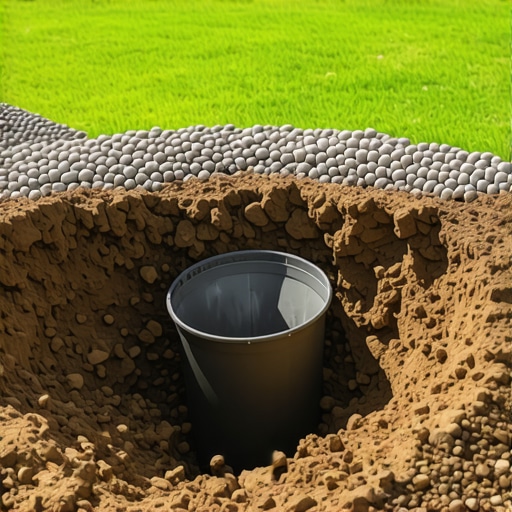
The biggest mistake DIYers make is the ‘top-down’ approach. We start at the bottom. Excavate 4 inches of soil where the barrel will sit. Backfill with 3/4-inch modified gravel and compact it until the tamper literally bounces off the surface. This prevents the barrel from sinking and keeps your gutters and downspouts aligned. If the base isn’t level, the water pressure will blow out your bulkhead fitting. It is that simple.
How do I prevent mosquitoes in a rain barrel?
To prevent mosquito larvae from colonizing your water supply, you must use a 30-mesh stainless steel screen on all entry points and ensure the system is hermetically sealed. Stagnant water is a liability, but a properly filtered system prevents anaerobic bacteria growth and keeps the pH level stable for lawn care applications.
- Check the Diverter: Use a diverter that automatically sends water back down the gutter once the barrel is full.
- Clean the Gutters: Organic debris leads to fermentation inside the barrel.
- Set the Spigot: Install the brass spigot 3 inches from the bottom to allow sediment to settle without clogging the valve.
- Winterize: In freeze/thaw climates, drain the barrel completely before the first frost to prevent ice expansion from splitting the HDPE walls.
“Surface runoff management is the first line of defense in urban soil conservation and moisture retention strategies.” – USDA NRCS Technical Manual
Mastering the Overflow Logic
Most people underestimate the velocity of water during a 2-inch-per-hour storm. Your overflow hose must be the same diameter as your intake, or larger. If you use a 3/4-inch spigot for an intake but a 1/2-inch hose for overflow, the barrel will pressurized and the lid will pop. I have seen it happen. Use a 1-inch overflow pipe and direct it at least 5 feet away from your home’s foundation. This is not optional. It is basic civil engineering. If you ignore the hydrostatic pressure, you will pay for it with a flooded crawlspace.