Why Your Retaining Wall is Bowing and How to Stabilize It
Why Your Retaining Wall is Bowing and How to Stabilize It
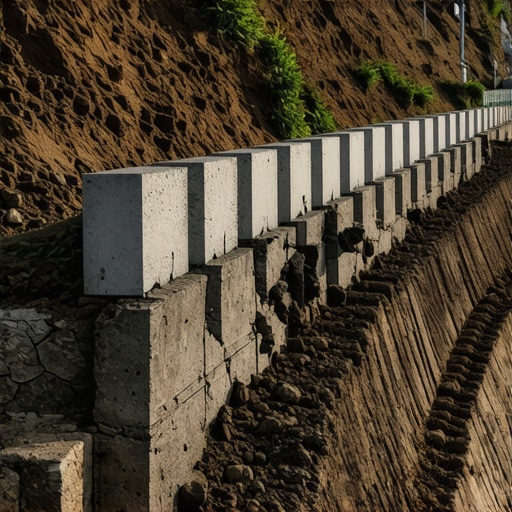
The sight of a stone or concrete wall developing a visible “belly” is enough to send a chill down the spine of any experienced hardscape foreman. This structural distortion, known as bowing, is the final warning shot before a total catastrophic failure occurs. When a wall begins to lean or bulge, it is not just a cosmetic issue; it is a sign that the fundamental laws of physics and civil engineering have been ignored. In the world of high-end landscaping, we don’t look at a wall as a decorative border. We look at it as a structural dam designed to hold back thousands of pounds of saturated earth and hydrostatic force. If your wall is bowing, it is losing a war against gravity and water.
The Anatomy of a Failure: A $30,000 Hardscape Autopsy
A retaining wall bows primarily because of hydrostatic pressure, where trapped water behind the wall increases the weight of the soil, exerting immense lateral force that exceeds the wall’s structural capacity. Without a 3/4 inch clean stone drainage zone and perforated pipe, the wall acts as a dam rather than a filter.
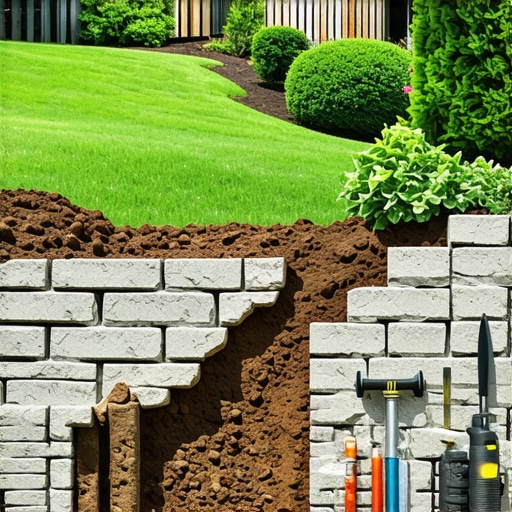
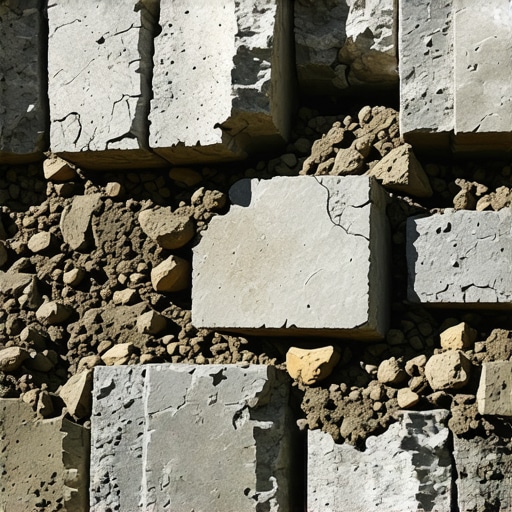
I recently got called out to tear up a $30,000 patio and tiered wall system that was sinking and bowing because the previous contractor decided to cut corners on the most critical element: the base and backfill. The homeowner showed me the original invoice. They paid for a premium job, but what they got was a ticking time bomb. The contractor had backfilled the wall with native clay soil rather than clean, angular stone. During a heavy spring rain, that clay turned into a heavy, hydraulic paste. Since there were no weep holes or French drains installed, the water had nowhere to go. It pushed against the blocks until the bottom courses began to kick out. The entire patio above it was literally sliding into the yard. I had to tell the homeowner that the only way to fix it was a total excavation. We had to start from the dirt up. This is the reality of “mow-and-blow” hacks playing at engineering. They don’t understand that a wall is only as strong as what you can’t see behind it.
“A retaining wall doesn’t fail because of the stone; it fails because of the water trapped behind it.” – Hardscape Engineering Axiom
How much hydrostatic pressure can a retaining wall handle?
The amount of pressure a wall can withstand depends entirely on its batter, or the degree to which it leans back into the slope, and its reinforcement. Standard segmental retaining walls (SRWs) are designed to handle specific load-bearing weights, but once water saturates the soil, the weight increases by over 60 pounds per cubic foot. If that water cannot escape through a drainage system, the pressure becomes exponential, eventually exceeding the shear strength of the blocks or the friction of the geogrid. You are essentially trying to hold back a lake made of mud.
The Science of Soil and Drainage Failures
To understand why your wall is bowing, we must analyze the soil types involved. In many regions, heavy red clay is the enemy of the hardscaper. Clay is non-porous and expansive. When it gets wet, it grows in volume. When it dries, it shrinks and cracks. This constant movement creates a “ratchet effect” on your wall. Every time the soil expands, it pushes the wall out a fraction of an inch. When the soil shrinks, it leaves a gap that fills with more debris or settling soil, preventing the wall from ever moving back into its original position. Over several seasons, this results in a noticeable bow.
| Material Type | Drainage Efficiency | Compaction Rating (Standard Proctor) | Recommended Use |
|---|---|---|---|
| 3/4″ Clean Stone (2B) | 95-100% | 95% | Backfill Drainage Zone |
| Modified 2A Gravel | 15-20% | 98% | Base Foundation Only |
| Native Clay Soil | 0-5% | Variable | Never use as backfill |
| Masonry Sand | 40% | 85% | Bedding layer only |
We also have to consider the “surcharge load.” This is any weight placed on top of the soil behind the wall. If you have a driveway, a swimming pool, or even a heavy shed within a distance from the wall equal to twice the wall’s height, you are adding massive amounts of pressure. If the original installer didn’t account for this by using geogrid (a high-tenacity polyester mesh) to tie the wall into the soil mass, the wall is doomed from day one. Geogrid creates a unified soil-and-block mass that uses its own weight to stay upright. Without it, you just have a stack of expensive rocks waiting to fall over.
Why is my retaining wall pulling away from the top?
When a wall tilts or pulls away from the top, it is usually a sign of inadequate base compaction or a failure of the cap stones to distribute weight. However, the most common culprit is “frost heave.” In colder climates, water in the soil freezes and expands upward and outward. If your wall’s base isn’t below the frost line or if the drainage stone isn’t deep enough, the ice will literally lift the wall out of the ground. It is a slow-motion disaster that repeats every winter. Don’t skip the deep base. It is the only thing that keeps the wall level when the ground turns to ice.
The Step-by-Step Remediation Process
Stabilizing a bowing wall is a surgical process. You cannot simply push it back. You must address the root cause, which is almost always the pressure behind it. Here is the professional protocol for stabilization:
- Excavate the Backfill: You must remove the soil behind the wall to a distance at least equal to the height of the wall. This relieves the pressure and allows you to inspect the back of the blocks.
- Check the Footing: Use a transit level to ensure the base hasn’t settled unevenly. If the footing is cracked or tilted, the entire section must be rebuilt.
- Install Drainage Infrastructure: Lay a 4-inch perforated PVC pipe (not the cheap corrugated stuff) at the bottom of the trench, sloped to daylight. Cover this with a geotextile fabric to prevent silt from clogging the system.
- Backfill with Clean Stone: Fill the void with 2B clean stone. This material does not compact into a solid mass; it allows water to fall straight down to the drain pipe.
- Implement Geogrid Reinforcement: For any wall over 3 feet, layers of geogrid should be placed between the block courses and extended back into the compacted soil.
- Re-establish the Batter: Ensure each course of block is set back slightly from the one below it. A wall that leans into the hill is significantly stronger than one that is perfectly vertical.
“Hydrostatic pressure is the silent killer of masonry. If you don’t give water a path of least resistance, it will create one through your mortar joints.” – ICPI Technical Manual
How much does it cost to fix a leaning retaining wall?
Repairing a wall typically costs 1.5 to 2 times more than the original installation. This is because you have the added labor of demolition, debris removal, and the careful extraction of salvageable materials. You are paying for the forensic work to find the failure and the engineering to ensure it never happens again. A typical remediation for a 20-foot long, 4-foot high wall can range from $4,000 to $8,000 depending on access and soil conditions. It is always cheaper to build it right the first time.
Final Inspection Protocols and Long-Term Stability
Once the wall is stabilized, your job isn’t over. You need to manage the biology and engineering of the surrounding landscape. Ensure your lawn care routine doesn’t include heavy irrigation right at the wall’s edge. Excessive water from sprinklers can overwhelm even a good drainage system. Furthermore, watch your garden design. Do not plant trees with aggressive, woody root systems near the wall. Roots can exert thousands of pounds of pressure as they grow, easily snapping concrete connectors and pushing blocks out of alignment.
Check your weep holes twice a year. If you see water trickling out after a storm, that is a good sign; the system is working. If the area behind the wall stays soggy for days, your drainage pipe might be crushed or clogged with silt. Address these issues immediately. A retaining wall is a living part of your property’s engineering. Treat it with the respect that a structure holding back tons of earth deserves. Don’t let a $500 drainage mistake lead to a $30,000 failure. Keep the water moving, keep the base solid, and keep the batter deep. That is how you build a wall that lasts a century.