Stop 2026 Mulch Washout on Hills with This Hack
The Forensic Reality of Hillside Erosion
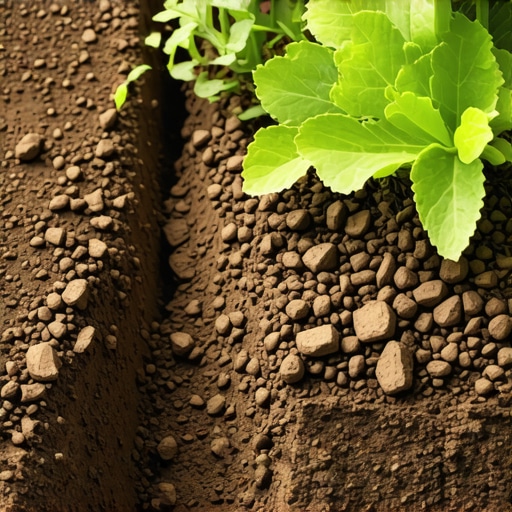
To stop mulch washout on hills, you must increase the coefficient of friction using shredded hardwood mulch instead of nuggets, implement mechanical stabilization like jute netting, and manage water velocity through terracing or subsurface drainage systems. Gravity is an absolute force. If you ignore it, your garden design is just a temporary arrangement of debris waiting for the next thunderstorm to relocate it to the street gutter. I have spent two decades fixing the mistakes of ‘mow-and-blow’ crews who think a thick layer of pine nuggets on a 30-degree slope is a solution. It is not. It is a disaster in waiting.
I recently got called out to tear up a $30,000 patio that was sinking because the previous contractor failed to account for the hydrostatic pressure coming off the uphill slope. The water was not just washing away the mulch; it was undermining the entire base-layer compaction of the hardscape. We had to excavate three feet down to install a proper drainage chimney. This is the same logic you must apply to your planting beds. If the water has enough velocity to move a three-inch piece of wood, your soil is already losing the battle. Real landscaping is about civil engineering, not just aesthetics. You have to respect the angle of repose of your materials. When the soil becomes saturated, its internal shear strength drops, and that is when you see entire hillsides move. Don’t be the homeowner who watches their investment slide into the neighbor’s yard.
“A retaining wall doesn’t fail because of the stone; it fails because of the water trapped behind it.” – Hardscape Engineering Axiom
The Physics of Mulch Stability and Surface Tension
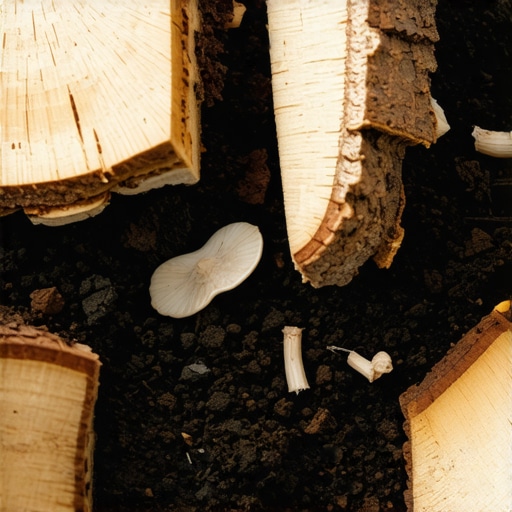
Mulch stability on a slope is determined by the interlocking capability of the fibers and the weight of the material when saturated. Most DIYers buy bags of cypress or pine bark nuggets because they look clean. On a hill, those nuggets act like tiny boats. They are buoyant. When the rain hits, they float and move. This is a failure of material science. Shredded hardwood, specifically ‘triple-shredded’ varieties, contains long, fibrous strands that physically ‘key’ into one another. They mat together. This creates a single, cohesive blanket that resists the shear stress of moving water. You are looking for high lignin content. Lignin is the organic polymer that gives wood its rigidity. As shredded mulch decomposes slightly, fungal hyphae—the root-like structures of fungi—begin to grow through the layer. These hyphae act as a biological glue, further anchoring the mulch to the soil surface. This is horticultural zooming: understanding that the microscopic growth of fungi is more effective at erosion control than a hundred plastic staples.
| Mulch Type | Slope Rating (Max Angle) | Erosion Resistance | Longevity |
|---|---|---|---|
| Pine Bark Nuggets | 5 Degrees | Very Low | High |
| Wood Chips | 15 Degrees | Moderate | Medium |
| Triple-Shredded Hardwood | 35 Degrees | High | Medium |
| Pine Needles (Straw) | 40 Degrees | Very High | Low |
The ‘Hack’ for 2026: The Jute and Trench Method
The secret to keeping mulch on a steep grade is a combination of contour trenching and biodegradable jute netting. First, you do not just spread mulch. You must ‘stair-step’ the slope. By digging shallow, 4-inch deep trenches along the contour of the hill, you create natural ‘speed bumps’ for water runoff. This breaks the velocity. If water cannot gain speed, it cannot move mass. Once your trenches are cut, you lay down a layer of natural jute mesh. This is not the plastic ‘weed barrier’ junk you find at big-box stores. Plastic is a slip-plane. It makes erosion worse. Jute is a rough, high-friction material that will eventually rot into the soil, adding organic matter. You staple the jute into the soil with 6-inch steel sod staples, then apply your shredded mulch directly over it. The mulch fibers get caught in the mesh of the jute. It will not move. It is a mechanical lock. For any slope steeper than a 3:1 ratio, this is the industry standard for professional land management.
How do I stop mulch from washing away in heavy rain?
To prevent mulch washout, use shredded hardwood mulch instead of bark, install jute netting for mechanical grip, and ensure your bed edges are trenched at least 4 to 6 inches deep to catch any shifting material before it leaves the bed. Most lawn care companies fail to create a proper ‘V-trench’ at the transition between turf and garden beds. Without that trench, the mulch has a clear path to wash onto the grass. The trench acts as a collection basin. It is a simple grade adjustment that saves hours of cleanup. Also, consider the impact energy of the rain. If your gutters are overflowing and dumping water directly onto a mulched bed, no amount of ‘hacks’ will help. You must redirect that water via a downspout extension or a French drain. High-velocity water will cut through mulch like a hot knife through butter. Solve the water source problem first.
How much modified gravel do I need for a patio base?
For a standard paver patio, you need a minimum of 4 to 6 inches of compacted 21A or 57 modified gravel, which equates to roughly 1 ton of gravel per 50 square feet at a 4-inch depth. Never use pea gravel or rounded stones for a base. They do not compact. They roll. You need angular, crushed stone that locks together under the pressure of a plate compactor. If you are building on a slope near your mulch beds, the base must be even thicker on the downhill side to prevent settling. We use a vibratory plate compactor to reach at least 95% Proctor density. If the tamper doesn’t literally bounce off the ground, it’s not compacted enough. Don’t skip this. A sinking patio is just an expensive pile of rocks.
“Soil pH and structure are the foundation of all plant health; ignoring them is building a house on sand.” – Penn State Agricultural Extension
- Call 811: Never dig your contour trenches without marking utility lines.
- Avoid Mulch Volcanoes: Never pile mulch against the trunk of a tree; it traps moisture and rots the bark.
- Check Soil pH: Hardwood mulch can slightly acidify soil as it breaks down; monitor your levels yearly.
- Deep Watering: After installing your ‘hack’, water the mulch deeply to help the fibers settle and mat together.
The ‘settling in’ period for a new hillside installation is roughly three heavy rain cycles. During this time, you must monitor the site for rilling—the formation of small channels in the mulch. If you see a rill, it means your water velocity is still too high in that specific spot. You may need to add a larger ‘rip-rap’ stone or a small boulder to break the flow. Landscaping is a game of inches. By year two, the root systems of your plants should be doing the heavy lifting of soil stabilization. Until then, your mechanical ‘hack’ is the only thing standing between your garden and the bottom of the hill. It will not rot overnight, and it will give your plants the time they need to establish a vascular anchor in the hillside. Stop buying cheap mulch. Start engineering your yard.
![Stop Killing Your 2026 Boxwoods: 3 Blight Fixes [Tested]](https://lawnmajesty.com/wp-content/uploads/2026/07/Stop-Killing-Your-2026-Boxwoods-3-Blight-Fixes-Tested.jpeg)
![Fix 2026 Yard Puddles with a $150 Dry Well [DIY]](https://lawnmajesty.com/wp-content/uploads/2026/06/Fix-2026-Yard-Puddles-with-a-150-Dry-Well-DIY.jpeg)