Why Your 2026 Strawberries Need Pine Needle Mulch
The Foundation of Fruit: Why Planning Starts Two Years Early
I always drill into my new crew members: if you don’t fix the soil grading and chemistry first, every plant you put in the ground is just expensive compost. In my 20 years of managing high-end residential estates, I have seen more money wasted on nursery stock than I care to admit, simply because the contractor or homeowner ignored the subterranean reality. When we talk about harvesting premium strawberries in 2026, we aren’t just talking about buying seeds next spring. We are talking about the long-game of soil conditioning, microbial health, and the strategic application of pine needle mulch. Most hacks will tell you to throw down some wood chips and call it a day. They are wrong. Wood chips consume nitrogen as they break down, starving your fruit. Pine needles, or pine straw, are the professional standard for a reason.
The Science of Pine Straw and Soil Chemistry
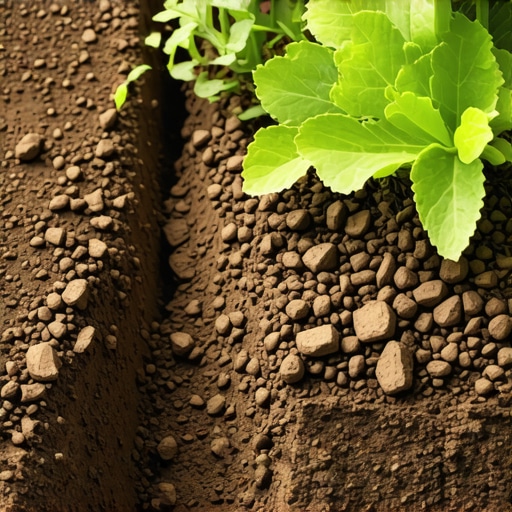
Pine needle mulch, specifically from longleaf pines, provides a stable, acidic micro-environment that is ideal for strawberry production while preventing soil-borne pathogens and maintaining a consistent soil moisture profile. It creates a lattice structure that allows for superior gas exchange at the root zone, ensuring that Fragaria × ananassa crowns do not succumb to crown rot during wet springs. [image_placeholder] This isn’t about aesthetics; it is about the physics of the soil and the biological requirements of the plant.
“A successful perennial bed is not built on the surface; it is built in the top 12 inches of the soil profile where the cation exchange capacity determines nutrient availability.” – Agronomy Manual of Standards
The Biological Advantage: Why Pine Needles Win
Strawberries are prone to a host of fungal issues, specifically Botrytis cinerea (gray mold). Traditional wheat straw often carries weed seeds and can become a sodden, matted mess that traps moisture against the fruit. Pine needles are different. Their shape allows them to interlock without compacting. This means air flows through the mulch. It stays dry. The fruit rests on a clean, airy bed rather than damp earth. Furthermore, as pine needles slowly decompose, they gently lower the pH of the soil. Strawberries thrive in a pH range of 5.5 to 6.8. If your soil is pushing 7.5 because of cheap limestone fill used by your builder, your berries will be stunted and chlorotic. Pine straw is your corrective measure. It is a slow-release acidifier that works with the biology of the plant, not against it.
| Pine Straw | Slightly Acidic | Slow | Very Low | Negligible |
| Wheat Straw | Neutral | Fast | High (Weeds) | Low |
| Wood Chips | Neutral | Very Slow | Medium | High |
| Black Plastic | None | N/A | High (Heat) | None |
Preparing the Site: Engineering and Grading
Before the first needle touches the ground, you must address the hydrostatic pressure and drainage patterns of your garden bed. Strawberries hate wet feet. If your garden design doesn’t account for a 1% to 2% slope away from the planting area, you are inviting Phytophthora root rot. We often use hardscaping elements like low-profile retaining walls or French drains to redirect surface runoff. This is where civil engineering meets horticulture. A well-constructed bed uses a modified gravel base if it’s a raised planter, ensuring that excess water exits the system immediately. You cannot fix bad drainage with mulch. You fix it with a shovel and a laser level.
“Effective moisture management in perennial crops requires a multifaceted approach, combining structural drainage with organic surface cover to minimize evaporative loss while preventing saturation.” – Penn State Agricultural Extension
How much pine mulch do I need for my garden?
For a standard strawberry bed, you should aim for a compressed depth of 2 to 3 inches of pine straw. This requires roughly one bale per 50 square feet. Do not mound it against the strawberry crown. The crown needs to breathe. If you bury it, the plant will rot. It’s a simple rule, but I see “professionals” get it wrong every season. You want to tuck the needles under the leaves, lifting the fruit off the soil surface. This prevents the “splash effect” where rain hits the dirt and bounces pathogens onto your berries. It is a mechanical barrier that saves your crop.
2026 Planting Checklist
- Test soil pH and adjust with elemental sulfur if above 7.0.
- Install hardscape borders to prevent grass encroachment.
- Ensure 811 / Dig Safe has marked all utilities before deep tilling.
- Source certified disease-free nursery stock, not big-box clearance plants.
- Apply 3 inches of clean longleaf pine straw in late autumn.
Does pine needle mulch attract pests?
Actually, the opposite is often true in a well-managed system. While some fear that pine straw attracts termites, studies show they prefer larger wood segments. For strawberries, the primary concern is slugs. Because pine straw stays drier on the surface than wheat straw or wood chips, it is less hospitable to slugs and snails. It is a sharper, more abrasive texture. It makes the environment difficult for soft-bodied pests to navigate. It won’t eliminate them entirely, but it is a significant deterrent compared to the soggy alternatives. It is a pragmatic choice for the serious grower.
The Maintenance Cycle: Year One and Beyond
In the first year of your 2026 plan, focus on root establishment. Pinch off any early blossoms. You want the plant’s energy going into the rhizome and root system, not fruit. By the time 2026 rolls around, those plants will be robust. Your pine straw will have started to break down into a rich humus layer, but you should top it off annually. This isn’t a “set it and forget it” situation. Gardening is a marathon. It requires constant observation. Check the soil moisture four inches down. If it’s dry, run your drip-line irrigation. Don’t use overhead sprinklers. That’s a rookie move that leads to leaf spot. Keep the water at the roots and the fruit on the straw. That is how you win.
![Stop Leaf Spot from Killing Your 2026 Roses [Fast Fix]](https://lawnmajesty.com/wp-content/uploads/2026/05/Stop-Leaf-Spot-from-Killing-Your-2026-Roses-Fast-Fix.jpeg)