Build a $50 2026 Cold Frame for Early Spring
The Fundamentals of 2026 Cold Frame Engineering
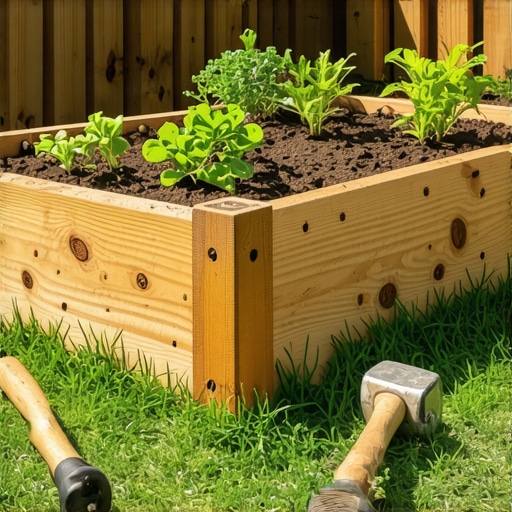
To build a $50 cold frame for the 2026 season, you must use untreated cedar or heat-treated pallets combined with salvaged tempered glass or double-walled polycarbonate. This structure acts as a passive solar collector, raising soil temperatures by 10 to 15 degrees Fahrenheit to jumpstart hardy greens and brassicas before the frost breaks. I always drill into my new crew members: if you don’t fix the soil grading first, every plant you put in the ground is just expensive compost. The same logic applies to cold frames. If you set your frame on a low spot where water pools, you aren’t building a season extender; you’re building a coffin for your seedlings. Roots need oxygen as much as they need warmth. Most homeowners think they can just slap a window over some dirt and call it a day. That is how you end up with damping off and fungal gnats. A professional build requires attention to the thermodynamics of the soil and the structural integrity of the box. We are looking at a system that manages solar gain, heat retention, and ventilation. Don’t skip the basics.
“A cold frame is essentially a bottomless box with a transparent lid that acts as a miniature greenhouse, protecting plants from wind and cold while trapping solar radiation.” – Penn State Extension Horticulture Manual
Sourcing Materials on a $50 Budget
Maximizing a $50 budget for a 2026 garden project requires scavenging high-quality lumber and focusing expenditures on durable hardware and specialized glazing. Avoid the big-box store pine; it will rot in two seasons when in contact with moist soil. Instead, look for discarded cedar fencing or HT-stamped pallets. The ‘HT’ stands for heat-treated, meaning it was not soaked in toxic chemicals like methyl bromide. You want your food growing in clean wood. For the lid, also known as the ‘light,’ a salvaged storm window is the gold standard for weight and thermal mass. If you use plastic film, you lose heat too fast. Check local reuse centers or architectural salvage yards. Spend your actual cash on stainless steel screws and heavy-duty galvanized hinges. Cheap hardware rusts out after one winter of humidity. IMAGE_PLACEHOLDER
How much modified gravel do I need for a patio base?
While this project focuses on cold frames, if you are integrating this into a larger hardscape design, you need a 4 to 6-inch base of compacted modified gravel (2A or CR617) to prevent frost heave. This prevents the frame from shifting or the glass from cracking during the freeze-thaw cycles of early spring.
Thermal Dynamics and Site Selection
The success of your early spring garden depends on placing the cold frame in a south-facing location that receives at least six hours of direct winter sunlight. You are looking for a microclimate. Ideally, place the frame against a brick wall or a dark-colored foundation. These surfaces act as a thermal battery, absorbing heat during the day and radiating it back into the frame at night. If you live in a region with heavy clay, like the red clay found in parts of the South, you must excavate the footprint and backfill with well-draining loamy soil mixed with coarse sand. Standing water in a cold frame will kill your 2026 harvest faster than a hard freeze.
“Proper ventilation is the most critical factor in cold frame management; internal temperatures can exceed 85°F even when outside air is near freezing, leading to plant desiccation.” – Texas A&M Agrilife Extension
The 2026 Build Process: Step-by-Step
The construction process for a durable cold frame involves precise geometry and slope calculations to ensure maximum solar angle and efficient water runoff. You want the back of the box to be roughly 12 to 18 inches high, sloping down to a front height of 8 to 12 inches. This angled profile allows rain to shed away from the hinges and aligns the glass lid with the lower arc of the early spring sun. Use a speed square to ensure your cuts are true. If the box isn’t square, the lid won’t seal, and you will lose all your hard-earned BTUs to the wind. | Material Type | Estimated Cost | Projected Lifespan | Thermal Efficiency | | :— | :— | :— | :— | | Salvaged Storm Window | $5 – $15 | 5-10 Years | High | | HT Pallet Wood | $0 | 2-3 Years | Moderate | | Cedar Planks (New) | $40 | 10+ Years | High | | 6-mil Polyethylene | $10 | 1 Year | Low |
What is the best soil for a cold frame?
The best soil for a 2026 cold frame is a 70/30 mix of compost and sandy loam that has been tested for a pH between 6.2 and 6.8. You must avoid heavy garden soils that compact easily; instead, use screened organic matter to ensure the pore space remains open for root respiration.
Critical Maintenance and Ventilation Protocols
Managing a cold frame is a daily commitment to monitoring internal temperatures and adjusting ventilation gaps to prevent heat stress. You cannot just leave it closed. On a sunny 40-degree day, the interior can easily hit 90 degrees. That will cook your spinach. I recommend using a simple wooden prop-stick to crack the lid open by 2 inches in the morning once the sun hits the glass. Close it by 4:00 PM to trap the remaining heat for the night. Checklist for 2026 Cold Frame Success:
- Verify south-facing orientation for maximum solar gain.
- Check soil moisture every 48 hours; cold frames dry out faster than the open ground.
- Install a thermometer inside the frame to monitor PSI and temperature spikes.
- Seal all gaps with weatherstripping to prevent heat loss.
- Use black-painted gallon jugs of water inside the frame to increase thermal mass.
Engineering the Base Layer
Proper drainage engineering is the difference between a thriving garden and a muddy mess. If your site has poor percolation, you need to dig out 6 inches and install a layer of pea gravel before adding your growing medium. This acts as a sump for excess water. Remember, cold soil is dormant soil. By elevating your planting bed and protecting it with glass, you are essentially hacking the USDA hardiness zones, allowing you to grow Zone 7 crops in a Zone 5 environment. It is about biology and physics, not luck. Don’t be a hack; do the site prep. It will pay off in March when you are eating fresh salad while your neighbors are still looking at snow.