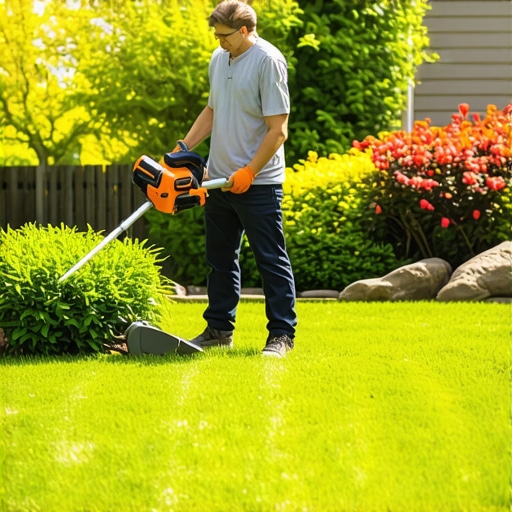
Stop 2026 Lawn Mower Scalping on Steep Hills
The Anatomy of a Ruined Slope: Why Your Hill Looks Like a Battlefield
Lawn mower scalping on steep hills happens when the rigid deck of a mower fails to navigate the change in terrain angle, forcing the blades to slice through the crown of the grass and into the soil. This mechanical injury destroys the plant’s apical meristem, leading to immediate brown patches, soil erosion, and an open invitation for opportunistic weeds like crabgrass and nutsedge to seize the territory. If you are seeing jagged brown gashes on your slopes every Saturday, your equipment and your grade are in a state of kinetic conflict.
I always drill into my new crew members: if you don’t fix the soil grading first, every plant you put in the ground is just expensive compost. I remember a job in ’14 where a client had spent six figures on garden design but ignored the 35-degree pitch of his north-facing lawn. He was using a standard zero-turn mower that was literally shaving the hill bald every two weeks. We didn’t just reseed; we had to re-engineer the entire physics of the slope. Turfgrass is a living biological carpet, not a plastic rug. When you scalp it, you aren’t just cutting it short; you are performing an accidental hardscaping excavation with a spinning blade at 3,000 RPM. It will rot. It will fail. You have to understand the relationship between the wheelbase and the blade arc.
How do I stop my mower from scalping the hill?
To prevent lawn mower scalping, you must increase the height of the cut to at least 3.5 or 4 inches, use a mower with a smaller deck width, or transition the area into a landscaping bed with groundcover. A 60-inch deck is a disaster on a steep incline because the outer edges of the deck will naturally dip into the soil as the machine crests a ridge. Smaller decks, like those found on 21-inch walk-behind mowers, follow the contour of the land with much higher precision. However, if the grade exceeds 25 degrees, turfgrass shouldn’t even be the goal. That is where we move into hardscaping territory.
“A retaining wall doesn’t fail because of the stone; it fails because of the water trapped behind it.” – Hardscape Engineering Axiom
The Science of Slope Failure: Soil Compaction and Turf Physiology
When you scalp a hill, you expose the soil microbiology to direct UV radiation. This cooks the beneficial bacteria and fungi that facilitate the nitrogen cycle. On a slope, your soil is already fighting gravity. Every time those blades hit the dirt, they loosen the top 0.5 inches of the soil profile. The next rainstorm washes that high-quality topsoil into the storm drain. You are left with heavy clay or shale that won’t grow anything but moss. We look at bulk density. A healthy lawn has a bulk density that allows for oxygen exchange. A scalped, compacted hill is basically a brick. Roots can’t penetrate. They grow horizontally, which makes them even easier to scalp. It’s a death spiral for your lawn care routine.
| Slope Angle (Degrees) | Recommended Mower Type | Risk of Scalping | Suggested Solution |
|---|---|---|---|
| 0 – 15 | Zero-Turn / Riding Mower | Low | Standard Maintenance |
| 15 – 25 | Walk-Behind / Robotic | Medium | Increase Cut Height to 4″ |
| 25 – 35 | String Trimmer Only | High | Groundcover / Terracing |
| 35+ | None (Dangerous) | Extreme | Hardscape Retaining Walls |
What is the best grass for steep hills that prevents erosion?
The best grass for landscaping on steep hills is Fine Fescue or Creeping Red Fescue because of their high drought tolerance and ability to thrive at higher mowing heights. These species have a lower vertical growth rate than Kentucky Bluegrass, meaning they don’t require the frequent, aggressive mowing that leads to scalping. Fine fescues also develop a deep, fibrous root system that acts like biological rebar, pinning the soil in place. If you are struggling with a hill in 2026, stop trying to make it look like a golf course fairway. Golf courses use 7-gang reel mowers with articulated heads. You have a fixed-deck tractor. Adjust your expectations or adjust your garden design.
Engineering the Fix: Hardscaping and Terracing Logic
If the hill is unmanageable, you stop being a mower and start being an engineer. We use retaining walls to break the vertical drop into manageable horizontal planes. This is where hardscaping saves your sanity. By installing a series of low walls—perhaps 18 to 24 inches high—you create flat tiers. These tiers can then be planted with native shrubs or perennials that require zero mowing. When we build these, we use a modified 2A gravel base compacted to 95% Proctor density. We don’t just stack stones. We manage hydrostatic pressure. We use perforated 4-inch SDR-35 pipe behind the wall, wrapped in a geotextile fabric. If you don’t manage the water, the water will manage your wall. It will heave. It will collapse.
“Soil stability on a slope is a function of shear strength and the root-to-soil interface ratio.” – USDA Soil Mechanics Manual
- Check the Deck Level: Before every season, ensure your mower deck is perfectly level on a flat concrete surface. A 0.5-inch tilt results in a catastrophic scalp on a hill.
- Optimize NPK Ratios: Use a slow-release nitrogen fertilizer (e.g., 24-0-12) to encourage root depth rather than top-growth surges.
- Core Aeration: Perform core aeration in the fall to alleviate the compaction caused by mower tires sliding on the incline.
- Blade Sharpness: Dull blades tear the grass. Tattered grass dies faster when cut short. Keep them razor-sharp.
- The 1/3 Rule: Never remove more than one-third of the grass blade in a single pass. If the hill is overgrown, take multiple passes over several days.
How much modified gravel do I need for a patio base on a slope?
For a stable hardscaping install on a slope, you need a minimum of 6 inches of compacted modified gravel (2A or similar) for the base, plus another 1 inch of bedding sand. On a slope, you must also account for the “toe” of the wall. This means burying the first course of block entirely to prevent the base from kicking out under the weight of the hill. Total gravel volume is calculated by multiplying the square footage of the base by the depth in feet (e.g., 0.5 ft), then dividing by 27 to get cubic yards. Do not skip the tamper. If the tamper doesn’t literally bounce off the base, it’s not compacted enough. It will settle. You will have a $40,000 pile of rubble in three years if you get lazy with the plate compactor.
The Long-Term Maintenance Protocol
In the world of professional landscaping, we don’t just fix a problem once. We set up a system. For a slope, that means deep, infrequent watering. You want to force those roots to chase the moisture down 6 or 8 inches into the soil profile. Light, daily sprinkling keeps the roots at the surface—right where your mower blades can destroy them. Aim for 1 inch of water per week, delivered in one or two heavy soakings. If you see runoff, stop. Wait 20 minutes, then continue. This is “cycle and soak” irrigation. It’s the difference between a resilient hill and a brown, dusty mess. Don’t be the guy who buys a $5,000 mower but won’t spend $20 on a soil test. Check your pH. If you’re below 6.0, your grass can’t even

![Stop 2026 Slut Seeding Mistakes [Better Germination]](https://lawnmajesty.com/wp-content/uploads/2026/07/Stop-2026-Slut-Seeding-Mistakes-Better-Germination.jpeg)