5 2026 Best Plants for Windy Coastal Backyards
Why Coastal Planting Fails Before You Ever Dig a Hole
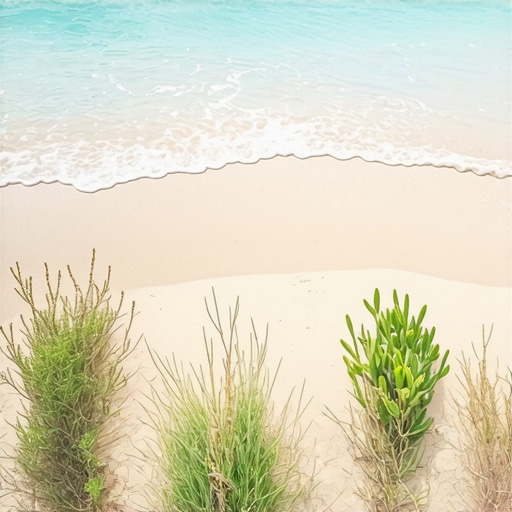
Coastal landscaping success in 2026 depends on understanding osmotic stress and mechanical wind load rather than just aesthetic appeal. To survive, plants must possess high cuticular wax or pubescent leaves that trap moisture and shield the plant from aerosol salt spray that causes leaf scorch. I always drill into my new crew members: if you don’t fix the soil grading first, every plant you put in the ground is just expensive compost. I have seen too many rookies slap a $200 Japanese Maple into a sandy dune and wonder why it looks like a burnt matchstick 48 hours later. Wind doesn’t just blow; it dehydrates. It rips the moisture right out of the stomata faster than the root system can pull it from the ground. If your soil doesn’t have the cation exchange capacity to hold water and nutrients against the pull of gravity in sandy coastal soils, your garden is doomed. We are looking at 2026 trends focusing on halophytic resilience and structural integrity. [image_placeholder]
“Salt spray is the primary limiting factor for vegetation in coastal zones, causing physical abrasion and osmotic stress.” – NC State Horticultural Extension
How do I stop salt spray from killing my plants?
The most effective method involves creating a staggered windbreak using salt-tolerant shrubs that filter air rather than blocking it entirely. This reduces the velocity of the wind without creating the turbulent eddies that occur when wind hits a solid wall or fence. Use gypsum applications to help displace sodium from the soil profile and improve drainage in areas where salt crusting occurs. Don’t skip the 811 call even in sandy soil. Utilities are often shallower than you think in coastal zones.
The Best Plants for 2026 Coastal Backyard Resilience
The best plants for 2026 windy coastal backyards are Muhlenbergia capillaris, Morella pensylvanica, Rosa rugosa, Armeria maritima, and Juniperus conferta because of their tensile strength and salinity tolerance. These species have evolved to thrive in nutrient-poor sandy loam and can withstand 50 mph gusts without suffering vascular failure. Below is a breakdown of their structural performance metrics.
| Plant Species | Salt Tolerance | Wind Resistance | Soil Requirement |
|---|---|---|---|
| Muhly Grass | High | Extreme | Well-drained sand |
| Bayberry | High | High | Acidic to Neutral |
| Rugosa Rose | Moderate-High | High | Sandy Loam |
| Sea Thrift | High | Moderate | Gritty/Rocky |
| Shore Juniper | Extreme | Extreme | Adaptive Sand |
1. Muhly Grass (Muhlenbergia capillaris)
This isn’t your standard turf. Muhly grass is a clumping graminoid that uses its fine-textured foliage to diffuse wind energy. The tensile strength of the blades allows them to bend without breaking, a process known as elastic deformation. In late 2025 and into 2026, we are seeing a shift toward mass plantings of these grasses because they provide a biological buffer for more sensitive inland species. They require almost zero supplemental nitrogen. High nitrogen levels actually make them floppy and weak. Keep it lean.
2. Northern Bayberry (Morella pensylvanica)
Bayberry is a powerhouse because of its actinorhizal nodules which allow it to fix its own nitrogen. In the sterile, leached sands of a coastal backyard, this is a massive engineering advantage. The leaves are covered in a resinous wax that makes them nearly impervious to salt burn. If you are building a privacy screen, this is your primary tool. It doesn’t just sit there; it improves the soil for everything around it. Plant them 4 feet on center for a dense hedge.
3. Rugosa Rose (Rosa rugosa)
Forget the high-maintenance tea roses you see in the suburbs. The Rugosa is a beast. Its leathery, rugose (wrinkled) leaves are designed to withstand the abrasive force of wind-blown sand. Its deep taproot system anchors it against high-velocity coastal gales. It also provides a scabrous barrier that can prevent erosion on sloped backyards. It thrives in pH levels as low as 5.5, which is common in many maritime forests.
4. Sea Thrift (Armeria maritima)
For the ground-level layers, Sea Thrift is essential. It grows in low-profile mounds that hug the earth, staying below the worst of the wind shear. It is a obligate halophyte, meaning it can actually process higher levels of salt than 95 percent of other garden plants. It is perfect for hardscape crevices or between pavers where salt spray tends to accumulate. It avoids the crown rot that kills most perennials in humid coastal nights.
5. Shore Juniper (Juniperus conferta)
This is the ultimate coastal ground cover. It grows as a prostrate shrub, forming a thick, needle-laden mat that prevents wind from scouring the topsoil away. The Blue Pacific cultivar is especially popular for 2026 designs due to its heat tolerance and xeric capabilities. It acts as a living mulch, keeping the root zones of taller plants cool. It is practically bulletproof once established. Use a 2-inch layer of shredded cedar mulch around it during the first year to prevent desiccation.
The Coastal Engineering Checkpoint
Success in a coastal environment is 80 percent preparation and 20 percent planting. You must evaluate the hydrostatic pressure and drainage patterns of your site before any materials arrive. Coastal soils are often deceptive. They look well-draining, but a high water table or a clay lens beneath the sand can cause anaerobic soil conditions that rot roots in days. I tell my crews: the tamper should literally bounce off the compacted base before we even think about setting a stone or a tree. Compaction is the enemy of roots but the friend of stability. You need to balance the two with structural soil mixes. [image_placeholder]
“A retaining wall doesn’t fail because of the stone; it fails because of the water trapped behind it.” – Hardscape Engineering Axiom
What is the best windbreak for a beachfront property?
A living windbreak is superior to a fence because it creates a porous barrier. A solid fence creates low-pressure zones on the leeward side, which actually pulls wind downward in a damaging vortex. A planting of staggered Bayberry and Muhly Grass allows air to pass through at a reduced speed, protecting the garden without the risk of structural fence failure. This is aerodynamic gardening.
Critical Maintenance Checklist for Coastal Yards
- Daily Rinse: During high-wind events, lightly mist your foliage with fresh water to dissolve salt crystals before they burn the leaf tissue.
- Deep Core Aeration: Perform this annually to prevent salt crusting and to ensure oxygen reaches the rhizosphere.
- Avoid Surface Watering: Use drip irrigation buried 3 inches deep to force roots to chase moisture downward, creating a more wind-stable plant.
- No Mulch Volcanoes: Never pile mulch against the root flare of your trees. It traps moisture against the bark and invites fungal pathogens.
- Soil Testing: Test for sodium adsorption ratio (SAR) every spring. If it is high, apply elemental sulfur or gypsum to rebalance the soil chemistry.
The internet tells you to water every day, but turf grass and coastal plants actually need deep, infrequent watering, exactly 1 inch per week, to force roots to chase the water down. If you keep the surface wet, the roots stay shallow. Shallow roots in a windstorm mean your plants will end up in your neighbor’s yard. It is that simple. Don’t be a hack. Do the work. Build from the soil up. “,”image”:{“imagePrompt”:”A professional high-end coastal backyard landscape featuring Muhly Grass, Bayberry shrubs, and Shore Juniper under a clear sky with visible wind-blown textures on the plants, 8k resolution, documentary style.”,”imageTitle”:”Resilient Coastal Garden Design 2026″,”imageAlt”:”A landscape showing wind-resistant plants like Muhly grass and Bayberry in a coastal setting.”},”categoryId”:0,”postTime”:””}
![5 Drought-Tolerant Shrubs for 2026 Privacy Hedges [Zone 6]](https://lawnmajesty.com/wp-content/uploads/2026/07/5-Drought-Tolerant-Shrubs-for-2026-Privacy-Hedges-Zone-6.jpeg)