5 2026 Best Trees for Fast Privacy in Small Yards
The Blueprint for Small-Space Privacy Screening
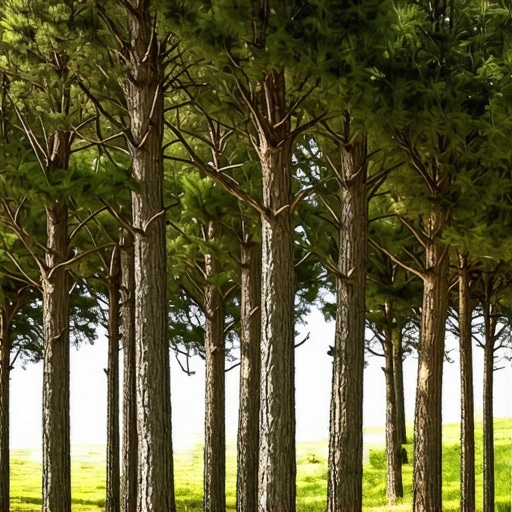
The best 2026 privacy trees for small yards include Taylor Juniper, Green Giant Arborvitae, Degroot’s Spire, Sky Rocket Juniper, and European Hornbeam. These species provide vertical growth, compact root systems, and dense foliage without encroaching on limited square footage or structural foundations. Selecting these varieties ensures a functional screen that respects property lines and drainage patterns. Success starts at the planning phase. Most homeowners buy a tree because it looks good at the nursery without calculating the mature spread or the root biology. I always drill into my new crew members: if you don’t fix the soil grading first, every plant you put in the ground is just expensive compost. You have to understand that a tree is a biological machine. It needs specific oxygen levels in the soil and a moisture profile that does not lead to root rot. If you bury that root flare even two inches too deep, you are setting a timer on the life of that tree. I have seen million dollar landscapes fail because someone thought more mulch meant more love. It does not. It creates a moisture trap that invites fungal pathogens and girdling roots.
“Proper tree planting and establishment are the most critical factors in the long-term health and structural integrity of urban canopies.” – ANSI A300 (Part 6) Management Standards
Soil Mechanics and Site Preparation
Proper **site preparation** for **small yard privacy trees** requires a minimum **soil compaction test** and **pH analysis** to ensure the **root zone** can support **nutrient uptake**. Use a penetrometer to check for hardpan layers that might obstruct vertical root development or cause lateral drainage failure. We do not just dig a hole. We engineer a growth environment. You need to know your soil type. If you are working with heavy clay, your biggest enemy is the ‘bathtub effect’ where water sits in the planting hole and drowns the roots. You need to check for hydrostatic pressure issues if you have a retaining wall nearby. Water must move through the soil, not sit in it. We aim for a pH between 6.0 and 7.0 for most of these evergreen varieties. If your soil is too alkaline, your trees will show chlorosis, which is just a fancy way of saying they are starving for iron because the soil chemistry is locked tight.
How much space do I need between privacy trees?
For most columnar varieties, you should space trees 3 to 5 feet apart on center, depending on the mature width of the specific cultivar. Planting too close leads to foliage browning and pest outbreaks due to poor airflow. Space is not just about the branches; it is about the root competition. If you jam five trees into a space meant for three, they will fight for nitrogen and water. The weaker ones will die, and the survivors will be stunted. We use a staggered planting pattern in larger lots, but in small yards, a single straight line is often the only option. In those cases, you must be surgical with your measurements. Measure twice, dig once. Don’t eyeball it. Use a transit or a string line to keep that screen professional. It makes a difference when the trees reach ten feet tall.
The 2026 Selection: Top 5 Trees for Tight Spaces
The selection of **privacy trees** for 2026 focuses on **columnar cultivars** with **high disease resistance** and **low maintenance requirements** for **urban micro-climates**. These trees are chosen for their narrow footprint and fast growth rates without the invasive habit of Leyland Cypress. Here is the technical breakdown of the best performers for the upcoming season.
| Tree Variety | Mature Width | Growth Rate | Soil Preference |
|---|---|---|---|
| Taylor Juniper | 3 feet | Fast | Well-drained/Rocky |
| Green Giant (Limited) | 5-8 feet | Aggressive | Adaptable/Loam |
| Degroot’s Spire | 2 feet | Moderate | Moist/Well-drained |
| Sky Rocket Juniper | 2-3 feet | Fast | Dry/Alkaline |
| European Hornbeam | 4-6 feet | Moderate | Heavy Clay/Loam |
The Taylor Juniper is a beast for narrow spaces. It looks like an Italian Cypress but can actually handle a cold winter without snapping like a twig. The European Hornbeam is the choice for people who want a formal look. You can pleach them, which is essentially growing a hedge on stilts. This allows you to have privacy above the fence line while keeping the ground level open for hardscaping or lower plantings. It is engineering with wood. Don’t buy the generic stuff from the big-box stores. Those plants have been sitting on hot asphalt for weeks and their roots are likely circling the pot. Go to a reputable nursery. You want to see healthy white root tips, not brown mush.
“Deep, infrequent watering cycles are required to force root systems to penetrate lower soil strata, ensuring long-term drought tolerance and stability.” – Texas A&M Agrilife Extension
What is the fastest growing privacy tree for a small yard?
The Green Giant Arborvitae remains the fastest growing option, capable of 3 feet of growth per year, though it requires heavy pruning to maintain a narrow profile in small landscapes. For tighter spots, the Taylor Juniper is the superior choice. If you want speed, you have to pay for it with maintenance. A fast-growing tree does not know when to stop. If you do not have the stomach for annual pruning, avoid the Green Giant. It will swallow a small yard in five years if left to its own devices. I prefer the Degroot’s Spire for the average city lot. It is slow and steady, but it stays tight and maintains a beautiful, twisted foliage texture that looks like a piece of art.
Installation and Long-Term Care Protocol
The **installation process** for **privacy trees** must prioritize **root flare visibility** and **proper hydration** to prevent **transplant shock** and **vascular failure**. Follow this rigorous checklist to ensure your investment survives the first critical year.
- Excavate the planting hole to twice the width of the root ball but no deeper than the root ball itself.
- Remove all twine, burlap, and wire cages from at least the top half of the root ball once positioned.
- Identify the root flare (the point where the trunk widens at the base) and ensure it is level with or slightly above the finished grade.
- Backfill with native soil unless the soil is strictly construction debris; do not over-amend with peat moss.
- Apply a 2-3 inch layer of aged wood mulch, keeping it at least 4 inches away from the trunk bark.
- Install a drip irrigation line or a soaker hose to deliver water directly to the root zone.
Watering is the part where most people fail. They spray the needles for five minutes and think they are done. That does nothing. You need to deliver at least one inch of water per week, delivered slowly. We use five-gallon buckets with small holes drilled in the bottom for new installs. Fill the bucket, let it drain over an hour. That forces the water down. It makes the roots chase the moisture deep into the earth. If you just wet the surface, the roots stay shallow. Then, the first time a heat wave hits, those shallow roots cook in the soil, and your expensive privacy screen turns into expensive firewood. Don’t be that guy. Do the work. Monitor the soil moisture with your finger, not an app. If the soil is cool and damp two inches down, you are good. If it is dry and dusty, you are failing your trees.