Stop 2026 Grass Spreading into Flower Bed Soil
The Structural Engineering of a Grass-Proof Border
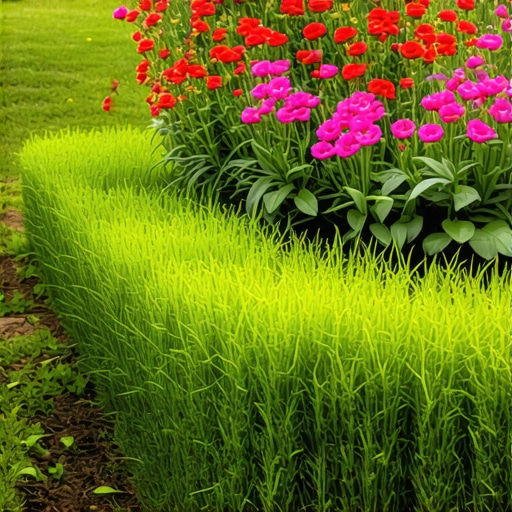
To stop grass from spreading into flower beds in 2026, you must install a physical vertical barrier or a mechanical edge trench at least 4 inches deep. This interrupts the horizontal growth of rhizomes and stolons, preventing invasive turfgrass species from migrating into nutrient-rich garden soil and competing with ornamental plantings.
I always drill into my new crew members: if you don’t fix the soil grading and establish a hard boundary first, every plant you put in the ground is just expensive compost. I have seen million-dollar estates where the owners spent a fortune on rare perennials, only to have the Kentucky Bluegrass reclaim the entire bed within two seasons. It is not about how much mulch you throw at the problem. It is about understanding the biological warfare happening at the root level. Grass is an aggressive colonizer. If you give it a path of least resistance, it will take it every single time. We do not do ‘pretty’ fixes; we do engineered solutions that respect the physics of soil and the biology of turf.
The Biological Reality of Rhizomes and Stolons
Understanding the enemy is the first step in successful lawn care. Most homeowners think grass grows from seeds alone. That is a dangerous misconception. Species like Kentucky Bluegrass and Bermuda grass utilize rhizomes (underground stems) and stolons (above-ground runners) to expand their territory. A single rhizome can travel several inches beneath the surface before popping up a new shoot. If your flower bed border is only an inch deep, you are essentially inviting the lawn to dinner. You need a barrier that exceeds the standard root depth of these species. For most cool-season grasses, that means a minimum of 4 inches of vertical separation. Warm-season grasses, which are more aggressive, may require 6 inches or more to truly stop the spread.
“A vertical barrier must extend at least 4 inches below the soil surface to intercept the majority of turfgrass rhizomes.” – University of Minnesota Extension
How deep should garden edging be to stop grass?
For permanent grass suppression, a garden edge must reach 4 to 6 inches deep to block rhizome migration effectively. While shallow 2-inch plastic edging is common in big-box stores, it is functionally useless against aggressive turf species that easily dive under the barrier to reach the loose, fertilized soil of your flower beds.
Material Science: Choosing the Right Barrier
Not all edging materials are created equal. You need something with high structural integrity that can withstand frost heave and the impact of string trimmers. We focus on 14-gauge steel, heavy-duty aluminum, or deep-cut masonry. Avoid the thin, corrugated plastic rolls. They are flimsy, they crack in the sun, and they provide zero protection against the hydrostatic pressure of shifting soil. Below is a breakdown of professional-grade materials we use in the field.
| Material | Recommended Gauge/Thickness | Installation Depth | Life Expectancy |
|---|---|---|---|
| 14-Gauge Steel | 1/8 inch thickness | 5 inches | 25+ Years |
| Structural Aluminum | 3/16 inch thickness | 4 inches | 20+ Years |
| Natural Cobblestone | 4x4x8 blocks | 6 inches (buried) | Lifetime |
| Spade-Cut Trench | N/A | 4-6 inches | Requires Annual Maintenance |
The Forensic View: Why Your Current Edging Failed
If you have grass in your beds right now, your system has a point of failure. It is usually one of three things: depth, height, or gaps. If the edging is too low, the stolons simply crawl over the top. If it is too shallow, the rhizomes go under. If you have gaps between paver stones, the grass finds the light. We treat garden design like civil engineering. You need a continuous, impenetrable wall. Many DIYers make the mistake of using landscape fabric to bridge the gap. Don’t do it. Soil and organic matter accumulate on top of the fabric within months. The grass roots then anchor into the fabric, making the problem ten times harder to fix. You don’t need fabric; you need a hard, clean break.
What is the best material for garden edging to prevent grass spread?
The gold standard for professional landscaping is 14-gauge steel edging because it is thin enough to remain nearly invisible but strong enough to prevent root penetration. It does not warp with temperature changes and can be driven deep into the subsoil to create a permanent, rigid barrier against all common lawn types.
The Professional Installation Checklist
Follow this protocol to ensure your flower bed remains grass-free for years to come. Do not skip the compaction phase.
- Mark your line with a high-visibility layout paint to ensure smooth, professional curves.
- Excavate a vertical trench using a sharp-bladed spade or a mechanical bed edger to a depth of 6 inches.
- Clear all debris and loose roots from the trench floor.
- Install your edging material, ensuring at least 1 inch of the barrier remains above the final soil line to prevent over-topping.
- Backfill with a mixture of native soil and stone dust, tamping it down every 2 inches of fill to prevent settling.
- Apply a 3-inch layer of triple-ground hardwood mulch, keeping the mulch 1 inch below the top of the edging.
“Mechanical control through deep edging remains the most effective non-chemical method for maintaining distinct bed lines and preventing grass encroachment.” – Penn State Agricultural Extension
The Contrarian Truth About Mulch and Fabric
The industry sells you on the idea that mulch and fabric are the cure-all. They aren’t. Mulch is organic matter. Organic matter decays into soil. If you have grass seeds blowing in from the lawn, they will germinate in that decaying mulch. This is why a mechanical air gap (a Victorian trench) or a hard metal edge is superior. It creates a physical cliff that the grass cannot easily climb or jump. If you rely solely on chemical barriers or thin fabric, you will be out there weeding by hand every Saturday morning. Build the wall correctly the first time. It is labor-intensive now, but it saves hundreds of hours of maintenance over the next decade. Precision matters. Depth matters. Don’t settle for ‘good enough’ when you are fighting the relentless biology of a healthy lawn. It will rot if you don’t. Build it right.
![Why Your 2026 Sprinklers Waste Water [Pressure Fix]](https://lawnmajesty.com/wp-content/uploads/2026/07/Why-Your-2026-Sprinklers-Waste-Water-Pressure-Fix.jpeg)
![Fix 2026 Grass Burn from Pet Waste [3-Step Fix]](https://lawnmajesty.com/wp-content/uploads/2026/05/Fix-2026-Grass-Burn-from-Pet-Waste-3-Step-Fix.jpeg)