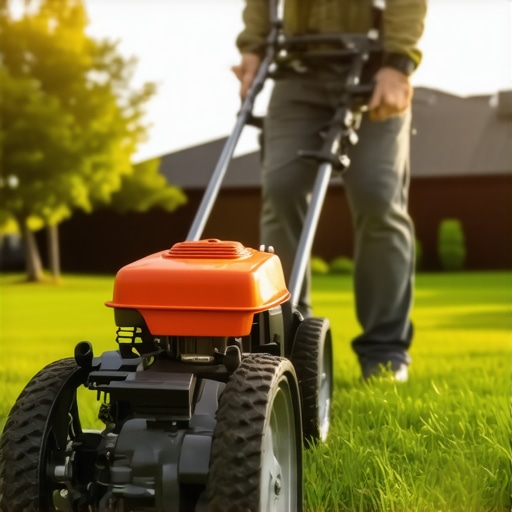
Stop 2026 Lawn Scalping with Mower Deck Leveling [Fix]
The Visual Autopsy of a Scalped Lawn
You see it before you smell it: that sickly, tan-colored haze across a once-green expanse. The grass blades aren’t cut; they are shredded, exposing the yellowing crowns and raw soil. It smells like scorched organic matter and failure. This is lawn care at its most negligent. When a mower deck is out of alignment, it doesn’t just cut grass; it gouges the earth, creating a physical entry point for fungal pathogens and opportunistic weeds. A scalped lawn is a dying lawn. It is a structural failure of the equipment that manifests as a biological disaster for the turf. I always drill into my new crew members: if you don’t fix the mower deck before you hit the first blade of grass, you’re not a landscaper; you’re an assassin. I remember a kid named Mike who thought eyeballing it was enough. He scalped a high-end bentgrass lawn in two passes because one tire was five PSI lower than the other. He learned that day that precision isn’t optional; it is the job. Precision is the difference between a professional finish and a yard that looks like it was attacked by a bush hog.
The Mechanics of the Deck: Why Leveling Fails
Mower deck leveling is the process of ensuring the cutting blades maintain a consistent, parallel relationship to the ground while accounting for a slight forward pitch. This mechanical calibration prevents uneven grass height, oscillating cut patterns, and the dreaded brown patches caused by soil scalping. Most homeowners assume the deck stays level forever. It doesn’t. Vibration, curb impacts, and even temperature-induced PSI fluctuations in the tires will throw your height-of-cut (HOC) off by half an inch or more.
“Mowing at the correct height is the single most important practice for maintaining a healthy, weed-resistant lawn. Removing more than one-third of the leaf blade at any one time stresses the plant’s root system.” – Penn State Center for Turfgrass Science
How do I know if my mower deck is uneven?
To identify an uneven mower deck, you must conduct a measurement test on a flat, level concrete surface like a garage floor. Use a mower deck leveling gauge to measure the distance from the blade tip to the ground at the far left and far right sides. If the variance exceeds 1/8th of an inch, your lawn care quality will suffer from visible streaking and ridged turf. Don’t trust the plastic deck shell. Always measure from the metal blade itself. The blade is the only part that matters.
What is the correct mower deck pitch?
The mower deck pitch, or rake, should be set so the front blade tip is 1/8 to 1/4 inch lower than the rear blade tip. This specific engineering calibration creates the necessary vacuum suction to lift the grass blades upright for a clean cut while ensuring the grass is only cut once, which reduces engine load and prevents clipping clump. If the back is lower than the front, you will double-cut the grass, turning it into a watery pulp that suffocates the soil microbiology. It will rot. Do not ignore the pitch.
The Technical Fix: A Step-by-Step Leveling Guide
Before you touch a wrench, check your tire pressure. A 2 PSI difference between the rear tires can tilt the deck significantly. This is the most common hardscaping and landscaping error in equipment maintenance. Once the tires are set to the manufacturer’s recommended PSI, follow this protocol:
| Grass Species | Recommended Height (Inches) | Scalping Risk |
|---|---|---|
| Kentucky Bluegrass | 2.5 to 3.5 | Moderate |
| Tall Fescue | 3.0 to 4.0 | Low |
| Bermudagrass | 1.0 to 2.0 | High |
| Zoysia | 1.5 to 2.5 | High |
1. Park on level ground and engage the parking brake. 2. Position the blades so they are perpendicular to the mower body. 3. Measure the outer blade tips to the ground. 4. Adjust the lift link adjustment nut on the low side until it matches the high side. 5. Turn the blades so they face front-to-back. 6. Adjust the front jam nut to achieve the required 1/4 inch forward pitch.
“A retaining wall doesn’t fail because of the stone; it fails because of the water trapped behind it. Similarly, a lawn doesn’t fail because of the mower; it fails because of the lack of mechanical calibration and drainage management.” – Hardscape Engineering Axiom
Long-Term Turf Health and Maintenance
Leveling is not a one-and-done task. If you are doing garden design or hardscaping, you are often moving over transitions between turf and stone. These transitions can jar the deck suspension. Check the level every 25 mowing hours or after hitting any solid object. Sharp blades are also non-negotiable. A dull blade tears the grass, leading to white-tip necrosis. Use a torque wrench to ensure blade bolts are tightened to the specific foot-pounds required by your manual. Don’t skip this. Check your mandrels for play. Any wobble in the spindle will negate even the most perfect leveling job. This is about the physics of the cut. This is how you stop the scalp in 2026 and beyond.