
The Best Drought-Tolerant Grasses for Hot and Dry Climates
The ground doesn’t lie. When I walk onto a property in July and hear that sickening, hollow crunch under my work boots, I know I’m standing on a botanical corpse. Most homeowners in hot regions are fighting a losing battle because they’ve planted cool-season fescue in a climate that demands a C4 carbon fixation specialist. They try to compensate with 40,000 gallons of water a month, but the soil is already hydrophobic. The grass isn’t thirsty; it’s suffocating. I recently got a frantic call from a homeowner who had literally torched their entire front lawn by applying a high-nitrogen ‘turf builder’ during a 102-degree heatwave. The salts in the fertilizer sucked every molecule of moisture out of the root zone, creating a chemical burn that looked like a localized forest fire. We had to strip six inches of topsoil just to get rid of the salinity. It was a $12,000 mistake that could have been avoided by understanding the biological limits of the turf and the chemical reality of soil heat. For those of you tired of throwing money into a dusty hole, we need to talk about grass that actually thrives on neglect and high-intensity UV exposure.
The Biological Advantage of C4 Warm-Season Species
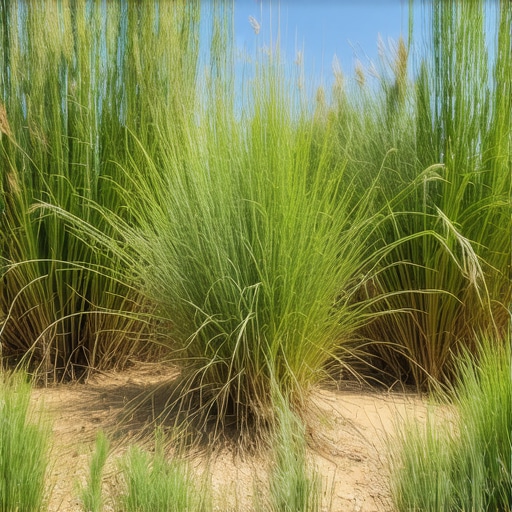
Selecting The Best Drought-Tolerant Grasses for Hot and Dry Climates requires prioritizing warm-season species like Bermuda, Zoysia, and Buffalograss that utilize the C4 photosynthetic pathway to maximize carbon intake while minimizing transpirational water loss through their stomata. These grasses aren’t just ‘tough’; they are engineered by evolution to handle high temperatures and limited rainfall. They don’t just survive; they go dormant to protect their crowns when the moisture drops below a critical threshold. Unlike Kentucky Bluegrass, which just gives up and dies, these species wait for the rain.
“Turfgrass water conservation is not just about reducing irrigation; it is about the selection of species that maintain physiological function under moisture stress through deep rooting and reduced evapotranspiration rates.” – Texas A&M AgriLife Extension
Bermuda Grass: The High-Performance Workhorse
If you have full sun and kids or dogs running around, Bermuda is your only real choice. It is a recuperative beast. Most hybrid varieties, like TifTuf, use 38% less water than other Bermuda varieties while maintaining color. Its secret weapon is the rhizome—an underground stem that stores energy and spreads horizontally. Even if the top looks brown, the engine is still running underground. You need to keep your pH between 6.0 and 7.0. If you’re at 5.5, your grass is literally starving because the nutrients are chemically locked in the soil particles. Spread some pelletized lime to fix it. Don’t guess; get a soil test.
Zoysia: The Luxury Standard for Low Water Usage
Zoysia is the choice for those who want a manicured look without the high-maintenance water bill. It grows slower than Bermuda, which means less mowing, but it forms a carpet so dense that weeds can’t find a square inch of light to germinate. It’s the ‘thick’ grass. It handles drought by curling its blades to reduce surface area, effectively shutting down its cooling system to save water. However, if you let the thatch layer get thicker than half an inch, you’re asking for trouble. Thatch acts like a sponge that prevents water from ever reaching the soil. If your lawn feels ‘spongy,’ you need to rent a power rake or a vertical mower. Period.
How much modified gravel do I need for a patio base?
While often asked during hardscaping projects near lawns, the calculation is simple: Multiply the square footage by the depth in feet (usually 0.5 feet for 6 inches) and divide by 27 to get cubic yards, then multiply by 1.5 for compaction. For lawn-adjacent garden design, ensure your base doesn’t bleed lime into your acidic soil zones, as it will spike the pH and kill your turf’s root system near the edge. Drainage is the priority.
| Grass Variety | Drought Resistance | Mowing Height (Inches) | Traffic Tolerance |
|---|---|---|---|
| Bermuda (TifTuf) | Elite | 0.5 – 1.5 | Exceptional |
| Zoysia (Zeon) | High | 1.0 – 2.0 | Moderate |
| Buffalograss | Maximum | 3.0 – 4.0 | Low |
| St. Augustine | Moderate | 3.0 – 4.0 | Low |
The Native Maverick: Buffalograss
Buffalograss is the only true native turfgrass for the American West. It can survive on 10 inches of rain per year. It has roots that can reach depths of six to eight feet. Think about that. While your neighbor’s fescue has four-inch roots that fry in the top layer of soil, Buffalograss is drinking from the deep reservoir. The downside? It’s not a dark, forest green. It’s a blue-green, prairie-style look. If you’re trying to make the Mojave Desert look like a golf course in Ireland, you’re the problem, not the grass. Use native logic.
The Hard Truth About Soil Compaction and Hydrostatic Pressure
You can buy the best grass in the world, but if your soil is compacted to the density of a concrete sidewalk, it will die. Roots need oxygen. In lawn care, we use core aeration to physically remove plugs of soil, breaking the surface tension and allowing water to reach the root flare and deeper horizons. I see too many ‘pros’ just throwing seed on top of hard clay. That’s not landscaping; that’s bird feeding. If you don’t see 3-inch deep holes after an aeration job, the contractor is lazy.
“Soil compaction reduces the macropore space necessary for gas exchange, leading to anaerobic conditions that favor fungal pathogens over healthy root development.” – Penn State Center for Turfgrass Science
How to fix poor soil grading for a new lawn?
To fix soil grading, you must ensure a minimum 2% slope away from any foundations to prevent hydrostatic pressure from building up in the soil, which leads to root rot and basement leaks. Use a transit level to mark your high and low points before bringing in screened topsoil. Never bury your existing problems with more dirt; excavate the ‘junk’ soil first to ensure the transition layer doesn’t create a drainage barrier.
- Step 1: Perform a jar test to determine your soil texture (Sand/Silt/Clay ratio).
- Step 2: Kill off all existing invasive weeds with a non-residual herbicide.
- Step 3: Core aerate to a depth of at least 3 inches.
- Step 4: Top-dress with 1/4 inch of organic compost to jumpstart soil microbiology.
- Step 5: Calibrate your irrigation to deliver 1 inch of water in a single session, once per week.
The biggest mistake is watering for 10 minutes every day. That keeps the surface wet and the deep soil dry. It trains the roots to stay near the surface where the heat can kill them. You want to force those roots down. Water deep. Water rarely. Make the grass hunt for its drink. That is the secret to a lawn that stays green when the world is burning. Stop treating your yard like a houseplant and start treating it like the complex biological system it is.
![Fix Patchy Bermuda: 3 Nitrogen Timing Rules [2026]](https://lawnmajesty.com/wp-content/uploads/2026/06/Fix-Patchy-Bermuda-3-Nitrogen-Timing-Rules-2026.jpeg)