5 2026 Best Trees for High Privacy in Zone 5 Yards
The Engineering of Natural Barriers in Cold Climates
Planning a privacy screen in Zone 5 is not a weekend hobby; it is a long-term civil engineering project using biological components. I always drill into my new crew members: if you do not fix the soil grading first, every plant you put in the ground is just expensive compost. I have seen too many homeowners drop five figures on 12-foot conifers only to watch them drown in a clay-lined bathtub because the contractor did not understand subsurface drainage. In Zone 5, where temperatures plunge to -20 degrees Fahrenheit, your plants face extreme physiological stress. You are not just looking for a wall of green. You are looking for a structural windbreak that can survive frost heaving and heavy snow loads without snapping or desiccating.
“Proper planting depth is the single most important factor in the long-term survival of woody ornamentals. Burying the root flare leads to secondary root issues and eventual crown decline.” – International Society of Arboriculture (ISA)
Why Site Preparation Precedes Plant Selection
Success in Zone 5 privacy landscaping requires evaluating soil drainage, wind exposure, and USDA hardiness ratings to prevent winter desiccation and root rot. Before a shovel touches the dirt, we analyze the soil texture. Most Zone 5 yards in the Midwest or Northeast deal with heavy silt or clay. These soils have high Cation Exchange Capacity (CEC) but poor macroporosity. If you dig a hole in heavy clay and fill it with loose potting soil, you create a sump. Water enters, cannot escape through the clay walls, and the roots rot. We use a penetrometer to check for compaction layers. If we hit 300 PSI of resistance in the top 12 inches, we are not planting until we subsoil or incorporate organic matter to break up that hardpan.
The Top 5 Privacy Trees for 2026
Selecting high-privacy trees for cold climates involves balancing growth rate with structural integrity and resistance to common pathogens like bagworms or cytospora canker. We have moved away from the overused Leyland Cypress, which is a structural nightmare in heavy snow. Here are the professionals choices for 2026.
1. Picea abies (Norway Spruce)
The Norway Spruce is the backbone of rural windbreaks for a reason: its pendulous branches shed heavy snow loads that would snap a White Pine. These trees are built for the long haul. They handle a wide pH range from 4.5 to 7.5. In our 2026 projects, we use them as the primary layer in a staggered windbreak. They grow about 2 to 3 feet per year once established. You need to give them space. Planting them 10 feet apart is a mistake. Go 15 to 20 feet if you want them to live past year twenty without losing their lower limbs to light competition.
2. Thuja occidentalis ‘American Pillar’
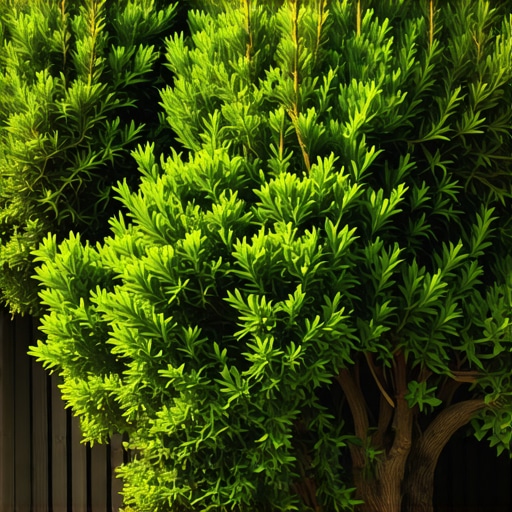
For narrow privacy screens in smaller suburban lots, the American Pillar Arborvitae is the superior alternative to the Emerald Green. It is a sport of ‘Hetz Wintergreen’ and can reach 20 feet in height while staying only 4 feet wide. This is critical for garden design in tight spaces. It resists snow splitting better than the ‘Techny’ variety. We install these with a 3-inch layer of wood chip mulch to regulate soil temperature. Do not let the mulch touch the trunk. That is a death sentence. It creates a moist environment for fungal pathogens and girdling roots.
3. Juniperus virginiana (Eastern Red Cedar)
The Eastern Red Cedar is the toughest native evergreen for Zone 5, offering high salt tolerance for roadside privacy and exceptional drought resistance. It is not a true cedar, it is a juniper. This is the tree for the site with terrible soil and zero irrigation. It provides dense cover for birds and holds its foliage to the ground. Be aware of Cedar-Apple Rust if you have an orchard nearby. We use this tree in the landscaping of high-wind sites where other evergreens would suffer from winter burn.
4. Carpinus betulus ‘Fastigiata’ (European Hornbeam)
Choosing deciduous privacy trees like the European Hornbeam provides a formal, architectural look that remains dense even after the leaves turn brown in autumn. This is called marcescence. The leaves often hang on until the new buds push them off in spring. It is a hardscape-friendly tree. Its roots are not aggressive, making it safe for 10-foot offsets from patios and retaining walls. It handles heavy pruning, so you can maintain it as a tall, narrow hedge.
5. Pinus strobus (Eastern White Pine)
The Eastern White Pine offers a soft texture and rapid growth for large-scale privacy, though it requires careful placement to avoid wind breakage. It is a pioneer species. It grows fast, which homeowners love, but it is brittle. We use it in the interior of a multi-row planting where it is protected from the strongest gusts. It prefers well-drained, acidic soils. If your soil pH is above 7.0, you will see chlorosis (yellowing of the needles) because the tree cannot uptake iron.
| Tree Species | Growth Rate (Annual) | Mature Width | Soil Preference |
|---|---|---|---|
| Norway Spruce | 24 to 36 inches | 25 to 30 feet | Moist, well-drained |
| American Pillar | 30 to 40 inches | 4 feet | Loam to clay-loam |
| Eastern Red Cedar | 12 to 18 inches | 10 to 20 feet | Any, salt-tolerant |
| European Hornbeam | 12 to 24 inches | 15 feet | Heavy clay or loam |
| Eastern White Pine | 36+ inches | 20 to 40 feet | Sandy, acidic |
The Physics of Installation: Avoid the Mulch Volcano
Proper tree installation techniques involve digging a hole twice the width of the root ball but no deeper than the root flare to avoid crown rot. When we bring a B&B (balled and burlapped) tree to the site, the first thing I do is strip the top of the basket to find where the trunk flares out into the roots. Most nurseries ship trees with 4 inches of extra soil over the flare. If you plant at that depth, the tree will suffocate. Oxygen cannot reach the root system. We use a transit to ensure the flare is 1 to 2 inches above the finished grade. This allows for settling.
“A retaining wall doesn’t fail because of the stone; it fails because of the water trapped behind it.” – Hardscape Engineering Axiom
How to handle drainage near hardscaping?
Integrating hardscaping with privacy trees requires strategic drainage planning to prevent hydrostatic pressure from damaging nearby retaining walls or saturated roots. If you are planting a screen behind a new paver patio, you must ensure the patio base (usually 6 inches of compacted 21A modified gravel) does not redirect all the runoff into the planting trench. We install French drains or NDS catch basins to move that water away. The interaction between hardscaping and lawn care is often overlooked. If the patio runoff is not managed, you will end up with a bog that kills your grass and your expensive trees.
What is the best way to water new trees in Zone 5?
Efficient irrigation for new trees focuses on deep, infrequent watering that reaches the entire root zone to encourage deep root penetration. A common mistake is a daily 5-minute spray. This only wets the top inch of soil, encouraging shallow roots that will die in the first summer drought or winter freeze. You need 1 inch of water per week, delivered slowly. We use 20-gallon watering bags (like TreeGators) for the first two seasons. This slow-release method ensures the water percolates through the heavy Zone 5 clay instead of running off the surface.
The Professional Maintenance Checklist
- Check root flares every spring for mulch accumulation.
- Prune dead or crossing branches in late winter before sap flow.
- Apply 0-0-60 potash in late fall to increase cold hardiness.
- Monitor for bagworms in June when they are small and vulnerable.
- Dormant oil spray in early spring to kill overwintering mites.
Winter desiccation is the real killer in Zone 5. While the deciduous trees are dormant, evergreens are still transpiring (losing water through their needles). If the ground is frozen, they cannot replace that water. This is why we water deeply until the ground actually freezes. We also use anti-desiccants like Wilt-Pruf on broadleaf evergreens, though most of the conifers mentioned here are resilient enough if they have adequate sub-soil moisture. Do not skip the fall watering. It is the difference between a thriving screen and a row of brown skeletons come April.