5 2026 Best Trees for Small Urban Backyard Privacy
Planning the Urban Screen: Why Site Assessment Trumps Aesthetics
Selecting the best trees for small urban backyard privacy requires prioritizing verticality over lateral spread, focusing on columnar cultivars like ‘Green Pillar’ Oak or ‘Hicksii’ Yew that provide dense screening without encroaching on hardscape footings or violating local utility setbacks. I always drill into my new crew members: if you don’t fix the soil grading first, every plant you put in the ground is just expensive compost. You can buy the most expensive specimen in the nursery, but if it is sitting in a bowl of compacted clay with zero drainage, it will be dead by the second season. 80 percent of a successful privacy screen happens before the tree ever leaves the flatbed. We look at the soil structure, the proximity to the neighbors foundation, and the movement of water across the lot. Urban yards are notorious for poor soil quality and high hydrostatic pressure from surrounding concrete. You are not just planting a tree; you are integrating a biological filter into a rigid engineering environment. If the grade sends water toward the root ball without a path to exit, you are effectively drowning the vascular system of the plant. We check the pH, we check the compaction with a penetrometer, and we ensure the site can actually support the metabolic needs of a fast-growing screen.
The 2026 Privacy Elite: Top 5 Tree Selections for Tight Spaces
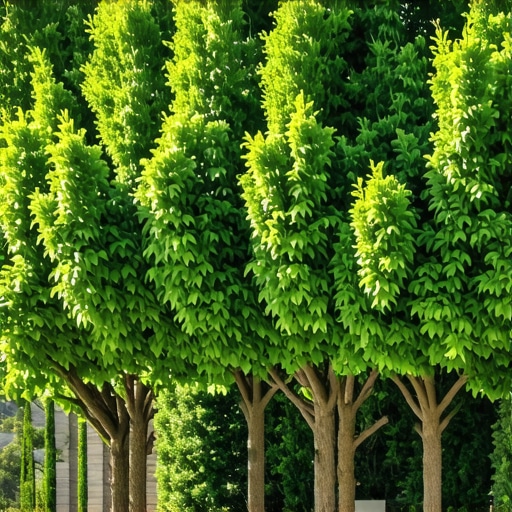
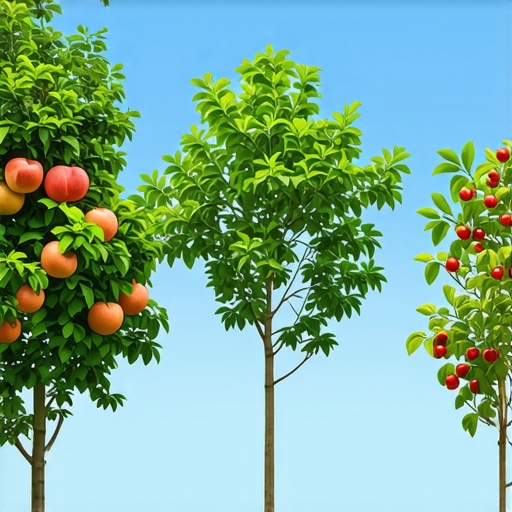
The 2026 top privacy trees focus on narrow growth habits and disease resistance, specifically targeting urban challenges like heat island effects and restricted root zones for maximum screening density. These selections move away from the over-used Leyland Cypress, which is a structural nightmare in small lots, and toward genetically stable columnar varieties. [image placeholder]
| Tree Species | Growth Rate | Width at Maturity | USDA Hardiness Zone |
|---|---|---|---|
| Taxus x media ‘Hicksii’ | 6 to 12 inches per year | 3 to 4 feet | 4 to 7 |
| Thuja occidentalis ‘Degroot’s Spire’ | 6 to 8 inches per year | 2 to 3 feet | 3 to 8 |
| Quercus palustris ‘Green Pillar’ | 12 to 18 inches per year | 12 to 15 feet | 4 to 8 |
| Carpinus betulus ‘Fastigiata’ | 12 inches per year | 15 feet | 4 to 8 |
| Juniperus scopulorum ‘Skyrocket’ | 12 plus inches per year | 2 to 3 feet | 4 to 9 |
1. Hicks Yew (Taxus x media ‘Hicksii’)
This is the workhorse of the formal urban garden. It is a dense, upright evergreen that handles heavy pruning with ease. Unlike many evergreens, it can tolerate partial shade, making it perfect for those narrow side yards between tall city houses. It is slow-growing, which means less maintenance, but it provides a solid wall of green that is nearly impenetrable to the eye.
2. Degroot’s Spire Arborvitae
Stop buying Emerald Greens. Degroot’s Spire offers a much more interesting, twisted foliage texture and stays significantly narrower. It is the answer for the homeowner who only has a two-foot wide planting strip between their patio and the fence. It is rugged, handles snow loads without splaying, and has a deep green hue that lasts through the winter.
3. Green Pillar Pin Oak
If you want the majesty of an oak but only have 15 feet of width, this is your tree. It grows straight up like a middle finger to the sky. It provides height that evergreens cannot match, which is vital for blocking out second-story windows from the house next door. Its leaves turn a deep red in autumn, providing seasonal interest that most privacy screens lack.
4. Fastigiate European Hornbeam
This tree is a structural masterpiece. In 2026, we are seeing more architects specify Hornbeams because of their clean lines and incredible wind resistance. They can be hedged into a literal living wall or left to grow into a tight, flame-shaped silhouette. They are remarkably tolerant of urban pollutants and heavy clay soils.
5. Skyrocket Juniper
For the arid urban lot or the homeowner who wants a silvery-blue aesthetic, the Skyrocket is the narrowest juniper available. It takes up almost no floor space. It is drought-tolerant once established and thrives in full sun where other evergreens might scorch. It is a durable, low-maintenance vertical accent.
Technical Installation: Avoiding the 100 Dollar Hole Mistake
Installing privacy trees in small backyards requires precise root flare exposure and soil amendment strategies to prevent transplant shock and ensure long-term structural stability.
“The primary cause of tree failure in urban landscapes is the failure to recognize the transition from the nursery root ball to the surrounding soil matrix.” – Pennsylvania State Extension
When my crew digs a hole, it is always twice as wide as the root ball but no deeper. If you dig too deep, the tree settles, the soil covers the root flare, and the bark begins to rot. This is a slow death that takes three years to manifest. We use a sharp spade to shave off the outer inch of the root ball to eliminate any circling roots that would eventually girdle the tree. In the urban environment, you are often dealing with ‘fill dirt’ left by developers. This stuff is garbage. We backfill with a mix of 70 percent native soil and 30 percent organic compost to bridge the gap between the nursery potting mix and the reality of your backyard.
How much space does a privacy tree need?
For most narrow columnar trees, you should allow for at least 3 to 5 feet of clearance from permanent structures like fences or foundations to ensure the root system has adequate room to anchor the plant. Planting too close to a fence will result in lopsided growth as the tree competes for light and air circulation, eventually leading to fungal issues on the backside of the foliage.
What is the fastest growing tree for a small backyard?
The Green Pillar Pin Oak and Skyrocket Juniper are the fastest growing options for tight spaces, often putting on 12 to 18 inches of height per year when provided with consistent drip irrigation and proper nitrogen levels. While speed is often a priority for privacy, remember that faster growth typically requires more frequent structural pruning to maintain the narrow form.
Hardscaping Integration: Protecting Your Patio from Root Heave
Integrating landscaping trees into a hardscape design requires a deep understanding of root morphology and hydrostatic pressure to prevent the upheaval of pavers or the cracking of concrete pads. Never plant a tree with aggressive surface roots near a $20,000 paver patio. All five trees listed above were chosen because they have relatively polite root systems. However, even with these species, we often install a root barrier: a high-density polyethylene sheet buried 24 inches deep along the edge of the hardscape. This forces the roots to grow downward rather than outward under your pavers.
“A retaining wall doesn’t fail because of the stone; it fails because of the water trapped behind it, often exacerbated by root systems disrupting the drainage aggregate.” – Hardscape Engineering Axiom
If you are planting behind a retaining wall, ensure you have at least 3 feet of structural backfill (modified gravel) between the tree and the wall blocks. If you plant too close, the growing root mass will eventually push the wall out of plumb.
- Step 1: Locate all underground utilities by calling 811.
- Step 2: Excavate a hole 2x the width of the root ball.
- Step 3: Identify the root flare (where the trunk widens at the base) and ensure it sits 1 inch above the final grade.
- Step 4: Remove all burlap, twine, and wire cages from the top third of the root ball.
- Step 5: Backfill with native soil, tamping lightly with your foot to remove large air pockets.
- Step 6: Apply 2 to 3 inches of wood chip mulch, keeping it 4 inches away from the trunk.
- Step 7: Install a drip irrigation bag or ring for consistent deep watering.
Precision is the difference between a thriving screen and a row of brown sticks. Don’t skip the soil test. Don’t bury the flare. Don’t use cheap big-box store mulch that is likely full of dye and weed seeds. Follow the biology, and the engineering will hold. Your backyard refuge depends on it. High-quality nursery stock beats a sale-rack tree every single time. It is an investment in your property value and your peace of mind. Get it right the first time.