5 2026 Best Perennials for Low-Water Gardens
5 2026 Best Perennials for Low-Water Gardens: Engineering a Drought-Resistant Landscape
I always drill into my new crew members: if you don’t fix the soil grading first, every plant you put in the ground is just expensive compost. I have seen too many rookies slap high-end perennials into compacted red clay or high-alkaline fill dirt without checking the bulk density or the drainage profile. In twenty years of running a hardscape and horticultural firm, the most expensive mistake is ignoring the biology of the root zone. You can buy the most genetically advanced 2026 cultivars of drought-tolerant plants, but if they are sitting in a topographic depression with no oxygen exchange, they will fail before their first bloom cycle. Proper landscaping is not about aesthetics; it is about site-specific engineering and understanding the nitrogen cycle, capillary action, and transpiration rates. We are building a biological machine that must survive 100-degree heat and three-week dry spells. If you think garden design is just picking colors, you are already behind.
The Critical Physics of Low-Water Garden Design
Successful low-water landscaping depends on soil structure and root zone management rather than just plant selection. By optimizing Cation Exchange Capacity and ensuring a minimum of 6 inches of well-draining organic matter, you prevent root rot while maximizing water retention for 2026’s hardest perennials. Most homeowners mistake xeriscaping for just throwing rocks over weed barrier. That is a death sentence for your yard. Rock mulch acts as a thermal heat sink, raising the soil temperature by 15 degrees and cooking the delicate mycorrhizal fungi that help plants absorb nutrients. I advocate for three inches of coarse arborist chips which regulate soil temperature and slowly break down into carbon-rich topsoil.
How much modified gravel do I need for a patio base?
When integrating hardscaping with your garden, you need a minimum of 6 inches of 2A modified gravel for a standard patio, but if you have heavy clay, go to 8 inches. Compact this in 2-inch lifts using a plate compactor until you hit a 98 percent Proctor density. If you fail to manage this base, the hydrostatic pressure from the adjacent garden beds will cause the pavers to heave during the freeze-thaw cycle.
“Planting depth is the single most critical factor in the survival of container-grown perennials; the root flare must remain visible to ensure gas exchange.” – Pennsylvania State University Agricultural Extension
The 5 Best 2026 Perennials for High-Performance Landscapes
Selecting the right species for 2026 requires looking at USDA Hardiness Zones and selecting plants with specific physiological adaptations like thick cuticles or taproot systems. Here are the top performers I am spec-ing for my high-end clients next season.
1. Agastache ‘Kudos Mandarin’ (Hyssop)
This is a powerhouse for low-water gardens due to its high concentration of volatile oils that reduce transpiration. It thrives in well-drained soil with a pH between 6.5 and 7.5. Avoid over-fertilizing; high nitrogen levels lead to weak, floppy growth and reduced drought resistance. It requires full sun to maintain its structural integrity. If you plant this in shade, the cell walls will elongate, causing the plant to lodge during the first heavy rain.
2. Amsonia hubrichtii (Arkansas Bluestar)
I call this the iron horse of perennials. Once established, its deep taproot can reach three feet into the subsoil, tapping into moisture reserves that other plants cannot access. In 2026, we are seeing more extreme heat spikes, and Amsonia handles it by reducing its stomatal conductance during the heat of the day. It provides excellent garden design texture with its feathery foliage that turns a burnt orange in autumn.
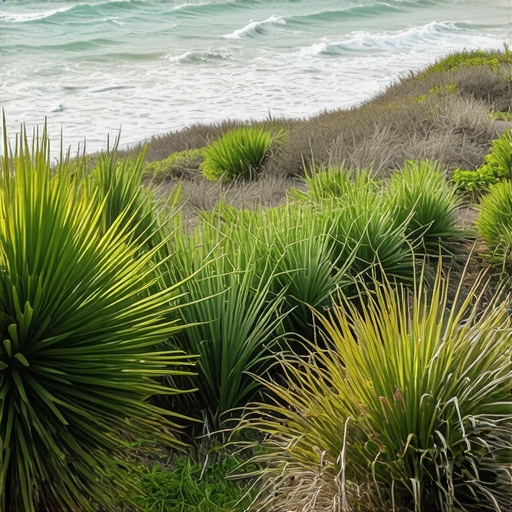
3. Eryngium yuccifolium (Rattlesnake Master)
This is a native beast with a waxy, glaucous cuticle that reflects UV radiation. It is virtually bulletproof against drought once the root system has two years of development. We use this to anchor the edges of hardscaping projects where the soil temperature is highest near concrete or stone. It tolerates poor soil and high salinity, making it perfect for roadside plantings where salt spray is an issue.
4. Baptisia australis (False Indigo)
Baptisia is a nitrogen-fixing legume, meaning it works with soil bacteria to create its own fertilizer. This makes it ideal for landscaping in nutrient-poor environments. Do not try to move it once it is in the ground; its root system is extensive and woody. It mimics a shrub in the landscape without the maintenance requirements of woody ornamentals.
5. Sedum ‘Night Embers’
This is not your average groundcover sedum. It stands 14 inches tall and uses Crassulacean Acid Metabolism (CAM) photosynthesis. This means it opens its stomata at night to collect CO2, minimizing water loss during the day. It is the ultimate engineering solution for South-facing slopes where solar radiation is highest. The dark purple foliage provides a sharp contrast against lighter stone or concrete hardscaping elements.
How often should I water new perennials in 2026?
During the first six weeks, you must water new perennials every 2 to 3 days to maintain turgor pressure. Once the roots move into the surrounding native soil, shift to deep, infrequent watering of 1 inch per week. This forces the root tips to chase the receding moisture line deep into the soil profile, creating a truly drought-resistant plant. Frequent light watering keeps roots near the surface where they will desiccate during the first heat wave.
“A retaining wall doesn’t fail because of the stone; it fails because of the water trapped behind it.” – Hardscape Engineering Axiom
[IMAGE_PLACEHOLDER]
Installation and Maintenance Data
Precision installation is the difference between a garden that lasts 20 years and one that dies in 20 months. Use the following table to calibrate your soil and material needs for these 2026 perennials.
| Plant Species | Drought Tolerance (1-10) | Min. Soil Depth (Inches) | Preferred pH Range |
|---|---|---|---|
| Agastache | 9 | 8 | 6.5-7.5 |
| Amsonia | 8 | 12 | 6.0-7.0 |
| Eryngium | 10 | 10 | 5.5-7.5 |
| Baptisia | 9 | 18 | 6.0-7.5 |
| Sedum | 10 | 6 | 6.5-8.0 |
The following checklist ensures your crew or you personally do not skip the foundational steps of high-end lawn care and garden installation.
- Call 811 to mark all underground utility lines before any excavation.
- Conduct a soil test to determine the Cation Exchange Capacity and nutrient deficiencies.
- Adjust grading to ensure a minimum 2 percent slope away from all hard structures.
- Install a drip irrigation system with pressure-compensating emitters to reduce evaporation.
- Apply 3 inches of organic mulch, keeping it 2 inches away from the plant stems to prevent rot.
Remember that the first year of a low-water garden requires more attention than the third. You are building biological resilience. Check for hydrophobic soil conditions during mid-summer; if water beads on the surface, you may need a mechanical aeration or a biological surfactant to break the surface tension. Never use