![Build a $200 2026 Gravel Path with Brick Edging [Quick Fix]](https://lawnmajesty.com/wp-content/uploads/2026/07/Build-a-200-2026-Gravel-Path-with-Brick-Edging-Quick-Fix.jpeg)
Build a $200 2026 Gravel Path with Brick Edging [Quick Fix]
I always drill into my new crew members: if you don’t fix the soil grading first, every plant you put in the ground is just expensive compost and every stone you lay is just a future tripping hazard. I have spent two decades fixing the mistakes of contractors who think a path is just a layer of rock on top of dirt. It is not. A functional gravel path is a civil engineering project on a micro scale. It requires an understanding of soil compaction, lateral displacement, and the movement of water through porous media. If you ignore the sub-grade, the freeze-thaw cycles of 2026 will turn your $200 investment into a muddy trench. I am here to tell you how to do it right, without wasting money on big-box store gimmicks. We are going to build a path that respects the laws of physics.
The Physics of Path Stability and Soil Compaction
A gravel path with brick edging requires a stable foundation of compacted sub-grade and angular aggregate to prevent the stones from shifting underfoot. To achieve a Quick Fix that lasts, you must excavate the soil to a depth of four inches and remove all organic matter that could decompose and cause settling. This is about managing the load-bearing capacity of your soil. If your soil is heavy clay, you are dealing with high plasticity; if it is sandy, you have drainage but no cohesion. You need to hit the sweet spot of compaction where the air pockets are removed. It is hard work. It will make your back ache. Do it anyway.
“A retaining wall doesn’t fail because of the stone; it fails because of the water trapped behind it.” – Hardscape Engineering Axiom
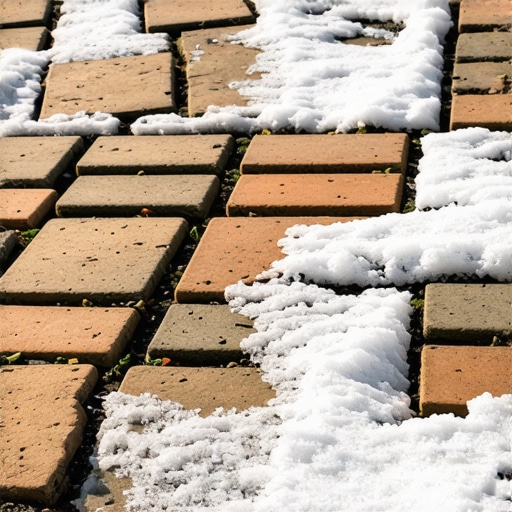
Water is the enemy of any hardscape. When you dig your trench, it must have a slight pitch—at least 2 percent—to move water away from your home or garden beds. Without this, the water sits in the gravel, freezes in the winter, and heaves your brick edging out of alignment. Use a line level. Check it twice. It will rot if you let the water pool.
Material Selection on a $200 Budget
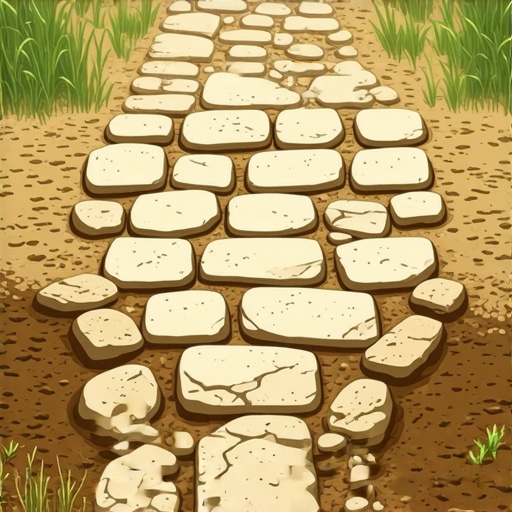
Buying the right materials for a landscaping project on a tight budget means sourcing from a local stone yard, not a retail center with pretty packaging. Garden design is often ruined by using the wrong stone. For a path, you need 3/4-inch minus crushed limestone or decomposed granite. Do not buy pea gravel. Pea gravel consists of rounded river stones that act like ball bearings; they will never lock together. You want angular stones that have flat faces to wedge against each other. This creates a surface that stays put when you walk on it.
| Material | Quantity (for 15ft path) | Estimated Cost |
|---|---|---|
| 3/4″ Minus Crushed Stone | 0.75 Cubic Yards | $45.00 |
| Reclaimed Red Bricks | 80 Units | $60.00 |
| Non-woven Geotextile Fabric | 1 Roll (3×25) | $30.00 |
| 10-inch Steel Spikes | 20 Count | $25.00 |
| Rental Manual Tamper | 1 Day | $40.00 |
Notice the total is $200. This budget assumes you are scavenging for the bricks. Check local classifieds for people tearing down old chimneys or patios. Reclaimed clay bricks have a higher density and more character than the concrete knock-offs you find at the warehouse. Just ensure they are pavers, not wall bricks. Wall bricks are porous and will shatter when they freeze while saturated.
How much modified gravel do I need for a patio base?
To calculate the amount of modified gravel or hardscaping base needed, multiply the square footage by the depth in feet (e.g., 4 inches is 0.33 feet) and divide by 27 to get cubic yards. For a standard 10×10 area, you would need approximately 1.25 cubic yards of material. Always add 10 percent for compaction. The stone will compress. If you don’t account for this, you will run short before the job is done.
Step-by-Step Installation and Engineering
The lawn care aspect of this project starts with a sod cutter or a sharp spade. You are not just skimming the surface; you are removing the root zone of the grass to prevent regrowth through your path. Once the dirt is exposed, you must tamp it until the tamper literally bounces off the ground. If the dirt is soft, your path will fail. Don’t skip this.
- Flag and mark all utility lines by calling 811 before you dig.
- Excavate a 4-inch deep trench with a flat-bottom spade.
- Lay down a non-woven geotextile fabric to separate the stone from the soil.
- Install the brick edging in a “soldier course” (standing on end) for maximum stability.
- Backfill with 2 inches of crushed stone and compact.
- Add the final 2 inches and compact again until firm.
What is the best gravel for a walkway?
The best gravel for a walkway is an angular crushed aggregate with a variety of particle sizes, often labeled as “crusher run” or “3/4-minus.” The mix of large stones and fine dust allows the material to interlock and form a hard, pavement-like surface. This prevents the stone from migrating into the grass and keeps the path accessible for strollers or wheelchairs. Rounded stones like pea gravel should be avoided in high-traffic areas.
The Long-Term Maintenance of Porous Surfaces
Your path is a living system. Over the first year, the stone will settle into the fabric. You may need to add a few shovelfuls of stone to low spots. The brick edging will also settle. If you used a proper soldier course, the bricks will remain vertical. If you laid them flat (sailor course), they are more likely to tip. Keep the edges trimmed. Don’t let the turf creep over the bricks. If the soil builds up on top of the bricks, it provides a medium for weed seeds to germinate. Keep it clean. Keep it dry. The engineering will do the rest. I have seen paths built this way last thirty years with nothing more than a light raking once a spring. It’s about the base. It’s always about the base.
“Compaction is the physical process of increasing the density of a soil by packing the particles closer together with a reduction in the volume of air.” – USDA Soil Engineering Manual
Remember, the soil is alive. It moves with moisture and temperature. By using the fabric and the angular stone, you are creating a flexible crust that moves with the earth rather than cracking like concrete. This is the secret to a high-end look on a $200 budget. You are outsmarting the environment. Don’t let the simplicity of the materials fool you. The execution is what separates a pro from a hack. Go get your hands dirty.