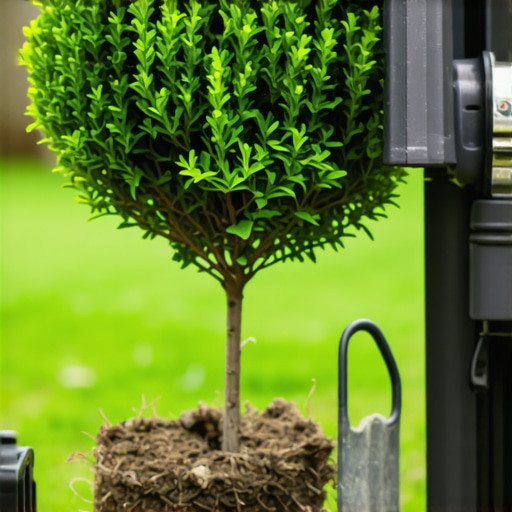
Stop 2026 Tree Bark Damage with Proper Tree Guard Secret
The Hard Truth About Juvenile Tree Survival
I always drill into my new crew members: if you don’t fix the soil grading first, every plant you put in the ground is just expensive compost. But even with perfect soil, most landscapers fail their clients by ignoring the protective barrier of the tree. In my 20 years running a crew, I have seen more five-inch caliper Maples killed by a single $15-an-hour mower operator with a string trimmer than by any disease or drought. Bark is not just decoration; it is the tree’s vascular system. When you compromise that bark, you are essentially severing the veins of the organism. By 2026, many of the saplings planted during the recent housing booms will reach their most vulnerable stage—the juvenile bark phase—where the bark is thick enough to look hardy but thin enough to be lethally damaged by a single winter of rodent gnawing or one bad freeze-thaw cycle. The secret to preventing this isn’t just buying a plastic sleeve; it is the engineering of the air gap and the protection of the basal flare.
What is the best tree guard for 2026 protection?
The most effective tree guard for 2026 is a rigid, breathable mesh cylinder made of UV-stabilized HDPE or galvanized hardware cloth that stands at least 24 inches high and is installed with a one-inch air gap between the material and the bark to prevent moisture trapping and fungal rot.
“The vascular cambium is a thin layer of living tissue located between the bark and the wood; damage to more than 50% of the circumference usually results in death or permanent stunting of the specimen.” – International Society of Arboriculture (ISA) Standards
The Anatomy of Bark Failure
To understand why a tree guard is mandatory, you have to understand the microscopic reality of the trunk. Just beneath the outer bark lies the phloem and the cambium. These layers are responsible for transporting photosynthates from the leaves down to the roots. When a rabbit strips the bark in winter or a weed whacker strikes the base, it causes girdling. If that ring of damage goes all the way around, the roots starve. It is that simple. The tree might look fine for a few months because the xylem (the inner wood) is still sending water up, but the roots are dying in real-time. By the time the leaves turn brown and fall off in July, the tree was actually dead in February. This lag time is why homeowners often don’t realize their ‘mow-and-blow’ crew killed their $800 specimen months ago.
Why 2026 is a Critical Year for Landscaping
Weather patterns and pest cycles are converging. We are seeing an increase in volatile temperature swings where we go from 50 degrees to 5 degrees in 24 hours. This causes sunscald, or ‘Southwest Injury.’ On a cold winter day, the sun warms the dark bark on the south side of the tree, waking up the cells. When the sun drops and the temperature plummets, those cells freeze and burst. A proper tree guard provides the necessary shade to keep the bark dormant. Furthermore, 2026 marks a peak in many regional rodent populations. When the snow covers the ground, voles and rabbits have nothing to eat but the tender, sugar-rich bark at the base of your trees. Without a physical barrier, your landscape is just an all-you-can-eat buffet.
| Guard Material | Lifespan | Pros | Cons |
|---|---|---|---|
| Corrugated Plastic | 2-3 Years | Cheap, easy to install | Traps moisture, hides insects |
| Galvanized Mesh | 10+ Years | Maximum airflow, permanent | Difficult to cut, can be sharp |
| Spiral Wraps | 1-2 Years | Very affordable | Girdles tree if not removed |
| Rigid HDPE Mesh | 5-7 Years | Best balance of air/protection | Higher upfront cost |
How much space should be between the tree and the guard?
You must maintain at least one inch of clearance around the entire circumference of the trunk. If the guard touches the bark, it creates a micro-climate that is perfect for fungal pathogens and wood-boring insects. I have pulled off solid plastic guards only to find the bark underneath turned to mush because it couldn’t breathe. We call this ‘trunk rot,’ and it is entirely preventable. The guard should be a cage, not a second skin. It should be anchored into the soil with a small sod staple or a piece of rebar to ensure it doesn’t shift and rub against the trunk during high winds. This friction can be just as damaging as a mower strike.
The Installation Checklist for 2026 Success
- Clear all mulch away from the root flare before installation.
- Select a guard height based on local snow load (must be 12 inches above snow line).
- Ensure the mesh aperture is small enough to exclude voles (1/4 inch or less).
- Check the guard every six months for tightness and debris buildup.
- Remove any labels or nursery tape before installing the guard.
“Tree wraps and guards should be monitored frequently to ensure they do not harbor moisture or insects, which can lead to secondary decay of the sapwood.” – Penn State Agricultural Extension
How do I prevent my tree guard from killing the tree?
The most common mistake is the ‘mulch volcano.’ People put a guard on and then pile mulch up against it. This is a death sentence. The root flare—where the trunk widens at the base—must remain visible. If you bury the flare, you are trapping moisture against the bark and suffocating the roots. My rule for the crew is simple: ‘If you can’t see the flare, the tree is too deep.’ The guard should sit just above the soil line, or be buried no more than an inch into the dirt to prevent rodents from tunneling under. It should never be part of a mulch mound. Also, ensure the guard is removed or widened as the tree’s caliper increases. A guard that was perfect in 2024 will be a strangulation device by 2028 if left unchecked.
Engineering the Base: Drainage and Pressure
In high-end hardscaping, we worry about hydrostatic pressure behind walls. In arboriculture, we worry about the same thing at the base of the tree. If your site has heavy clay soil, water will sit in the planting hole like a bathtub. A solid plastic tree guard makes this worse by preventing evaporation at the base of the trunk. This is why I exclusively use mesh. It allows the wind to move through, drying the bark after a rainstorm. This airflow is your best defense against the ‘soft bark’ syndrome that makes trees susceptible to pathogens. When you are designing your garden, think like an engineer: where is the water going, and is there enough gas exchange for the living tissue? If the answer is ‘I don’t know,’ you need to rethink your install.
Stop the ‘Mow-and-Blow’ Damage
If you hire a service, they are focused on speed. They will get as close to the trunk as possible with a weed whacker to save time on hand-pulling weeds. One ‘zip’ of that nylon line can remove the entire year’s growth layer. I tell my clients that a tree guard is essentially insurance against their own maintenance crew. It provides a physical ‘stop’ that forces the operator to keep their distance. In 2026, with labor costs rising and experience levels dropping in the industry, this physical barrier is the only way to guarantee your landscape investment survives the season. Don’t trust that the guy with the trimmer knows about cambium layers; trust the 19-gauge wire mesh. It’s a pragmatic solution for a messy world.

![Repairing 2026 Broken Garden Gate Latches [Easy]](https://lawnmajesty.com/wp-content/uploads/2026/07/Repairing-2026-Broken-Garden-Gate-Latches-Easy.jpeg)