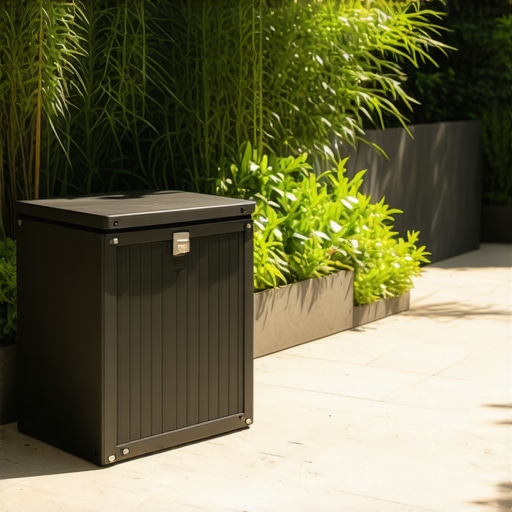
4 Clever Ways to Hide a Trash Can on Your Patio
A high-end patio is a feat of civil engineering involving hundreds of hours of labor and thousands of dollars in materials. Yet, I frequently see these projects sabotaged by the sight of 96-gallon plastic municipal waste bins sitting like an eyesore right next to a custom outdoor kitchen. I recently got called out to tear up a $30,000 patio that was sinking because the previous contractor tried to build a heavy stone trash enclosure directly on top of pavers without a dedicated foundation. The result was a structural disaster that cost the homeowner double to fix. If you want to hide your trash cans, you have to think like an engineer, not a decorator. We are talking about managing static loads, drainage, and soil biology. It is not just about a screen; it is about protecting the integrity of your hardscape for the next thirty years. Don’t skip the prep work.
The Structural Foundation of Professional Trash Enclosures
Trash can enclosures require a compacted gravel base of at least 4 inches of modified stone to prevent settling. Without proper hydrostatic drainage and subgrade preparation, heavy masonry screens will crack the underlying paver patio or lean due to seasonal freeze-thaw cycles. When we talk about base prep, we are looking for a 98% Proctor density. This isn’t something you achieve with a hand tamper from a big-box store. You need a gas-powered plate compactor. If the ground isn’t rock hard, that enclosure is going to migrate. Water is your primary enemy here. If water collects at the base of your trash screen, it will infiltrate the sub-base and cause heaving. Use a 2% slope to ensure runoff moves away from the foundation of the house and the patio itself.
“A retaining wall doesn’t fail because of the stone; it fails because of the water trapped behind it.” – Hardscape Engineering Axiom
How much modified gravel do I need for a patio base?
To calculate your gravel needs, multiply the square footage of your enclosure area by the depth in feet, then multiply by 1.25 to account for compaction. For a standard 4×8 trash pad with a 6-inch base, you need approximately 1.5 tons of 2B modified stone. Do not use pea gravel. It acts like ball bearings and will never compact. You need angular stone that locks together under pressure. This creates a bridge that distributes the weight of the masonry or timber screen across the soil. It must be stable. [IMAGE_PLACEHOLDER]
Living Screens: Using Horticulture to Hide Waste
Living screens utilize columnar evergreens like Thuja occidentalis or Taxus x media to create a biological barrier that absorbs odors and masks waste bins. Proper root flare exposure and soil pH management are critical to ensure these plants survive the reflected heat of a stone patio. Most homeowners kill their screening plants because they plant them too deep. I see mulch volcanoes every single day. If you bury the root flare, you are suffocating the tree. It will rot. You also need to consider the cation exchange capacity of your soil. If you have heavy clay, you must incorporate expanded shale to improve drainage. Otherwise, those expensive trees are just sitting in a bathtub of stagnant water.
“Proper plant selection for screening depends entirely on the soil’s bulk density and cation exchange capacity.” – Penn State Agricultural Extension
What are the best plants for screening trash cans?
The best plants for screening are species with a dense, upright habit and high tolerance for urban stress. Consider these three options: 1. Sky Rocket Juniper for tight spaces. 2. Hicks Yew for shade. 3. Green Giant Arborvitae for large-scale concealment. Avoid invasive species like Running Bamboo, which will destroy your patio and your relationship with your neighbors. When planting near a patio, you must account for the root zone. Use a root barrier if you are planting within 24 inches of the hardscape edge to prevent the roots from lifting your pavers in a decade.
| Material Choice | Installation Complexity | Maintenance Level | Expected Lifespan |
|---|---|---|---|
| Pressure Treated Timber | Moderate | High (Staining/Sealing) | 12-15 Years |
| Natural Stone Masonry | Very High | Very Low | 50+ Years |
| Composite Lattice | Low | Low | 10-20 Years |
| Evergreen Living Wall | Moderate | Moderate (Pruning) | 25+ Years |
The Engineered Timber Screen: Step-by-Step Build
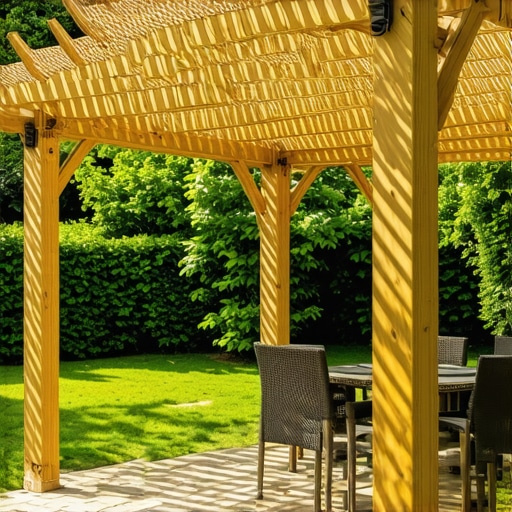
Timber screens for trash cans must be constructed using ground-contact rated lumber and stainless steel fasteners to resist corrosive organic acids. A freestanding screen requires structural footings extending below the frost line to prevent the post from shifting and cracking the surrounding hardscape design. If you are in the North, that means 36 to 48 inches deep. Don’t eyeball it. Use a string line and a laser level. When you set your posts, don’t just dump dry concrete in the hole and add water. Mix it in a wheelbarrow to the correct consistency. This ensures the chemical bond is strong enough to withstand the wind load of a 6-foot high solid screen.
- Call 811 to mark utility lines before any excavation.
- Excavate the area 6 inches wider than the planned enclosure.
- Lay 4 inches of 2B modified gravel and compact in 2-inch lifts.
- Set 4×4 or 6×6 posts in concrete footings below the frost line.
- Use 1/2-inch spacing between slats to allow for airflow and reduce wind resistance.
- Apply a high-quality UV-rated sealer to prevent timber checking and warping.
Do I need a permit for a trash can screen?
In many municipalities, any structure over 4 feet tall requires a zoning permit, especially if it is located in a front or side yard setback. Check your local building codes and HOA regulations before you buy a single board. Many HOAs have specific rules about the color and material of any screening structure. If you build it without approval, you might find yourself tearing it down next month. It happens more than you think. Always follow the code. It is there for a reason. While the internet tells you to water every day, turf grass actually needs deep, infrequent watering, exactly 1 inch per week, to force roots to chase the water down. This same logic applies to your screening plants. Deep roots are strong roots.