
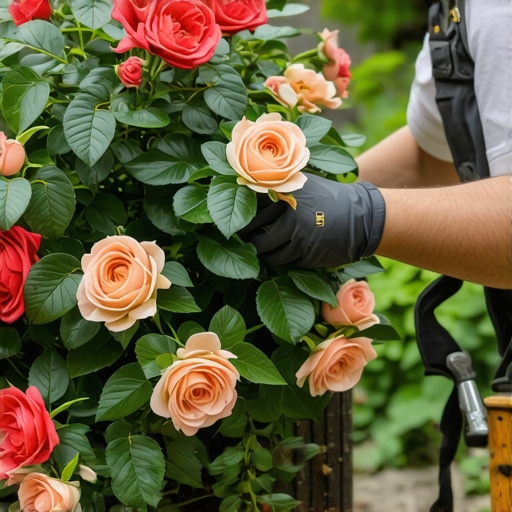
Stop 2026 Leaf Spot from Killing Your Native Roses
Identifying the 2026 Pathogen Outbreak
Black spot (Diplocarpon rosae) is a fungal pathogen that manifests as circular dark lesions with fringed edges on rose foliage. To stop it, you must disrupt the fungal spore lifecycle by controlling moisture, improving air circulation, and maintaining a strict soil hygiene protocol before the 2026 spring thaw.
I always drill into my new crew members: if you don’t fix the soil grading and airflow first, every plant you put in the ground is just expensive compost. I remember a kid named Tyler who thought garden design was just about where the colors went. I had to show him a native rose bed where the roses were literally suffocating because the previous guy ignored the hydrostatic pressure from a nearby slope that was dumping water right into the root flares. The plants weren’t just sick; they were drowning in a petri dish of their own making. If the base of your rose isn’t dry within two hours of a rainstorm, you aren’t gardening; you’re running a fungus farm.
How often should I spray roses for leaf spot?
Chemical intervention should occur every 7 to 14 days during the active growing season, but only as a secondary defense to cultural controls like pruning and irrigation management. Over-spraying leads to resistance. Use a rotating schedule of fungicides to ensure the mycelium doesn’t adapt to a single mode of action.
The Anatomy of Diplocarpon Rosae
Understanding the enemy is the first step in any legitimate landscaping operation. Diplocarpon rosae is not a surface-level nuisance; it is an invasive fungal organism that penetrates the cuticle of the leaf. Once the spore germinates, it sends out hyphae—microscopic threads—that mine the internal tissue for nutrients. This causes the yellowing (chlorosis) you see around the black spots. The plant is essentially being digested from the inside out.
“Black spot fungus spores can survive the winter in fallen leaves and infected canes, requiring meticulous sanitation to prevent reinfection.” – Texas A&M AgriLife Extension
This is why “mow-and-blow” contractors fail. They leave the leaf litter behind, providing a warm winter hotel for the spores to wait for the 2026 spring rains. You must remove every single fallen leaf from the site. Do not compost them. The heat in a backyard compost pile rarely hits the 140 degrees Fahrenheit required to kill fungal spores. Bag them and get them off the property.
Can roses recover from severe black spot?
Yes, roses can recover if the structural integrity of the canes remains intact and the root system is healthy. Recovery requires aggressive defoliation of infected material, a complete replacement of the top two inches of mulch, and a focused nitrogen-heavy feeding to stimulate new vegetative growth after the fungal load is reduced. It takes work.
Engineering Airflow and Drainage
In hardscaping and garden design, we talk about the ‘micro-climate.’ If your roses are tucked into a corner with a six-foot privacy fence and a dense treeline, they will die. Fungal spores need four to seven hours of leaf wetness to germinate. If you don’t have airflow, that water never evaporates. I recommend a minimum of three feet between native rose bushes. This isn’t a suggestion; it’s a biological requirement. When we install a new bed, we look at the prevailing winds. We want the air to move through the center of the plant. This is the ‘Bird through the Bush’ rule: a bird should be able to fly through the center of your rose bush without hitting a branch.
“High relative humidity (over 85%) for a period of six hours or more is the primary catalyst for spore germination on leaf surfaces.” – University of California IPM Standards
If your soil is heavy clay, you have a drainage problem that will exacerbate leaf spot. Clay holds water, increasing the ambient humidity around the base of the plant. You need to break that clay up with expanded shale or gypsum to improve the macro-pore space. Don’t skip this.
The 2026 Maintenance Framework
To ensure your native roses survive 2026, you need a data-driven approach. Most homeowners wait until they see spots to act. By then, the infection is systemic. You need to be proactive. Use the following table to assess your risk and take action based on the specific variety of rose you are managing.
| Rose Category | Susceptibility Level | Primary Risk Factor | Recommended Action |
|---|---|---|---|
| Native Wood Rose | Moderate | High Humidity | Prune for internal airflow |
| Hybrid Tea | High | Overhead Irrigation | Shift to 1/2-inch drip line |
| Knockout Varieties | Low | Soil Compaction | Annual core aeration |
| Climbing Roses | High | Vertical Stagnation | Horizontal cane training |
Notice the trend? Moisture and air. If you are still using overhead sprinklers for your rose beds, you are the problem. Transition to a sub-surface drip irrigation system. This keeps the foliage dry while delivering water directly to the root zone at a rate the soil can actually absorb—usually about 0.5 to 1.0 gallons per hour per emitter.
The Professional Pruning Protocol
Pruning is not just about aesthetics; it is a surgical strike against disease. When you prune for the 2026 season, you must use bypass pruners, not anvils. Anvil pruners crush the stem, creating a jagged wound that is an open door for pathogens. Bypass pruners make a clean, scissor-like cut. Always cut at a 45-degree angle about 1/4 inch above an outward-facing bud. This forces the new growth to go away from the center of the plant, maintaining that critical airflow. It will rot if you leave
![Stop Killing Your 2026 Boxwoods: 3 Blight Fixes [Tested]](https://lawnmajesty.com/wp-content/uploads/2026/07/Stop-Killing-Your-2026-Boxwoods-3-Blight-Fixes-Tested.jpeg)