7 Mediterranean Plants for a Zero-Water Front Yard
Why Zero-Water Design Demands Engineering over Aesthetics
Designing a zero-water front yard requires a fundamental shift from traditional garden design to biological engineering. To succeed with Mediterranean plants, you must first master the soil drainage and grading protocols that prevent hydraulic pressure from stagnating around the root flare. I always drill into my new crew members: if you don’t fix the soil grading first, every plant you put in the ground is just expensive compost. Most homeowners fail because they attempt to install high-drainage flora into compacted clay soils. This creates a bathtub effect where the root system literally drowns in anaerobic conditions during the first heavy rain. True landscaping in arid or semi-arid climates starts with a 70/30 mix of mineral grit and organic matter, ensuring the Cation Exchange Capacity (CEC) is balanced without inducing excessive soft growth that cannot survive high-heat cycles.
Soil Preparation for Mediterranean Success
To ensure 100% success with Mediterranean species, you must amend heavy clay soils with expanded shale or 1/4-inch crushed gravel to achieve a drainage rate of at least 2 inches per hour. This prevents root rot and mimics the calcareous, rocky terrains of their native range. Stop buying the $5 bags of garden soil from big-box stores. They are too high in peat moss, which becomes hydrophobic when dry and waterlogs when wet. You need structural integrity. The soil must be loose enough that you can push a rebar stake 12 inches deep with minimal resistance, yet firm enough to hold a 45-degree grade without slumping. We measure pH levels religiously; Mediterranean plants crave a range between 6.5 and 7.8. Anything more acidic, and you’ll see micronutrient lockout, specifically iron and manganese, leading to chlorotic leaves and stunted vigor.
“Soil drainage is the single most critical factor in the survival of Mediterranean species, as their root systems are biologically programmed for rapid oxygen exchange.” – University of California Agriculture and Natural Resources
How do I prep soil for Mediterranean plants?
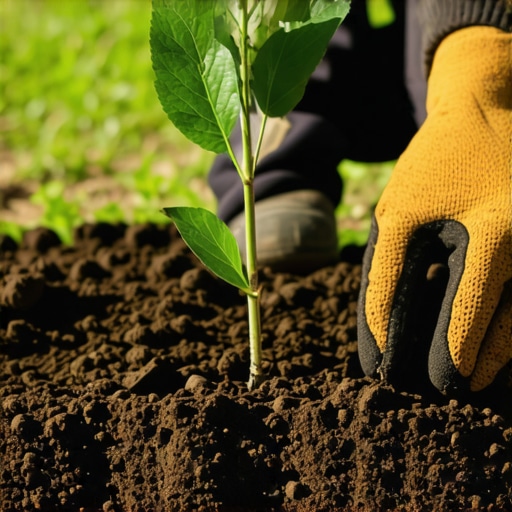
Start by excavating 8 inches of existing soil and replacing it with a custom blend of 50% native soil, 40% crushed granite, and 10% aged compost. Avoid high-nitrogen fertilizers. They force lawn care style growth that is too succulent and prone to pests. Use a plate compactor on hardscaping areas but keep planting zones hand-tamped to avoid destroying soil pore space. If the soil is too dense, the roots will girdling. It will rot. Don’t skip this.
| Plant Species | Root Depth (Inches) | Optimal Soil pH | Spacing (Feet) |
|---|---|---|---|
| Rosmarinus officinalis | 18-24 | 6.5 – 8.5 | 3 – 4 |
| Lavandula angustifolia | 12-18 | 6.7 – 7.3 | 2 – 3 |
| Olea europaea ‘Little Ollie’ | 24-36 | 6.0 – 8.0 | 5 – 8 |
| Santolina chamaecyparissus | 8-12 | 7.0 – 8.0 | 1.5 – 2 |
| Salvia rosmarinus | 14-20 | 6.5 – 7.5 | 3 – 5 |
| Euphorbia rigida | 10-15 | 6.0 – 7.5 | 2 – 3 |
| Phlomis fruticosa | 15-22 | 6.5 – 8.0 | 3 – 4 |
The 7 Essential Mediterranean Species for Zero-Water Use
1. Rosmarinus officinalis (Rosemary): This is the workhorse of hardscaping integration. It handles high-pH soils and salt spray with ease. We use the ‘Prostratus’ variety for retaining wall spillover. Its root system is aggressive, capable of penetrating compacted sub-grades to find deep moisture. It needs zero supplemental water once the taproot reaches 18 inches. 2. Lavandula angustifolia (English Lavender): Don’t plant this in a hole; plant it on a mound. Garden design 101 dictates that lavender must have 360-degree airflow around the base to prevent Botrytis. We aim for a 3000 PSI compaction on the surrounding paver stones, but the lavender bed itself must remain airy. 3. Olea europaea ‘Little Ollie’: This is a non-fruiting dwarf olive. It provides the structural height needed in a front yard without the mess of fallen fruit. It is functionally bulletproof once established. 4. Santolina chamaecyparissus (Lavender Cotton): The silver foliage reflects UV rays, reducing the plant’s internal temperature. It acts as a living mulch, shading the soil. 5. Salvia rosmarinus (Culinary Sage): Beyond the kitchen, its woody base provides winter structure. 6. Euphorbia rigida (Silver Spurge): Its architectural geometry is unmatched. It flowers in late winter when everything else is dormant. 7. Phlomis fruticosa (Jerusalem Sage): This plant features felt-like leaves that trap moisture and reduce transpiration. It is the ultimate zero-water performer.
“A retaining wall doesn’t fail because of the stone; it fails because of the water trapped behind it.” – Hardscape Engineering Axiom
How much modified gravel do I need for a patio base?
To calculate the modified gravel needed for a hardscaping project integrated with your garden, use the formula: (Length x Width x (Depth in inches / 12)) / 27. For a standard 4-inch base on a 200 sq ft area, you need approximately 2.5 cubic yards of 2A modified stone. Compact in 2-inch lifts to ensure a 98% Standard Proctor Density. Failure to compact leads to settling and plant death due to root crushing.
The Engineering of Arid Landscapes
Integrating Mediterranean plants into a front yard isn’t just about the flora; it’s about the hardscaping. Use permeable pavers or decomposed granite (DG) to allow the few rain events you do get to recharge the local water table. We avoid plastic weed barriers. They trap heat and gas-off chemicals that kill the mycorrhizal fungi essential for drought tolerance. Instead, use 3 inches of arbor mulch or 1-inch river rock. The rock acts as a thermal mass, keeping the roots cool during 100-degree spikes.
- Check for utility lines via 811 before any excavation deeper than 6 inches.
- Install a French drain if your yard has a slope greater than 2%.
- Use 12-inch landscape spikes for all edging to prevent frost heave.
- Apply a pre-emergent in early spring to stop weed seeds without disturbing the plant roots.
- Group plants by ‘Hydrozones’ even in zero-water setups to maximize efficiency.
Final Specs for Long-Term Maintenance
Maintenance for a zero-water yard is paradoxical. If you water too much, you kill it. If you prune at the wrong time, you kill it. Only prune Mediterranean plants in early spring after the first flush of growth appears. Cutting into old wood during the heat of summer causes desiccation stress. For lawn care enthusiasts transitioning to this style, throw away your high-nitrogen bags. A once-yearly application of kelp meal or bone meal is all the nutrient load these plants require. Monitor for scale and aphids, but generally, the high essential oil content of these species makes them naturally pest-resistant. Your job is to stay out of the way and let the engineering do the work.