
Stop 2026 Japanese Beetles Without Pesticides
The Forensic Autopsy of a Beetle-Ridden Landscape
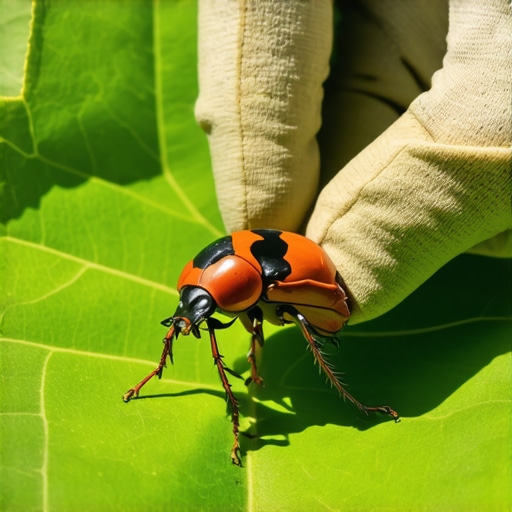
You wake up in mid-July and see your $5,000 weeping cherry tree looking like it was hit by a blowtorch. The leaves are not gone; they are lace. You see the iridescent green shells of Popillia japonica—the Japanese Beetle—gorging on the parenchyma of your foliage. Most homeowners panic and spray neurotoxins that kill every honeybee in a three-mile radius. That is a failure of engineering and biology. I always drill into my new crew members: if you don’t fix the soil grading and biology first, every plant you put in the ground is just expensive compost. You cannot spray your way out of a systemic ecological imbalance. To stop the 2026 infestation, you must start 18 months in advance, targeting the larval instars hidden four inches beneath your turf. It is about disrupting the life cycle through soil moisture management, biological colonization, and strategic arboriculture. Don’t skip this. If you ignore the subsurface grubs now, you are simply inviting the 2026 swarm to dinner.
How to identify Japanese Beetle damage?
To identify Japanese Beetle damage, look for skeletonized leaves where only the veins remain, typically starting at the top of the plant and moving downward. This damage occurs primarily in mid-summer (late June through August) and is often accompanied by large brown patches in the lawn caused by subsurface grubs.
“A successful Integrated Pest Management (IPM) program for Japanese beetles focuses on the most vulnerable stage—the soil-dwelling larvae—rather than the highly mobile adults.” – Penn State College of Agricultural Sciences
The Life Cycle of Popillia japonica: Why 2026 Starts Now
Understanding the timeline is critical for non-chemical control. In late June, adults emerge from the soil to mate and feed. Each female can lay 40 to 60 eggs throughout the summer. These eggs require high soil moisture to hatch. If your soil is at 15% moisture or higher, the survival rate of these eggs skyrockets. By September, those eggs are first-instar grubs feeding on your lawn’s root system. As the soil temperature drops below 50°F, they migrate 8 to 10 inches deep to overwinter. In the spring, they rise again as third-instar grubs. If you want to stop the 2026 generation, you must make your soil a hostile environment during the 2025 egg-laying window. This isn’t guesswork; it is soil physics. High-clay soils with poor drainage act as an incubator for these pests. You need to manage your hydrostatic pressure and soil compaction to ensure the surface stays dry enough to desiccate the eggs while the roots remain hydrated deep down.
Non-Chemical Grub Control: The Biological Warfare Strategy
Forget the big-box store granules. We use two primary biological agents: Milky Spore (Paenibacillus popilliae) and Beneficial Nematodes (Heterorhabditis bacteriophora). Milky spore is a bacterium that, once established, can protect a lawn for 15 to 20 years. However, it only works if the grubs are present to consume the spores. It is a slow-burn strategy. For immediate knockdown of the 2026 population, nematodes are your heavy artillery. These microscopic roundworms hunt grubs by sensing CO2 emissions and heat. You must apply them when the soil temperature is exactly between 55°F and 85°F. Too cold and they go dormant; too hot and they die. We use a pressurized sprayer, ensuring the soil is pre-saturated so the nematodes can move through the pore spaces between soil particles. If your soil is compacted like concrete, the nematodes can’t move. They will die on the surface from UV exposure. Aerate your lawn to a 4-inch depth before application. It is a measurement game.
| Control Method | Application Window | Longevity | Mechanism |
|---|---|---|---|
| Milky Spore | Spring/Fall | 15-20 Years | Bacterial Infection |
| H. bacteriophora Nematodes | Late August | Seasonal | Parasitic Predation |
| Manual Knockdown | Daily (June-July) | N/A | Physical Removal |
| Neem Oil (Organic) | Weekly (Summer) | 7 Days | Antifeedant |
How do I get rid of Japanese beetles in my yard permanently?
To eliminate Japanese beetles permanently, you must implement a multi-year biological strategy including Milky Spore for long-term soil colonization and beneficial nematodes for immediate grub reduction. Replacing “beetle-magnet” plants like Linden trees and Roses with resistant species like Red Maples is also required for permanent results.
The “Information Gain” on Beetle Traps: The Great Deception
The internet will tell you to buy those yellow bag traps. Don’t. Those traps use floral scents and sex pheromones (japonilure) that are so effective they pull beetles from your neighbor’s yard half a mile away. Research shows that properties with traps actually suffer more damage than those without. You are effectively hosting a singles bar for every beetle in the zip code. Instead of traps, we use decoy plants. Pelargonium (Geraniums) contain a specific compound that causes temporary paralysis in Japanese beetles. When they eat the petals, they fall to the ground and become easy prey for ground beetles and birds. It is a biological trap that doesn’t use attractants. We also look at soil pH. Keeping your lawn at a slightly acidic 6.2 to 6.5 pH encourages healthy root growth that can survive minor grub feeding without the need for intervention.
“Managing soil moisture during the peak egg-laying period of July and August is the single most effective cultural control for reducing next year’s beetle population.” – Agricultural Extension Agronomy Manual
Hardscaping and Drainage: The Overlooked Defense
Poor drainage is the beetle’s best friend. In my hardscape projects, I see it constantly: a sunken patio or a poorly graded lawn that holds water. This saturated soil is exactly where the females want to deposit eggs. By installing a French drain or correcting the finish grade to a 2% slope away from the house, you aren’t just protecting your foundation; you are drying out the beetle’s nursery. If you have a modified gravel base under your patio, ensure your polymeric sand is intact. Beetles will often try to lay eggs in the soft transition zones between pavers and turf. Tighten up those edges. A 1-inch thick layer of mulch around your garden beds can also act as a physical barrier, making it harder for the grubs to reach the soil surface as adults.
What is the best time to apply milky spore for Japanese beetles?
The best time to apply Milky Spore is during the late summer or early fall when the soil temperature is warm and the first-instar grubs are actively feeding near the surface. This ensures the bacteria can infect the larvae and begin the natural multiplication process within your soil profile.
The 2026 Prevention Checklist
- July 2025: Monitor adult populations and use manual removal (dropping them into soapy water) early in the morning when they are sluggish.
- August 2025: Core aerate the lawn to a depth of 3-4 inches to reduce compaction and prepare for biologicals.
- Late August 2025: Apply H. bacteriophora nematodes during a drizzly day or late evening to avoid UV degradation.
- September 2025: Apply Milky Spore powder in a grid pattern (every 4 feet) to begin long-term colonization.
- October 2025: Mow the lawn at a height of 3.5 to 4 inches; taller grass has deeper roots that can withstand grub damage.
- April 2026: Perform a soil test to ensure pH is between 6.2 and 6.8 to optimize root resilience.
Landscape management is a chess match. If you are reactive, you lose. If you are proactive, you win. The 2026 beetle season isn’t a force of nature; it is the result of what you do with your soil today. Stop the “mow-and-blow” mentality. Think like an engineer. Treat the soil, not the leaf. Your garden’s survival depends on the biology you foster in the dark, damp earth where the real battle is fought.
![Stop Killing 2026 Lavender: Drainage Rules [Zone 8]](https://lawnmajesty.com/wp-content/uploads/2026/06/Stop-Killing-2026-Lavender-Drainage-Rules-Zone-8.jpeg)

![How to Install 2026 Drip Irrigation [Fast]](https://lawnmajesty.com/wp-content/uploads/2026/09/How-to-Install-2026-Drip-Irrigation-Fast.jpeg)