
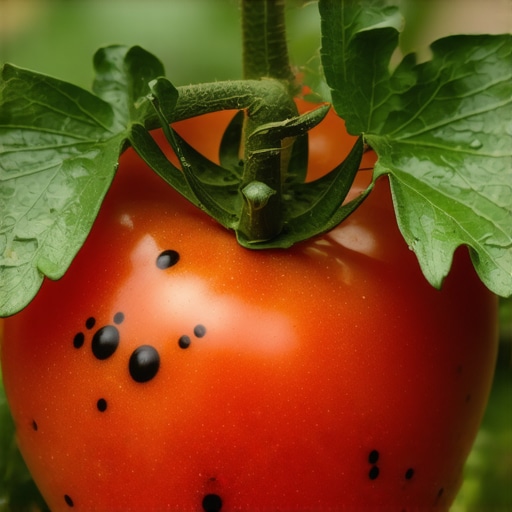
Why Your 2026 Tomato Leaves are Turning Black
The smell hits you before you even reach the garden gate: a cloying, heavy scent of wet rot and decomposing organic matter. You see it from ten feet away—the once-sturdy stalks of your 2026 tomato crop are collapsing, and the foliage looks like it has been scorched by a blowtorch. This isn’t just a gardening mishap; it is a structural and biological failure. When tomato leaves turn black, they are screaming that the local ecosystem you’ve constructed has suffered a catastrophic breach in its defense layers. Whether it is a fungal invasion or a chemical overdose, the solution requires more than a watering can; it requires an engineering mindset.
The Chemical Nightmare: Why Excess Nutrients Kill
Tomato leaves turn black primarily due to Late Blight (Phytophthora infestans), Bacterial Speck, or Nitrogen toxicity. These conditions are exacerbated by poor soil drainage and high humidity. Identifying the specific necrotic pattern—whether water-soaked lesions or crispy margins—is critical for selecting the correct horticultural remediation strategy.
I remember a homeowner in late 2025 who called me in a panic after they completely torched their front lawn and vegetable garden by applying a triple-dose of high-nitrogen turf fertilizer right before a heatwave. They thought more was better. Instead, they created a hyper-saline environment in the soil. Within 48 hours, the tomato leaves didn’t just wilt; they turned a brittle, carbon-black along the edges. The concentrated salts in the fertilizer literally pulled the moisture out of the plant’s root hairs through reverse osmosis. It wasn’t a disease; it was a chemical execution. If you are seeing black margins on your 2026 crop, check your fertilizer logs before you reach for the fungicide. The soil’s electrical conductivity (EC) is likely off the charts, and you are looking at a localized drought caused by nutrient saturation.
“A retaining wall doesn’t fail because of the stone; it fails because of the water trapped behind it.” – Hardscape Engineering Axiom
Identifying the Biological Culprit: Blight vs. Bacteria
If the black spots are greasy and water-soaked, you aren’t dealing with fertilizer burn; you are dealing with a pathogen. Late Blight (Phytophthora infestans) is the most common executioner of tomato plants. This oomycete thrives in 2026’s fluctuating humidity levels. It starts as pale green, water-soaked spots that rapidly turn dark brown to black. Under the right conditions (above 90% humidity and temperatures between 60-78°F), the pathogen can liquefy a healthy plant in three days. This is where your garden design fails you. If your plants are crowded and the airflow is stagnant, you have created a high-pressure incubation chamber for spores.
How much modified gravel do I need for a patio base?
While this seems unrelated to tomatoes, the answer is central to garden health. A standard patio requires 4 to 6 inches of modified gravel (2A or 2B), compacted in 2-inch lifts. If you don’t manage the hydrostatic pressure and drainage of your surrounding hardscaping, that water has nowhere to go but your garden beds. Excess water pooling against a patio edge eventually seeps into the garden, raising the humidity at the drip-line of your tomatoes and inviting the very fungal pathogens that turn leaves black. Poor engineering in your landscaping translates directly to disease in your lawn care and garden.
| Condition | Visual Symptom | Microscopic Cause | Immediate Action |
|---|---|---|---|
| Late Blight | Greasy, black lesions | Phytophthora infestans spores | Prune and apply copper fungicide |
| Nitrogen Burn | Crispy, black leaf margins | Salt-induced osmotic stress | Leach soil with 2 inches of water |
| Bacterial Speck | Small, black pinpricks | Pseudomonas syringae | Remove infected debris, rotate crops |
Hardscaping and Drainage: The Invisible Shield
Most gardeners treat garden design as an aesthetic choice. I treat it as civil engineering. If your tomato leaves are turning black from the bottom up, your soil grading is likely the culprit. When water sits at the base of a plant, it creates a capillary rise that carries soil-borne pathogens directly onto the lower leaves. You need a 2% slope away from your planting zones. If you are building a raised bed, don’t just fill it with dirt. You need a French drain or a weep-hole system at the base of the retaining wall to prevent the “bathtub effect.” In 2026, we are seeing more frequent high-intensity rain events; your garden must be able to shed 2 inches of water in an hour without saturating the root zone.
“Soil compaction is the silent killer of urban landscapes, reducing pore space and oxygen availability for root respiration.” – Penn State Agricultural Extension
Why are my tomato leaves turning black and curling?
When leaves turn black and curl simultaneously, you are likely looking at Tomato Spotted Wilt Virus (TSWV) or severe aphid infestation. The curling is a physiological response to the pest sucking the phloem sap, while the blackening is often sooty mold growing on the honeydew left behind. You must treat the insect vector, not just the fungus. It is a biological chain reaction. Pruning is not enough. You must disrupt the life cycle of the thrips or aphids or your 2026 harvest is forfeit. Don’t skip the dormant oil spray next season.
The Restoration Checklist: Saving Your 2026 Crop
- Sanitize Your Tools: Use a 10% bleach solution or 70% isopropyl alcohol between every cut. If you don’t, you are just a walking vector for disease.
- Adjust the pH: Blackening can sometimes be a precursor to blossom end rot, caused by calcium being locked out by low pH. Aim for 6.2 to 6.8.
- Airflow Engineering: Prune all suckers and lower branches up to 12 inches from the ground. No leaf should touch the soil.
- Mulch Management: Use 2-3 inches of clean straw or specialized plastic mulch to prevent soil splash-back.
- Regulate Irrigation: Only use drip irrigation. Overhead watering is a death sentence for tomatoes.
Landscape management is a game of inches and percentages. From the PSI of your soil compaction to the NPK ratios in your mulch, every variable matters. Your tomato leaves are the diagnostic sensors for your entire property. If they are turning black, your system is out of balance. Fix the drainage, calibrate the chemistry, and respect the biology of the soil. It is that simple, and that difficult. Stop looking for a miracle cure in a bottle and start looking at the ground beneath your feet. The dirt never lies.
![Stop Killing 2026 Peonies: 3 Drainage Secrets [Zone 6]](https://lawnmajesty.com/wp-content/uploads/2026/05/Stop-Killing-2026-Peonies-3-Drainage-Secrets-Zone-6.jpeg)