Why You Should Prune Roses in Late Winter
The Engineering of Dormancy: Why Planning Beats Planting
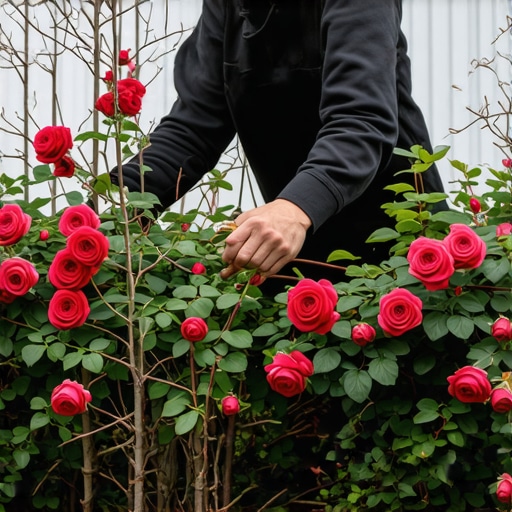
Late winter pruning is critical because it stimulates vigorous spring growth, removes overwintering pathogens, and allows for structural correction while the plant is dormant. Timing this before the buds swell ensures the plant directs energy into productive new wood rather than wasted foliage. I always drill into my new crew members: if you don’t fix the soil grading first, every plant you put in the ground is just expensive compost. Roses are no different. You can’t just hack at them and expect a professional result. You have to understand the architecture of the cane, the pressure of the sap, and the biology of the node. Most homeowners wait too long, missing the window where the plant is biologically primed for a reset. If you wait until you see leaves, you’ve already lost the game. You’re cutting away energy the plant has already spent. Stop wasting the plant’s resources. Pruning is not a haircut; it is a surgical intervention designed to maximize airflow and solar penetration to the center of the crown.
The Biology of Sap Flow and Tissue Healing
Understanding the microscopic reality of the rose cane is the difference between a thriving specimen and a rotting stump. When a plant is dormant, its metabolic activity is minimized, but its internal chemistry is preparing for a massive burst of auxins. These hormones are concentrated in the terminal buds. By removing these buds in late winter, you redistribute those auxins to the lower, outward-facing buds. This is civil engineering at a cellular level. You are rerouting the flow of nutrients and water.
“Pruning at the correct time of year ensures that the plant’s energy is directed toward the development of strong, healthy structural wood rather than being dissipated in unproductive growth.” – USDA Agricultural Research Manual
A clean cut at a 45-degree angle precisely 1/4 inch above an outward-facing bud is the industry standard. Why? Because it prevents water from pooling on the wound, which leads to fungal colonization by Diplocarpon rosae (Black Spot). If you cut too high, the remaining stub will die and rot back into the main cane. If you cut too low, you damage the bud itself. There is no middle ground. You get it right, or the plant suffers. Don’t skip this. Use a bypass pruner, never an anvil pruner. Anvil pruners crush the vascular tissue, effectively strangling the cane before it can heal.
How much should I cut back my roses in winter?
For most hybrid tea and floribunda roses, you should remove approximately one-half to two-thirds of the previous year’s growth, leaving 3 to 5 sturdy canes. This aggressive reduction forces the plant to develop a deep, resilient root system rather than supporting a sprawling, weak canopy. In the context of garden design, this ensures the rose remains a structured element rather than an unruly mess that interferes with hardscaping or walkways.
The Tools: Investing in High-Carbon Steel
Professional landscaping requires tools that maintain a surgical edge under heavy use. Forget the $10 specials at the big-box hardware store. They are made of soft pot-metal that loses its edge after ten cuts. A dull blade is a dangerous blade. It tears the bark and creates jagged edges that serve as entry points for pests like the raspberry cane borer. You need high-carbon steel bypass pruners, a whetstone with at least 1000 grit, and a bottle of 70% isopropyl alcohol. Every time you move from one plant to the next, you sanitize. This isn’t optional. Cross-contamination is the primary vector for spreading mosaic virus through a landscape. If you don’t treat your tools like surgical instruments, you are just a hack with a pair of scissors.
How to sharpen bypass pruners for rose care?
To sharpen your pruners, follow the existing bevel angle of the cutting blade using a diamond file or whetstone. Stroke in a single direction away from the body, and then remove the burr on the flat side with one light pass. A sharp blade should slice through a rose cane with less than 10 PSI of hand pressure. If you have to squeeze hard, you’re crushing the plant. Stop and sharpen.
Material Comparison and Structural Planning
Before you make your first cut, you must categorize the rose variety. Not all roses are engineered the same way. A climbing rose requires a completely different structural approach than a miniature or a shrub rose. Misidentifying your variety will lead to a season of zero blooms. Use this data block to guide your approach.
| Rose Category | Pruning Intensity | Primary Goal | Ideal Cane Count |
|---|---|---|---|
| Hybrid Tea | Heavy | Maximum Bloom Size | 3-5 canes |
| Floribunda | Moderate | Massive Color Display | 5-7 canes |
| Climbing Roses | Light/Structural | Vertical Framework | Maintain 3-4 main canes |
| Shrub Roses | Renewal | Density & Shape | Remove 1/3 of oldest wood |
Notice the relationship between pruning intensity and the desired output. In landscaping, we call this the ‘Form-to-Function’ ratio. If your goal is a formal garden design, you lean toward heavy pruning. If you are building a naturalistic screen, you lean toward renewal pruning. This is why we charge the big bucks; it’s about making a strategic decision before the first cane falls.
The Professional Late Winter Rose Checklist
- Inventory Your Tools: Clean, sharpen, and oil your bypass pruners and loppers.
- Identify the ‘Three Ds’: Remove all wood that is Dead, Damaged, or Diseased.
- Clear the Center: Cut out canes that cross through the middle of the bush to increase airflow.
- Check the Graft Union: Ensure no suckers are growing from below the ‘knob’ at the soil line.
- Seal Large Cuts: For canes thicker than a pencil, apply a drop of wood glue to prevent borer entry.
- Apply Dormant Oil: Spray the remaining canes with a horticultural oil to suffocate overwintering scale and spider mite eggs.
Soil Health and the Hardscape Intersection
Landscaping is a holistic system. You cannot fix the plant if the soil is a chemical wasteland. Roses are heavy feeders, but they also require impeccable drainage. If your rose bed is adjacent to a concrete patio or a retaining wall, you must account for the hydrostatic pressure and potential lime leaching from the masonry. Concrete raises the pH of the surrounding soil, making it more alkaline. Roses prefer a pH of 6.0 to 6.5. If the pH is off, the plant cannot uptake nutrients regardless of how much fertilizer you throw at it.
“A retaining wall doesn’t fail because of the stone; it fails because of the water trapped behind it, and a rose doesn’t die from the cold; it dies from the rot in the wet, compacted soil.” – Hardscape Engineering Axiom
In late winter, after pruning, apply a 2-inch layer of high-quality compost or aged manure around the base of the plant, keeping it 3 inches away from the trunk. This provides a slow-release nitrogen source and improves soil structure. If you are dealing with heavy clay, common in many urban landscapes, incorporate expanded shale to improve aeration core depth. Don’t use sand. Sand plus clay equals homemade concrete. Use organic matter or shale.
Post-Pruning: The Settling-In Phase
Once the pruning is complete and the soil is amended, your job isn’t done. You are now in the ‘observation phase.’ Within 2-4 weeks, depending on your USDA hardiness zone, you should see the buds begin to swell and turn a deep red or bronze. This is the sign that your dormant engineering worked. If you see die-back on the tips of your cuts, it means you likely had a late frost that damaged the exposed tissue. Simply prune back to the next healthy bud. Regular lawn care schedules should also be adjusted; ensure your pre-emergent herbicide for the grass does not drift into the rose beds. The chemicals used in standard lawn care can cause severe leaf curling and stunted growth in roses. Keep your spray tips low and your aim true. Professionalism is about the details others ignore. It will thrive. Just don’t get lazy with the maintenance schedule.”, “image”: {“imagePrompt”: “A high-resolution macro photograph of a professional bypass pruner making a precise 45-degree cut on a dormant rose cane, showing a clean green cambium layer inside the cut, with a blurred background of a winter garden.”, “imageTitle”: “Professional Pruning Technique for Winter Roses”, “imageAlt”: “Macro shot of bypass pruners cutting a rose cane at a 45-degree angle.”}, “categoryId”: 0, “postTime”: “”}