Why flagstone is worth the extra cost for paths
The Engineering Reality of Flagstone: Why Quality Stone Outlasts Cheap Alternatives
I recently got called out to tear up a $30,000 patio and walkway system that was sinking because the previous contractor thought he could skimp on the sub-base and use thin, sedimentary shale instead of true flagstone. The homeowner was devastated. The stone was cracking under its own weight, and the freeze-thaw cycles had turned the joints into a muddy mess. This is what happens when you treat hardscaping as a cosmetic choice rather than a structural one. Real flagstone is an investment in geology and civil engineering, not just a pretty surface.
Why is flagstone better than concrete or pavers for walkways?
Flagstone provides superior longevity and structural integrity for paths because it is a natural, high-density material that resists compressive stress and thermal expansion better than poured concrete. When installed over a compacted gravel base, it creates a flexible pavement system that shifts with the ground without cracking or spalling.
“A retaining wall or stone path doesn’t fail because of the stone; it fails because of the water trapped behind or beneath it.” – Hardscape Engineering Axiom
The Physics of Stone Density and PSI
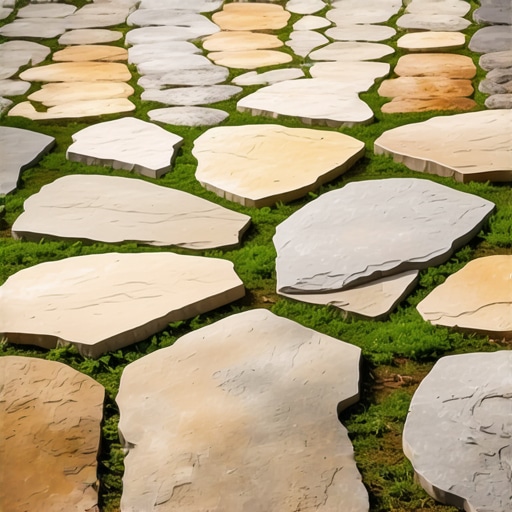
Most people look at the color of the stone. I look at the density. A high-quality Pennsylvania Bluestone or a Tennessee Quartzite has a much higher PSI (pounds per square inch) rating than standard 2,500 PSI residential concrete. Concrete is rigid. It wants to crack. Flagstone, specifically when dry-set on a modified gravel base, is part of a living system. It breathes. If the ground moves, the stone moves with it. You reset it. You don’t jackhammer it. Don’t buy the thin stuff. You need at least 1.5 to 2 inches of thickness for a dry-set application. Anything thinner is just expensive tile that will snap under a wheelbarrow.
How much modified gravel do I need for a patio base?
For a standard flagstone walkway, you must excavate deep enough to accommodate 4 to 6 inches of compacted 21A or CR-6 modified gravel, plus 1 inch of bedding sand and the thickness of the stone itself. Failure to provide this structural foundation leads to settling and hydrostatic pressure issues. Do not skip the plate compactor. A hand tamper is a toy. You need 4,000 lbs of centrifugal force to lock those aggregates together. It must be rock hard.
| Material Property | Natural Flagstone | Poured Concrete | Thin Slate Chips |
|---|---|---|---|
| Compressive Strength | High (8,000+ PSI) | Moderate (2,500-4,000 PSI) | Low (Brittle) |
| Flexural Strength | Superior (Natural Cleft) | Poor (Requires Rebar) | Very Poor |
| Life Expectancy | 50-100 Years | 15-25 Years | 2-5 Years |
| Repairability | Individual Stones | Full Replacement | Constant Patching |
What is the best base for flagstone paths?
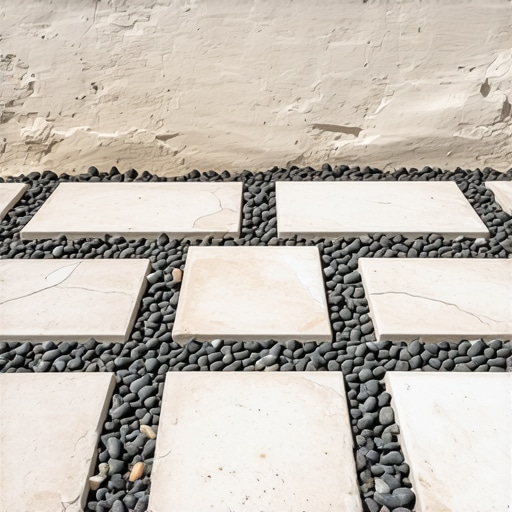
The best base for a flagstone path is a permeable graded aggregate system consisting of 4 inches of 3/4-inch crushed stone topped with a 1-inch screed layer of coarse sand or stone dust. This setup ensures that hydrostatic pressure does not build up under the stones, which causes heaving during winter months. If you live in a high-clay area, you need a geotextile fabric between the soil and the gravel. This prevents the clay from pumping up into your clean stone. It is a barrier. It is mandatory.
“Surface drainage must be calculated to move water away from the hardscape at a minimum 2% slope to prevent sub-grade saturation.” – Penn State Agricultural Extension
The Problem with Big-Box Stone
I see it every week. A homeowner goes to a big-box store and buys “steppings stones” that are 1/2 inch thick. Those are not stones; they are hazards. In garden design, you have to account for the weight of the material and the traffic it will bear. Natural flagstone sourced from a reputable quarry is sorted by thickness and structural grade. It costs more because it hasn’t been chemically treated or sliced so thin it loses its tensile strength. Quality stone stays where you put it. Cheap stone migrates.
Flagstone Installation Quality Checklist
- Excavation Depth: Minimum 8 inches total depth for residential foot traffic.
- Sub-grade Compaction: Clear all organic material; compact the raw soil before adding gravel.
- Base Layer: 4-6 inches of 21A modified gravel, compacted in 2-inch lifts.
- Stone Selection: Minimum 1.5-inch nominal thickness for dry-set paths.
- Jointing: Use polymeric sand or stabilized stone dust to prevent weed growth and erosion.
- Pitch: Ensure a 1/4 inch per foot slope away from any structures.
Maintaining the Micro-Environment
Hardscaping isn’t a “set it and forget it” project. You need to watch the joints. Polymeric sand is great, but it can degrade. If you see cracks in the joints, fix them. It will rot the base if you let water sit in those gaps. In lawn care, people often scalp the edges of their paths with a string trimmer. Stop it. You’re hitting the stone and weakening the edge bond. Keep the mower deck away. Use a sharp edge. It looks better and protects the stone. Flagstone is the king of materials. It is durable. It is heavy. It is worth every cent if you do the dirt work correctly. If you don’t, you’re just burying money in the mud. Don’t be that guy. Build it once. Build it right. Any contractor who tells you that a 2-inch gravel base is “enough” is a liar. Fire them immediately.