The secret to keeping hydrangeas blue
The Forensic Autopsy of a Fading Garden
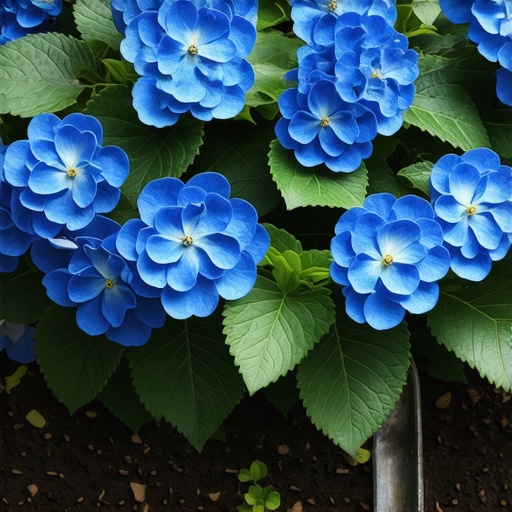
To keep hydrangeas blue, you must maintain a soil pH between 5.0 and 5.5 while ensuring the presence of soluble aluminum ions. If the pH rises above 6.0, the aluminum becomes chemically locked away, preventing the plant from producing the blue delphinidin-3-glucoside pigment. It is a matter of inorganic chemistry, not luck.
I recently walked onto a property where the homeowner had literally scorched their entire hydrangea border. They had spent thousands on Hydrangea macrophylla ‘Nikko Blue’ only to watch them turn a muddied, sickly pink within two seasons. In a desperate attempt to fix it, they dumped five pounds of high-nitrogen turf fertilizer directly onto the root crowns. When I arrived, the leaves were crisp, the soil was a salt-choked mess, and the plants were essentially dying in a chemical kiln. This is what happens when you treat a garden like a chemistry set without reading the periodic table first. Most homeowners and ‘mow-and-blow’ crews think you just throw some ‘blue juice’ at the dirt and walk away. It does not work like that. If your soil’s cation exchange capacity (CEC) is off, or if you are fighting heavy limestone bedrock, you are just throwing money into a hole.
The Aluminum Ion Barrier: Why pH is Only Half the Story
Soil acidity is the gatekeeper, but aluminum is the guest of honor. In the world of horticulture, we talk about the ‘bioavailability’ of micronutrients. For a hydrangea to express blue, it must absorb aluminum. However, aluminum becomes insoluble in soil that is even slightly alkaline. When the pH level hits 6.5 or higher, the aluminum binds to other elements and the plant can’t touch it. It does not matter if the soil is packed with aluminum; if the gate is locked, the blooms stay pink.
“The availability of aluminum is the primary determinant of blue sepal color in Hydrangea macrophylla, though soil pH is the controlling factor of that availability.” – Agricultural Extension Agronomy Manual
What soil pH is needed for blue hydrangeas?
A target soil pH of 5.2 to 5.5 is the industry standard for maintaining deep blue saturation in bigleaf hydrangeas. Once the soil climbs toward 6.0, you will see ‘blurple’ or lavender transitions, and above 7.0, true pink or red tones will dominate the sepals. Constant monitoring with a calibrated probe is mandatory.
Can I use coffee grounds to make hydrangeas blue?
Coffee grounds are a weak organic amendment that may slightly improve soil structure, but they lack the elemental power to shift soil pH significantly in a large garden bed. Relying on kitchen scraps for professional-grade color control is a fool’s errand; use elemental sulfur or aluminum sulfate for measurable, predictable results.
The Technical Breakdown: Soil Amendments and Material Science
When we design a landscape, we aren’t just looking at the plant; we are looking at the subsurface engineering. If you have a concrete foundation or a limestone retaining wall nearby, that lime is constantly leaching into your soil. This creates a localized ‘alkaline micro-pocket’ that will thwart your efforts to get blue blooms. You have to fight the infrastructure itself. I tell my crew: if there is a concrete walkway within three feet of the hydrangea, you better be prepared to double your acidifying efforts.
| Amendment Material | Action Type | Application Rate | Timing Recommendation |
|---|---|---|---|
| Aluminum Sulfate | Fast-Acting Acidifier | 0.5 lbs per 10 sq. ft. | Early Spring (Pre-Bud) |
| Elemental Sulfur | Slow-Release Acidifier | 1.0 lbs per 100 sq. ft. | Late Fall or Early Spring |
| Ammonium Sulfate | Acidifying Fertilizer | 2 lbs per 1000 sq. ft. | Growing Season |
| High-Phosphate Fertilizer | Blue Inhibitor | Avoid entirely | Never for blue color |
The Blueprint for Remediation: A 12-Month Plan
If you are staring at a pink hydrangea that should be blue, the autopsy is over. Now comes the engineering phase. We start by stripping back any ‘mulch volcanoes’—those mounds of cedar chips that suffocate the root flare and harbor fungus. We need direct access to the soil. Stop using tap water if your municipality treats it with high levels of lime to protect the pipes. That ‘hard’ water is slowly turning your blue plants pink with every drop. Use captured rainwater or acidified irrigation lines.
- Step 1: Soil Test. Do not guess. Get a professional lab analysis of your pH and phosphorus levels.
- Step 2: Lower Phosphorus. High phosphorus binds with aluminum. Switch to a 25-5-30 NPK ratio or similar.
- Step 3: Apply Elemental Sulfur. This is a slow burn. It takes soil microbes months to convert it, but it’s the most stable way to drop pH.
- Step 4: Top-dress with Pine Bark. Use a 2-inch layer of finely shredded pine bark mulch. It has a natural pH of 4.0 to 4.5.
- Step 5: Drench with Aluminum Sulfate. Dissolve 1 tablespoon per gallon of water and apply once a month in April, May, and June.
“A retaining wall doesn’t fail because of the stone; it fails because of the water trapped behind it, just as a hydrangea fails not from the seed, but from the chemistry of its bed.” – Hardscape Engineering Axiom
Precision matters. If you over-apply aluminum sulfate, you will kill the roots. It is a salt. Too much salt draws water out of the plant cells, leading to ‘fertilizer burn.’ I have seen $10,000 installations turned into brown sticks because someone thought ‘more is better.’ It isn’t. Follow the measurements. Watch the leaves. If they start yellowing at the edges, you’ve overdone it. Flush the soil with fresh water and back off. It’s a balance of forces. Like grading a yard for proper drainage, you have to work with the physics of the site, not against them. Stop buying big-box ‘miracle’ fixes and start measuring your inputs. That is the only ‘secret’ there is.