Why your mulch is disappearing every year
You look out at your garden beds and see bare, baked earth where three inches of hardwood should be. Your mulch isn’t just vanishing; it’s being consumed, washed away, or oxidized due to poor material selection and soil biology. Mulch disappears because of rapid microbial decomposition, wind and water erosion, and mechanical compaction. In healthy soil, microbes break down organic matter into humus, while poor-grade mulches like shredded pallets lack the lignin density to resist structural collapse over a single season.
The Chemical Nightmare: A Case Study in Cheap Fill
A homeowner called me in a panic last June after they completely torched their front lawn and three-year-old boxwoods. They had bought twenty yards of ‘budget mulch’ from a guy with a truck and no license. Within two weeks, the garden smelled like a swamp, and the plants were turning a sickly chlorotic yellow. I took one look at the soil and knew exactly what happened. The mulch was mostly ground-up construction debris and green waste that hadn’t been aged. As the microbes rushed to break down that fresh carbon, they sucked every milligram of nitrogen out of the soil. It’s called nitrogen tie-up. The mulch wasn’t just disappearing; it was literally eating the lawn’s nutrients to fuel its own decay. I had to tell them to strip it all out and start over. It was an expensive lesson in why price shouldn’t be your primary metric for landscaping materials.
The Biological Breakdown: Why Nitrogen is the Enemy of Longevity
When you spread organic mulch, you are essentially laying down a feast for soil microorganisms. These bacteria and fungi don’t care about your garden design; they only care about carbon. If your mulch has a high surface-area-to-volume ratio—like triple-shredded varieties—the decomposition process accelerates exponentially.
“Organic mulches are not permanent; they are a dynamic part of the soil-atmosphere interface that requires annual replenishment to maintain a 2-to-3-inch depth.” – Cornell University Cooperative Extension
The microbes consume the cellulose and lignin, turning the solid wood into carbon dioxide and water. If your soil is healthy and full of life, your mulch will disappear faster. That’s the irony of high-end landscaping: the better your soil, the more mulch you have to buy. However, you can slow this down by choosing materials with higher lignin content, such as cedar or large pine bark nuggets, which are harder for the ‘soil bugs’ to digest.
How much mulch do I need for a patio border?
To calculate your needs, multiply the square footage of your bed by the desired depth in inches, then divide by 324. For a standard 3-inch depth, one cubic yard covers 108 square feet. Don’t eyeball it. If you go too thin, the sun hits the soil and triggers weed germination. If you go too thick, you create an anaerobic environment that rots your plants’ root flares.
| Mulch Type | Decomposition Rate | Best Use Case | Hydrophobic Risk |
|---|---|---|---|
| Double-Shredded Hardwood | 6-12 Months | General Garden Beds | Medium |
| Pine Bark Nuggets | 2-4 Years | Slopes and Large Borders | High |
| Cedar / Redwood | 1-3 Years | Pest-Sensitive Areas | Low |
| Pine Straw | 6-9 Months | Acid-Loving Plants (Azaleas) | Low |
The Engineering of Erosion: Why Mulch Moves
If your garden design doesn’t account for hydrostatic pressure and surface runoff, your mulch will end up in the street after the first heavy thunderstorm. This is an engineering failure, not a biological one. Smooth mulch, like pine nuggets, has a tendency to float. When water sheets across a compacted soil surface, it lifts the bark and carries it away. To prevent this, you need to address the soil grading. We use a ‘V-trench’ edge—a 4-inch deep cut at the border of the lawn and the bed. This acts as a catch-basin for both water and migrating mulch.
“A retaining wall doesn’t fail because of the stone; it fails because of the water trapped behind it.” – Hardscape Engineering Axiom
The same logic applies to garden beds. If you don’t provide a path for water, the water will clear a path for itself, taking your $50-a-yard mulch with it. Don’t skip the edging.
Why does my mulch turn grey so fast?
This is solar oxidation. The UV rays from the sun break down the carbon bonds on the surface of the wood, bleaching it. It doesn’t mean the mulch is gone, but it looks dead. You can ‘refresh’ the look by lightly raking the top half-inch to expose the un-oxidized material underneath. Do not just keep piling more on top; you’ll choke the soil.
- Check the depth: Never exceed 4 inches total.
- Identify the ‘volcano’: Ensure mulch isn’t touching tree trunks.
- Test for ‘Artillery Fungus’: If you see black spots on your siding, your mulch is too wet.
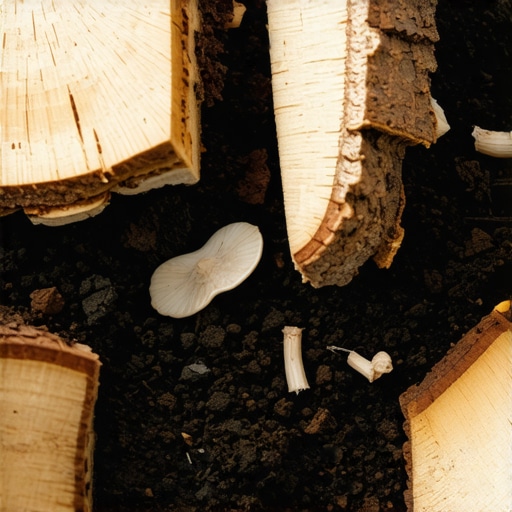
- Check for Mycelium: White threads mean the fungi are working; don’t disturb them.
The Hardscape Connection: Mulch and Drainage
In high-end hardscaping, we often see mulch disappearing around the edges of pavers. This usually points to a lack of proper base compaction or a failure in the geotextile fabric. If the soil underneath the mulch is settling because the contractor didn’t use a plate compactor, the mulch will naturally fall into those voids. It looks like it’s vanishing, but it’s actually filling the holes left by lazy workmanship. Every time I install a patio, I ensure the transition between the stone and the garden bed is reinforced with a heavy-duty edge restraint. This keeps the mulch where it belongs and prevents the ‘creep’ that leads to messy, uneven borders. You have to think about the yard as a system of interlocking parts. If the lawn care is sloppy, the hardscaping suffers. If the garden design is flawed, the maintenance costs skyrocket. Get the foundation right, or don’t bother doing the work at all.
![Stop 2026 Leaf Rust on Your Rose Bushes [Fix]](https://lawnmajesty.com/wp-content/uploads/2026/07/Stop-2026-Leaf-Rust-on-Your-Rose-Bushes-Fix.jpeg)
![Repairing 2026 Broken Garden Gate Latches [Easy]](https://lawnmajesty.com/wp-content/uploads/2026/07/Repairing-2026-Broken-Garden-Gate-Latches-Easy.jpeg)