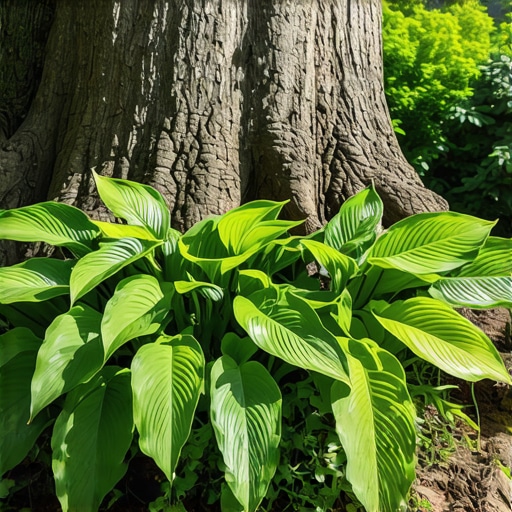
The Best Shade-Loving Plants for Under a Large Oak
The Hidden Engineering of an Oak Root System
Planting under an oak requires understanding that 90% of a tree’s feeder roots exist in the top 12 inches of soil. Any landscape design must respect the critical root zone to prevent physiological stress or hydrostatic pressure imbalances that lead to root rot.
I always drill into my new crew members: if you don’t fix the soil grading first, every plant you put in the ground is just expensive compost. I recall a job three years ago where a client had spent four grand on high-end hostas and ferns, only to have them desiccate within two months. Why? Because the previous contractor had tilled the soil 8 inches deep under a century-old White Oak. He didn’t just plant flowers; he severed the vascular system of the tree and destroyed the soil structure. In my firm, we don’t pick up a rototiller near a drip line. We use hand trowels and surgical precision. If you hit a root thicker than a human thumb, you move the hole. It is that simple. The biology of a Quercus specimen is a masterpiece of civil engineering, moving hundreds of gallons of water daily through osmotic pressure. When you disrupt that, you aren’t just gardening; you’re vandalizing a living infrastructure.
The Hard Reality of Dry Shade Chemistry
The environment beneath a mature oak is defined by low light penetration, acidic pH shifts from leaf litter, and moisture competition driven by the tree’s massive canopy. Successful landscaping here requires selecting species that thrive in dry shade and nutrient-poor environments.
“A retaining wall doesn’t fail because of the stone; it fails because of the water trapped behind it.” – Hardscape Engineering Axiom
While that axiom usually refers to masonry, it applies to soil physics too. Under an oak, the canopy acts like an umbrella, creating a rain shadow. Even during a downpour, the soil near the trunk remains dry. This is why most DIY lawn care attempts fail under trees; the turf grass simply cannot compete with the tree’s hydraulic lift. We look for plants with specific physiological adaptations: waxy cuticles to prevent transpiration or rhizomatous root systems that can store energy. We are looking for survivors, not prima donnas. Soil pH under these giants often sits between 4.5 and 5.5 due to the decomposition of tannins. If you try to force a lime-loving plant into this acidic trench, it will chlorose and die. You cannot fight the chemistry of the site. You must work with it.
What can I plant under an oak tree that won’t die?
To survive under an oak, plants must be shade-tolerant, drought-resistant once established, and capable of growing in acidic soil. Top contenders include Helleborus, Epimedium, and certain Dryopteris fern species that handle low moisture better than their swamp-dwelling cousins.
The Essential Checklist for Under-Canopy Planting
Before you purchase a single 1-gallon pot, you must perform a site audit. This isn’t about aesthetics; it’s about survival rates and long-term maintenance. Use this checklist to ensure your garden design doesn’t become a graveyard.
- Identify the Root Flare: Never, ever pile soil or mulch against the trunk. The flare must be visible to allow for gas exchange.
- Measure the Drip Line: This is your primary zone of competition. The closer to the trunk, the more aggressive the roots.
- Test Soil Compaction: Use a penetrometer or a simple screwdriver. If you can’t push it in 4 inches, you have a compaction issue that needs vertical mulching.
- Check Light Intervals: Does the area get dappled morning sun or 100% deep shade? Even ‘shade’ plants need some photosynthesis to thrive.
- Utility Marking: Call 811. You might think you’re just digging a small hole, but a 1-inch gas line doesn’t care about your garden plans.
How do you prepare soil under a large tree without damaging roots?
Preparation involves top-dressing with 1-2 inches of high-quality organic compost rather than tilling. This preserves the mycorrhizal fungi networks and the tree’s fine absorptive roots while providing a nutrient boost to the new plantings.
Selecting the Survivors: A Technical Plant Breakdown
We don’t buy plants from big-box stores because their root balls are often pot-bound or grown in peat-heavy mixes that don’t transition well to native soil. We source from nurseries that understand local USDA Hardiness Zones. For under-oak environments, we prioritize texture over bloom. Blooms are fleeting; foliage is permanent. Look for Heuchera with deep purple pigments—these anthocyanins help the plant manage light stress. Consider Carex pensylvanica (Pennsylvania Sedge) for a lawn-alternative that doesn’t require the nitrogen levels or water of Kentucky Bluegrass.
| Plant Species | Growth Habit | Moisture Need | Soil pH Preference |
|---|---|---|---|
| Helleborus orientalis | Clumping | Low to Moderate | Neutral to Slightly Acidic |
| Epimedium (Barrenwort) | Spreading | Very Low | Acidic |
| Polystichum acrostichoides | Fronds | Moderate | Acidic |
| Tiarella cordifolia | Groundcover | Moderate | Acidic to Neutral |
“Proper tree care begins with the understanding that roots need air as much as they need water; soil density is the silent killer of urban landscapes.” – ISA Arboricultural Manual
Notice the moisture needs in the table. Even the low-moisture plants need supplemental irrigation during their first two seasons. I’ve seen homeowners walk away from a fresh install thinking ‘drought-tolerant’ means ‘cactus.’ It doesn’t. It means once those roots find their way into the soil matrix, they can handle a dry spell. Until then, you are the life support system. Use drip irrigation, not overhead sprays. Overhead watering under an oak is a recipe for powdery mildew and fungal leaf spot on your expensive new perennials. Keep the foliage dry and the root zone moist.
The Maintenance Protocol: Year One and Beyond
Your job isn’t done when the last plant is in the ground. Year one is about root establishment. We use a 2-inch layer of arborist wood chips—not that dyed red garbage you see in parking lots. Genuine wood chips break down slowly, feeding the soil food web and maintaining a consistent soil temperature. Don’t use landscape fabric. It’s a scam. It suffocates the soil and eventually, weeds just grow on top of it anyway. If you want to stop weeds, plant densely. Use the ‘green mulch’ strategy where your plants eventually touch, shading out the soil surface. This reduces evaporation and mimics the natural forest floor. Every autumn, let some of those oak leaves stay. They are free fertilizer. Run a mulching mower over them if they are too thick, but don’t strip the soil bare. Nature doesn’t like being naked. Keep it covered, keep it moist, and stay away from the damn trunk. Your tree will thank you by not falling on your house in ten years.
![4 2026 Best Plants for Salty Roadside Soil [Tested]](https://lawnmajesty.com/wp-content/uploads/2026/07/4-2026-Best-Plants-for-Salty-Roadside-Soil-Tested.jpeg)