3 Low-Maintenance Water Features for Small Patios
I recently got called out to tear up a $30,000 patio that was sinking because the previous contractor thought he could just toss a 500-pound granite fountain on top of four inches of uncompacted screenings. The result was a catastrophic failure of the sub-base and a fractured drainage pipe that turned the client’s backyard into a swamp. In 20 years of hardscaping, I have seen it a hundred times. People buy a water feature because they want the sound of a mountain stream, but they ignore the civil engineering required to keep that water where it belongs. Water is heavy. It is invasive. It exerts hydrostatic pressure that can buckle poorly built retaining walls and undermine the structural integrity of your pavers. If you do not account for the weight and the splash-out rates, you are not building a feature; you are building a liability.
The Engineering Logic of Small-Scale Water Design
Small-scale water features require structural load-bearing bases, high-efficiency submersible pumps, and recirculation reservoirs that minimize evaporation and maintenance. For a small patio, the goal is to integrate these elements into the existing hardscape without compromising the soil grading or the drainage patterns of the property.
“A retaining wall doesn’t fail because of the stone; it fails because of the water trapped behind it.” – Hardscape Engineering Axiom
How much modified gravel do I need for a patio base?
For a standard small patio with a medium water feature, you need at least six inches of compacted 2B modified stone. This base must be vibrated in two-inch lifts to achieve a 98 percent Proctor density. Skipping this step leads to settling. Settling leads to cracks. Cracks lead to expensive remediation. Don’t skip this.
1. Recirculating Basalt Column Fountains
Basalt columns are the heavy hitters of the low-maintenance world because they offer a vertical focal point with a minimal footprint of roughly four to nine square feet. These are natural volcanic rocks, core-drilled to allow a PVC pipe to pass through the center. The water doesn’t sit in an open pool. Instead, it falls into a buried reservoir filled with 3/4 inch river rock or decorative pebbles. This design eliminates the algae bloom associated with sunlight hitting standing water.
You must size your pump based on the “head height” or the vertical distance from the pump to the top of the column. A pump rated for 500 GPH at zero feet might only push 200 GPH at four feet. If your flow rate is too low, the water won’t coat the stone. It will just dribble. We use 45-mil EPDM liners for the reservoir because they are puncture-resistant and UV-stable. Don’t use those cheap plastic pre-formed tubs from the big-box stores. They crack under the first hard freeze.
2. Stainless Steel Scuppers and Wall Spouts
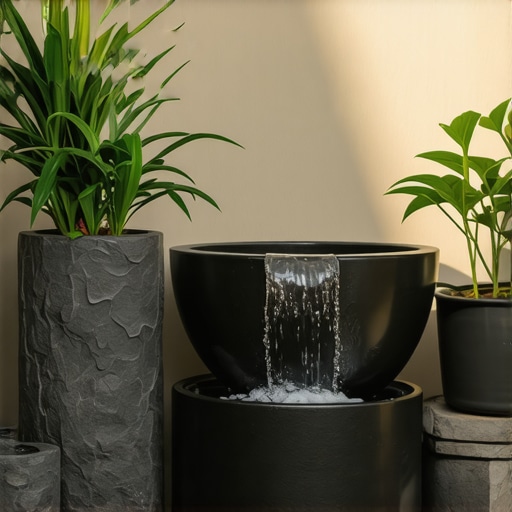
For patios with existing or planned retaining walls, stainless steel scuppers provide a modern, architectural look while utilizing closed-loop plumbing systems. These features are built directly into the masonry. The water is pushed through a 304 or 316-grade stainless steel weir, creating a glass-like sheet of water that falls into a hidden basin. This is purely a mechanical install. There are no plants to prune and no fish to feed.
The critical failure point here is the leveling of the weir. If the weir is off by even an eighth of an inch, the water will