
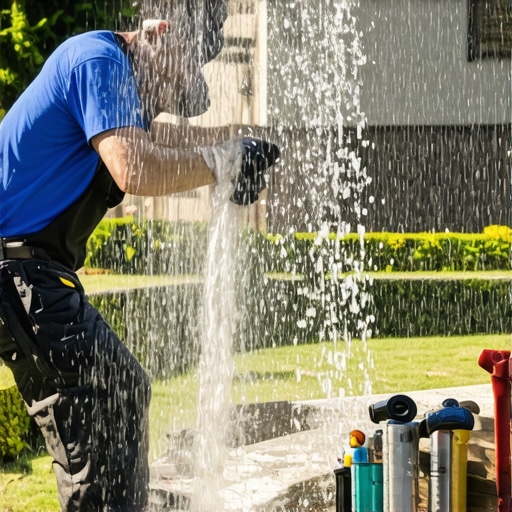
How to Fix a Leaking Waterfall in One Afternoon
The Forensic Autopsy of a Vanishing Stream
A leaking waterfall is typically caused by liner settling, capillary wicking, or plumbing failure. To fix it in one afternoon, you must isolate the pump system, inspect the EPDM liner edges, and apply MS Polymer sealant to any structural breaches or bio-falls connections. This process requires immediate diagnostic testing before any excavation begins.
I recently got called out to tear up a $30,000 patio that was sinking because the previous contractor failed to realize the adjacent waterfall was losing 400 gallons a day through a hairline fracture in the plumbing. The ground was so saturated it turned the modified gravel base into a slurry. If you see wet spots in your garden design or soft soil near your hardscaping, you aren’t just losing water; you are losing your foundation. Most people think a leak is a giant hole. It isn’t. It is usually a 45-mil liner that has sagged two inches, allowing water to escape via capillary action into the surrounding soil. This is physics, not magic. Water follows the path of least resistance. If your liner edge is lower than the water’s surface tension, that water is gone. You are essentially irrigating your lawn care zone with expensive, filtered pond water.
“Water will always find the path of least resistance, often following the capillary pull of soil or roots along the margins of a flexible liner system.” – Horticultural Extension Service Research
How do I find a leak in my backyard waterfall?
Finding a waterfall leak requires a systematic shutdown of the filtration system to isolate the upper basin from the lower reservoir. Start by turning off the pump and marking the water level. If the level remains constant in the pond but drops when the pump is active, the leak is located in the waterfall plumbing, the header tank, or the stream bed liner. If the pond level drops while the pump is off, the breach is in the pond liner itself. This is the first rule of hydraulic troubleshooting. Don’t guess. Measure. Use a piece of electrical tape on the skimmer faceplate to track the drop over three hours. A drop of more than 1/4 inch in that timeframe, adjusted for local evaporation rates, indicates a pressurized leak or a significant liner breach.
| Material Type | Typical Lifespan | Flexibility Rating | Best Use Case |
|---|---|---|---|
| 45-Mil EPDM | 20-30 Years | High | Main Stream Beds |
| PVC Liner | 5-10 Years | Moderate | Temporary Features |
| High-Density Polyethylene | 15-20 Years | Low | Rigid Pre-formed Tubs |
| Butyl Rubber | 30+ Years | High | Professional Grade Installs |
The Capillary Effect: The Silent Water Thief
Capillary wicking occurs when a piece of filter fabric, a root mass, or even dry soil touches the water’s edge and pulls moisture over the liner perimeter. I have seen invasive roots from nearby landscaping grow over the edge and act like a straw, siphoning gallons of water into the mulch. This isn’t a hole; it’s a bridge. You must inspect every inch of the stream bank. Look for areas where the liner has been stepped on or pushed down by the weight of decorative stones. If the liner edge is level with the soil, it is too low. In my crew, we have a rule: the liner must always be three inches above the highest possible water line, tucked behind the rock work. Don’t skip this. A single low spot can ruin the hydraulic integrity of the entire system.
“A retaining wall or waterfall weir doesn’t fail because of the stone; it fails because of the hydrostatic pressure and water displacement trapped behind the structural liner.” – Hardscape Engineering Axiom
How much sealant do I need for a waterfall weir?
Calculating sealant volume depends on the linear footage of the spillway lip and the depth of the mechanical attachment. For a standard 24-inch bio-falls, one 10-ounce tube of black silicone or MS Polymer is sufficient, provided the surfaces are cleaned with denatured alcohol first. Most hacks just squirt glue on a wet liner. It will fail. You need a dry, etched surface for the polymer chains to bond. Use a high-tack adhesive that remains flexible. Static materials like mortar will crack when the ground shifts during freeze-thaw cycles. You need a material that can handle at least 25% joint movement without delaminating from the EPDM.
- Checklist for Leak Repair:
- Submersible pump turned off and drained.
- Electronic moisture meter for soil density checks.
- 45-mil EPDM patch kit with primer.
- Black expanding waterfall foam (closed-cell only).
- Scrub brush and denatured alcohol for surface prep.
- Non-toxic underwater sealant.
The Step-by-Step Remediation Process
Once the leak is identified in the stream bed, pull back the rocks. You will likely find a spot where the hydrostatic pressure has caused the liner to fold. Clean the area. If you find a puncture, don’t just throw a patch on it. You must use a liner primer. This chemically etches the EPDM, allowing the patch to vulcanize to the original material. If the leak is at the waterfall weir, you must unscrew the faceplate, scrape off the old, degraded silicone, and apply a thick bead of new sealant in a continuous “U” shape. Re-attach the faceplate until the sealant oozes out the sides. Do not over-tighten the screws. You will strip the plastic housing. Firm is enough. Let it cure for at least one hour before reintroducing water flow. If you are dealing with a leak behind the rocks, use closed-cell expanding foam to redirect water back onto the liner. Open-cell foam is a sponge. It will rot. Only use professional-grade black foam designed for pond use. This ensures the water stays on top of the liner where it belongs. Every drop that goes behind the liner is a drop that is eroding your landscape foundation.
Long-Term Structural Monitoring
After the repair, monitor the water level daily for one week. Check the pump vault for debris. A clogged pump can cause back-pressure that forces water out of the plumbing connections. In garden design, we often forget that plants grow. A willow tree or aggressive ornamental grass planted too close to the waterfall will eventually send roots through the plumbing seals. Keep your landscaping at a distance. Maintain a clear zone of at least two feet around the primary liner. This prevents root penetration and makes future inspections easier. If the leak persists, you may have a cracked check valve or a failed bulkhead fitting. These require mechanical replacement, not just sealant. Never use “stop-leak” chemicals in a pond with fish or sensitive plants. Those products are for automotive radiators, not biological systems. Stick to mechanical fixes. They are the only way to ensure the long-term health of your water feature and the surrounding hardscape. Your yard is an ecosystem. Treat it with the engineering respect it deserves. Stop the leaks, stabilize the soil, and keep the water where it belongs.
![Why Your 2026 Pond is Green [The $40 Filter Fix]](https://lawnmajesty.com/wp-content/uploads/2026/06/Why-Your-2026-Pond-is-Green-The-40-Filter-Fix.jpeg)
![Why Your 2026 Backyard Pond is Green [Algae Fix]](https://lawnmajesty.com/wp-content/uploads/2026/05/Why-Your-2026-Backyard-Pond-is-Green-Algae-Fix.jpeg)
![Fixing 2026 Ponds with Murky Water [Filter Hack]](https://lawnmajesty.com/wp-content/uploads/2026/07/Fixing-2026-Ponds-with-Murky-Water-Filter-Hack.jpeg)