Why Steel Carports Outperform Wood Structures in Heavy Snow Regions
Why Steel Carports Outperform Wood Structures in Heavy Snow Regions
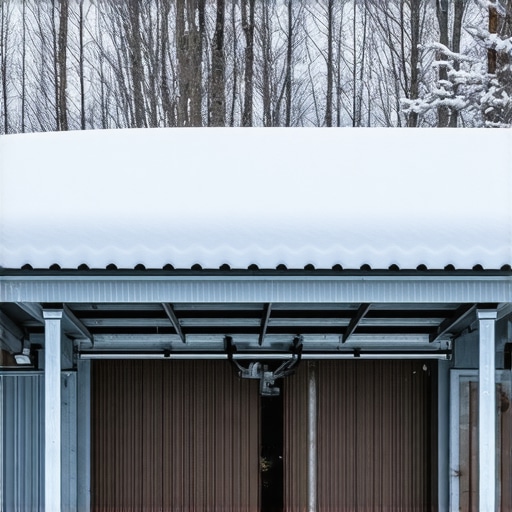
Imagine a quiet Tuesday night in the dead of winter. Outside, a “Snowmageddon” event is unfolding – a relentless, heavy snowfall that blankets the landscape in a deceptive, white silence. Inside, you hear it: a low, rhythmic creak emanating from your driveway. It is the sound of a wooden carport struggling under a weight it was never truly engineered to sustain. For many homeowners, this sound is the precursor to a structural failure that can crush vehicles and lead to thousands of dollars in property damage.
As a Structural Engineer with extensive international experience in structural design and construction engineering, I, Rebin K Reji, have spent years analyzing how different materials respond to environmental stressors. In regions prone to heavy snowfall, the choice between wood and steel is not merely an aesthetic one; it is a fundamental decision regarding safety, liability, and long-term structural integrity. While wood offers a traditional, rustic charm, Steel Carport Installations represent the pinnacle of modern engineering for high-load environments. In this comprehensive analysis, we will explore why steel is the only viable long-term solution for protecting your assets against the crushing reality of winter.
The Physics of Snow Load: Why Wood Fails
To understand why wood structures often succumb to winter weather, we must first understand the physics of snow. In the engineering world, we differentiate between “Ground Snow Load” (GSL) and “Roof Snow Load.” GSL is the weight of snow on the ground, but the roof load is affected by factors like slope, thermal properties, and accumulation patterns.
Snow is rarely just “fluff.” Saturated, wet snow can weigh between 20 to 30 pounds per cubic foot. During a major storm, a standard double carport can easily be forced to support upwards of 10,000 to 20,000 pounds. This is where wood’s organic nature becomes a liability. Wood is a natural polymer, and it is susceptible to a phenomenon known as “creep.” Creep is the permanent deformation of a structural element under a sustained heavy load. Over several winters, a wooden beam may begin to sag, and unlike steel, it does not “bounce back” once the load is removed.
Furthermore, wood’s strength-to-weight ratio is significantly impacted by moisture. As snow melts and refreezes, wood absorbs moisture, which increases its self-weight while simultaneously weakening the cellular bonds of the timber. This is why homeowners must look beyond the driveway and consider the broader ecosystem of their property. Understanding how to prep your lawn for a harsh winter is a great start, but if your primary vehicle protection is a wooden structure, you are leaving a critical vulnerability unaddressed.
The Freeze-Thaw Cycle and Wood Degradation
Wood is hygroscopic, meaning it constantly exchanges moisture with the environment. In heavy snow regions, the freeze-thaw cycle is brutal. Water enters the micro-cracks in the wood, freezes, expands, and widens those cracks. Over time, this leads to rot and structural fatigue. Even pressure-treated lumber eventually yields to the relentless hydraulic pressure of freezing water, leading to a compromised structure that may look fine on the surface but is hollowed out by internal decay.
Steel Carport Installations: The Engineering Advantage
When we pivot to Steel Carport Installations, we are moving from the realm of organic materials to the precision of material science. Modern steel carports utilize galvanized, cold-formed steel. This process involves rolling steel at room temperature, which increases its yield strength and hardness through strain hardening.
Tensile Strength and Span Capabilities
Steel possesses a much higher tensile strength than wood. This allows engineers to design structures that can span larger distances without the need for the bulky, intrusive support beams that wood requires. This is particularly important for Double Carport Installations or Multi Carport Installations. In a multi-vehicle setup, you need clear spans to maneuver cars safely. Steel allows for these wide openings while maintaining a safety factor that far exceeds local building codes for snow loads.
When considering the investment, it is helpful to look at the data. I often direct clients to review What You Should Actually Expect to Pay for a Double Carport Installation to understand that the premium for steel is actually a long-term saving. You are paying for a material that does not creep, does not rot, and does not require the expensive annual staining and sealing that wood demands.
Wind and Snow Synergy
In heavy snow regions, snow rarely falls in a vacuum. It is almost always accompanied by high-velocity winds. A structure must be able to handle “unbalanced snow loads,” where wind blows snow from one side of the roof to the other, creating a massive weight disparity. Heavy-duty steel kits are often rated for 100 MPH winds and significant ground snow loads. Steel’s rigidity ensures that the structure remains plumb and level even when subjected to these asymmetrical forces, whereas a wooden frame can “rack” or tilt, leading to a total collapse.
Comparing Installation Types and Their Structural Viability
Not all carports are created equal, and the method of installation is just as important as the material itself. As a structural engineer, I evaluate the load path – how the weight of the snow travels from the roof through the columns and into the ground.
Cantilever Carport Installations
Cantilever Carport Installations are increasingly popular for their modern aesthetic and the absence of front support pillars. However, from an engineering standpoint, a cantilever is a “diving board” for snow. The stress concentrated at the connection point is immense. In a heavy snow region, a wooden cantilever is a recipe for disaster. Steel, however, can be engineered with massive footings and high-gauge columns to handle the leverage of a snow-laden roof. Understanding the engineering requirements is key to understanding The Hidden Factors That Drive Up Cantilever Carport Prices in Pretoria or any other region where site conditions demand specialized structural integrity.
Wall Mount Carport Installations
Wall Mount Carport Installations involve attaching the structure directly to an existing building. This requires a deep understanding of the home’s structural frame. Steel is the preferred material here because its thermal expansion coefficient is more predictable than wood’s warping, ensuring that the seal between the carport and the house remains watertight. For those in specific locales, researching What You Should Actually Pay for a Wall Mount Carport in South Rand can provide a baseline for the professional labor involved in these precise installations.
The Limitations of Shadenet and Shadeports
It is important to address other popular options like Shadenet Carport Installations, Shadeport Carport Installations, and Shadesail Installations. While these are excellent for UV protection in warmer climates, they are generally unsuitable for heavy snow regions. Shadenet is designed to breathe, but heavy, wet snow can quickly fill the pores of the net, turning it into a solid, heavy sheet. This leads to The Real Reason Your Shadenet Carport Is Tearing Early: the material simply isn’t designed to act as a load-bearing surface for thousands of pounds of ice and snow.
- Single Carport Installations: Ideal for compact spaces, but still require high-gauge steel to prevent buckling.
- Double Carport Installations: Require reinforced trusses to handle the wider roof area accumulation.
- Multi Carport Installations: Often used for commercial or multi-family dwellings; these must be engineered with redundant load paths.
Longevity and Maintenance: The 20-Year Horizon
When we look at the 20-year horizon, the superiority of steel becomes even more apparent. A wooden carport in a heavy snow region requires a rigorous maintenance schedule:
- Annual inspection for termite and pest damage (which thrives in moisture-heavy wood).
- Bi-annual staining or painting to prevent rot.
- Frequent tightening of bolts as the wood shrinks and expands with the seasons.
In contrast, Steel Carport Installations are virtually maintenance-free. Modern galvanized steel is coated with a zinc layer that prevents oxidation. Even if the outer paint layer is scratched, the zinc provides “sacrificial protection,” corroding in place of the steel to maintain structural integrity. In the freeze-thaw cycle, steel remains dimensionally stable. It does not warp, twist, or split. This stability ensures that the roof panels remain tightly fastened, preventing the leaks that often plague aging wooden structures.
The Return on Investment (ROI) for steel is found not just in the resale value of the property, but in the “insurance” it provides. The cost of a collapsed carport includes not just the structure itself, but the replacement of the vehicles beneath it and the potential damage to the adjacent home. Steel’s predictable failure mode – which is significantly higher than any expected snow load – provides a peace of mind that wood simply cannot match.
Regional Considerations & Professional Advice
Engineering is never “one size fits all.” A carport in a coastal region needs different specifications than one in the mountains. Before proceeding with any installation, a site survey is vital. This survey assesses soil density (to design the concrete footings) and local wind/snow data.
In my professional practice, I have seen many DIY projects fail because the homeowner underestimated the “Ground Snow Load” of their specific micro-climate. For example, a valley may accumulate significantly more snow than a nearby ridge due to wind patterns. This is why professional Steel Carport Installations involve calculated structural designs – often using cold-formed steel sections designed by engineers like myself or my colleagues, such as Luay Mohammed, to ensure that every bolt and bracket is optimized for the local environment.
Conclusion
When the next “Snowmageddon” arrives, your carport should be the last thing on your mind. While wood may offer a certain aesthetic appeal, it lacks the structural resilience, material stability, and long-term durability required to withstand the crushing weight of heavy snow and the violence of winter winds.
Steel Carport Installations are an investment in engineering excellence. They offer superior tensile strength, resistance to the freeze-thaw cycle, and a maintenance-free lifespan that wood cannot replicate. Whether you are considering Single Carport Installations or expansive Multi Carport Installations, the choice of steel is the choice of safety. Don’t wait for the sound of creaking timber to realize your mistake. Consult with a structural professional today to ensure your vehicles are protected by the strength of steel before the first flake falls.

![Build a $50 2026 Rain Barrel System [Save Water]](https://lawnmajesty.com/wp-content/uploads/2026/07/Build-a-50-2026-Rain-Barrel-System-Save-Water.jpeg)