
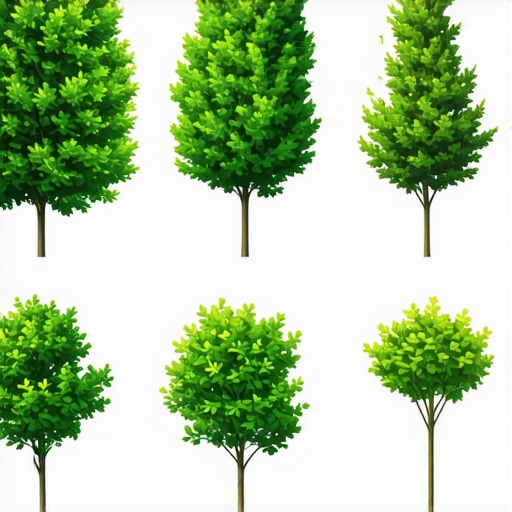
7 Privacy Shrubs That Grow Faster Than Leyland Cypress
Why Most Privacy Screens Fail Before They Reach Maturity
I always drill into my new crew members: if you don’t fix the soil grading and drainage first, every plant you put in the ground is just expensive compost. Most homeowners rush to the local big-box store to buy Leyland Cypress because they want a 10-foot wall yesterday. What they don’t realize is that the Leyland is a biological ticking time bomb. Between Seiridium canker and Cercospora needle blight, you are often looking at a dead, brown skeleton within ten years. To get a functional, long-term privacy screen, you must select superior horticultural alternatives like Thuja Green Giant or Nellie R. Stevens Holly that offer disease resistance and comparable growth rates without the structural instability.
“A retaining wall doesn’t fail because of the stone; it fails because of the water trapped behind it.” – Hardscape Engineering Axiom
The Engineering of the Root Zone
Before you dig, you have to understand the bulk density of your soil. If your yard has been compacted by heavy machinery during home construction, those roots aren’t going anywhere. You are essentially planting in a concrete bowl. We measure soil compaction in PSI using a penetrometer; if it’s over 300 PSI, those fine feeder roots will suffocate. You need to fracture the soil profile at least 18 inches deep and 3 times the width of the root ball. This isn’t just gardening; it’s sub-surface engineering. It will rot if you don’t ensure proper oxygen exchange.
1. Thuja Green Giant: The King of Privacy
The Thuja Green Giant is the primary alternative to Leyland Cypress because it can grow between 3 to 5 feet per year while maintaining a dense, pyramidal form that resists heavy snow loads. Unlike the Leyland, the Green Giant is highly resistant to the fungal pathogens that decimate monoculture plantings. It thrives in USDA zones 5 through 8 and can handle a variety of soil types, provided the pH levels stay between 5.0 and 6.5. When planting these, spacing is the variable that most contractors mess up. You need at least 8 to 12 feet on center. If you pack them in at 4 feet, the lack of airflow will invite spider mites and scale. Don’t skip the spacing.
2. Skip Laurel (Schipkaensis): The Broadleaf Heavyweight
Skip Laurel provides a dense, glossy green screen that excels in both full sun and significant shade, making it a versatile tool for garden design in tight urban corridors. It is an upright evergreen that can reach 10 to 15 feet in height. While not as tall as a conifer, its width provides immediate screening. The key here is the drainage. Laurels hate wet feet. If your soil is heavy clay, you must plant these on a slight berm—essentially a 6-inch raised bed of native soil mixed with 20 percent coarse sand—to prevent Phytophthora root rot. These are tough plants, but they aren’t scuba divers.
“Correct plant selection begins with understanding the site’s USDA Hardiness Zone and its specific microclimate stressors, such as wind tunnels or salt exposure.” – Penn State Agricultural Extension
How much modified gravel do I need for a patio base?
When integrating privacy shrubs with hardscaping, you must calculate the base depth; typically, a 6-inch layer of 21A or 57 stone is required for stability. If you are planting shrubs adjacent to a new patio, you need to ensure the gravel base doesn’t bleed into the planting trench, which would spike the alkalinity of the soil and kill the shrubs. Use a heavy-duty geotextile fabric to separate the stone from the soil. This prevents the fines from migrating and keeps your lawn care boundaries clean.
3. Nellie R. Stevens Holly: The Impenetrable Barrier
The Nellie R. Stevens Holly is a vigorous grower that can add 2 to 3 feet of height annually, producing a dense, thorny structure that acts as a natural security fence. It is a hybrid between Ilex aquifolium and Ilex cornuta, making it exceptionally heat-tolerant. In the South, this is the gold standard. It produces deep red berries in the winter, but from a foreman’s perspective, its value is in its structural integrity. It doesn’t flop over in high winds like a Leyland. You need to monitor for leaf miners, but otherwise, this plant is a tank. It is nearly bulletproof.
4. Wax Myrtle: The Native Speedster
For those looking for a native option in coastal or southern regions, the Wax Myrtle grows at a blistering pace, often exceeding 5 feet in a single season under the right conditions. It has a spicy, aromatic foliage that is naturally deer-resistant. Because it fixes its own nitrogen, it can survive in poor, sandy soils where other plants would starve. However, it requires frequent structural pruning in the first three years. If you don’t tip-prune the lead branches, the plant becomes leggy and top-heavy. Use a high-quality bypass pruner, not those cheap anvil shears that crush the vascular tissue.
5. American Pillar Arborvitae: The Space Saver
If you have a narrow side yard and need height without the horizontal spread, the American Pillar Arborvitae is your solution. It stays about 4 feet wide while reaching 25 feet in height. It is a sport of the ‘Hetz Wintergreen’ and grows much faster than the standard ‘Emerald Green’ Thuja. For hardscaping projects where the planting bed is only 3 feet wide, this is the only plant I recommend. It won’t heave your pavers as it matures because the root system is relatively vertical. It stays in its lane.
Comparison of Fast-Growing Privacy Shrubs
| Shrub Variety | Growth Rate (per year) | Mature Height | Best Soil Type |
|---|---|---|---|
| Thuja Green Giant | 3-5 Feet | 40-60 Feet | Loam / Moist Clay |
| Nellie R. Stevens Holly | 2-3 Feet | 15-25 Feet | Well-drained acidic |
| Skip Laurel | 2 Feet | 10-18 Feet | Well-drained / Shade |
| Wax Myrtle | 3-5 Feet | 15-20 Feet | Sandy / Poor Soil |
| American Pillar | 3-4 Feet | 20-25 Feet | Silt / Clay |
6. Chindo Viburnum: The Sound Barrier
The Chindo Viburnum features massive, waxy leaves that are excellent for noise attenuation in landscaping. If you live near a busy road, this is the plant you want. It is an evergreen that grows 2 feet per year and produces clusters of red berries. From a biological standpoint, the leaf surface area is its greatest asset for privacy. To maximize growth, you need to apply a slow-release fertilizer with a 10-10-10 NPK ratio in early spring. Avoid high-nitrogen quick-release products that cause weak, leggy growth. Strong cells mean a strong screen.
7. Japanese Cleyera: The Low-Maintenance Professional
While often overlooked, Japanese Cleyera is a sophisticated choice for garden design. It starts a bit slower but once established, it provides a thick, bronze-tinted evergreen screen that requires almost zero pruning. It is highly resistant to pests and diseases. For homeowners who want a “set it and forget it” hedge, this is it. It reaches 10 to 15 feet and maintains a naturally rounded shape. It’s the reliable veteran of the plant world. It just works.
The Master Landscaper’s Planting Checklist
- Verify Utilities: Call 811 before digging any trench. One hit on a gas line ruins your day.
- Check the Root Flare: Never bury the trunk. The flare where the roots meet the stem must be visible at the soil surface.
- Hydration Protocol: New shrubs need 1 inch of water per week, delivered via drip irrigation, not overhead spraying.
- Mulch Management: Apply 2-3 inches of hardwood mulch, but keep it 3 inches away from the trunk to prevent rot.
- Internal Drainage: If the hole holds water for more than 4 hours, you must install a French drain or a dry well.
How do I stop my privacy hedge from dying in the middle?
To prevent interior dieback, you must ensure light penetration and airflow reach the center of the plant. This is achieved through “thinning cuts” rather than “heading cuts.” If you only shear the outside, you create a thick shell of foliage that blocks all light to the interior, causing the inner branches to rot and drop needles. Use hand pruners to remove 10% of the outer branches annually to let the plant breathe. It needs light to live.

![4 Heat-Proof Perennials That Won't Wilt in 2026 [Zone 7]](https://lawnmajesty.com/wp-content/uploads/2026/05/4-Heat-Proof-Perennials-That-Wont-Wilt-in-2026-Zone-7.jpeg)