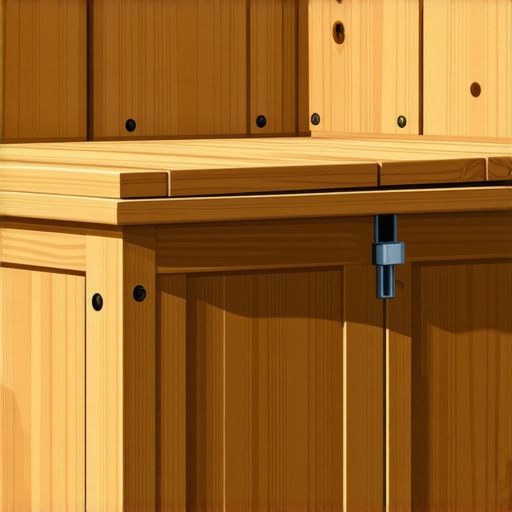
![Build a $300 Modern Pergola for 2026 Shade [DIY]](https://lawnmajesty.com/wp-content/uploads/2026/06/Build-a-300-Modern-Pergola-for-2026-Shade-DIY.jpeg)
Build a $300 Modern Pergola for 2026 Shade [DIY]
The Engineering Reality of Low-Cost Shade Structures
Building a modern pergola for under $300 requires a pivot from aesthetic dreaming to hardcore structural engineering and material procurement. To achieve 2026 shade standards on a budget, you must ignore the overpriced cedar kits at big-box retailers and focus on pressure-treated lumber, structural fasteners, and mechanical stability. Most DIY projects fail because the builder prioritizes the ‘look’ over the physics of lateral load and wood-to-earth contact. If you don’t understand the difference between a shear load and a withdrawal load, your pergola will be a safety hazard by the first summer storm of 2027.
I always drill into my new crew members: if you don’t fix the soil grading and footing depth first, every plant or structure you put in the ground is just expensive compost. I’ve seen $5,000 ‘custom’ builds lean five degrees after a single season because some hack didn’t account for the frost line. On a $300 budget, you don’t have the luxury of over-engineering with steel. You have to be smart with dimensional lumber and physics. We aren’t just ‘putting up some wood’; we are managing the hydrostatic pressure of the soil around the footings and the torsional strain on the beams. Stop looking at Pinterest and start looking at your local building codes.
How deep should pergola footings be for long-term stability?
Pergola footings must reach below the local frost line, typically 24 to 36 inches, to prevent heaving and lateral displacement. In most jurisdictions, a structural post requires a minimum of 12 inches of compacted gravel or poured concrete to resist the uplift forces created by high winds acting on the overhead rafters.
“Post-to-base connections must be designed to resist uplift, sliding, and lateral displacement to ensure the structural integrity of the assembly under environmental stress.” – American Wood Council (AWC) Standards
Why 4×4 Posts Often Fail in Modern Designs
While the $300 budget pushes you toward 4×4 posts, you must understand their limitations. A 4×4 pressure-treated post has a much higher tendency to warp and twist as the moisture content equalizes with the atmosphere. This is known as hygroscopic movement. In a modern, minimalist design with clean 90-degree angles, even a quarter-inch twist is visible to the naked eye. If you use 4x4s, you must utilize cross-bracing or knee braces to manage the moment arm forces. Without them, the structure will rack. It will wobble. Eventually, the fasteners will shear. Don’t skip the bracing.
The $300 Material Breakdown (2026 Price Forecasting)
To hit this price point, you are buying Standard Grade Pressure Treated (PT) lumber. This wood is saturated with ACQ (Alkaline Copper Quaternary) to prevent rot. It’s green, it’s heavy, and it’s wet. You’ll need to let it ‘season’ for several months before staining. Here is the objective cost analysis for a 10×10 structure.
| Material Item | Quantity | Estimated Cost (USD) |
|---|---|---|
| 4x4x10 Pressure Treated Posts | 4 | $68.00 |
| 2x6x10 PT Beams (Main Support) | 4 | $52.00 |
| 2x4x10 PT Rafters (Shade Slats) | 9 | $81.00 |
| 80lb Bag of Concrete Mix | 4 | $26.00 |
| Structural Screws (CT-20 or GRK) | 1 Box | $38.00 |
| Post Base Anchors (Galvanized) | 4 | $32.00 |
| TOTAL ESTIMATED COST | – | $297.00 |
[image placeholder]
Can I build a pergola for under $300 without sacrificing safety?
Yes, you can build a safe pergola for under $300 by sourcing dimensional PT lumber and using direct-burial techniques or surface-mounted anchors on existing slabs. The key is structural geometry; using notched beams instead of expensive hardware hangers can save $60 while actually increasing the bearing capacity of the structure. This requires precise carpentry skills and a circular saw, but it preserves the budget for high-quality corrosion-resistant fasteners.
“Wood in contact with the ground must be treated to a minimum retention level of 0.40 pcf for ACQ to prevent fungal decay and termite infestation in residential applications.” – Southern Pine Inspection Bureau (SPIB)
The Step-By-Step Installation Protocol
- Site Analysis: Check for utility lines (Call 811). Verify the soil pH and drainage. If the area holds water, your posts will rot regardless of treatment.
- Excavation: Dig footings 30 inches deep. Add 6 inches of crushed stone for drainage.
- Post Setting: Use a laser level. Standard bubble levels are for amateurs. In a 10-foot span, a 1% error is nearly 1.2 inches of lean.
- Beam Attachment: Notch your posts. A housed joint transfers the weight of the roof directly to the wood of the post, not just the bolts.
- Rafter Spacing: For 2026 shade optimization, space rafters 12 inches on center. This creates a parallax effect that blocks 70% of overhead sun at peak hours.
Moisture Management and the ‘Mulch Volcano’ Threat
Most DIYers finish the pergola and then immediately pile mulch around the base. This is a death sentence for the wood. You are creating a moisture trap that bypasses the chemical treatment of the lumber. Keep mulch at least 3 inches away from the post bases. Use pea gravel or river rock in the immediate contact zone. It’s a simple rule: wood needs to breathe. If the base stays saturated, the lignin in the wood fibers will break down. It will rot. Don’t be the person calling me in three years to replace a ‘soft’ post.
Why Fastener Choice is Non-Negotiable
Do not use standard interior screws. Do not even use cheap ‘deck screws’ for the main connections. ACQ-treated lumber is highly corrosive to zinc and thin-coated metals. You must use Hot-Dipped Galvanized (HDG) or Stainless Steel fasteners. On a $300 budget, HDG is your best bet. If the coating is compromised during installation, the copper in the wood will literally eat the steel screw. This leads to catastrophic failure. Use structural timber screws with a built-in washer head for the beams. The shear strength is worth the extra $10. Your life depends on those four points of contact.
Modern Design Aesthetics on a Budget
Modern design is defined by clean lines and minimalism. Avoid the ‘curly’ tail cuts on the end of rafters that were popular in the 90s. Use square cuts. Paint the entire structure a charcoal black or deep navy. Darker colors hide the green tint of the pressure treatment and give the structure an industrial steel look. This is the ‘secret’ to making a $300 PT structure look like a $2,000 custom install. The shade doesn’t care about the price, but your property value does.
![Build a $500 Outdoor Kitchen Frame with Steel Studs [DIY]](https://lawnmajesty.com/wp-content/uploads/2026/05/Build-a-500-Outdoor-Kitchen-Frame-with-Steel-Studs-DIY.jpeg)