Designing a Backyard Oasis in a Narrow Lot
Engineering the Small-Scale Landscape
Designing a backyard in a narrow lot requires precise site grading and sub-surface drainage management to avoid foundation failure and soil saturation. Because space is limited, water runoff from roofs and hard surfaces concentrates in small areas, making the installation of permeable layers and structural sub-bases a non-negotiable requirement for long-term stability.
[image_placeholder_1]
I recently got called out to tear up a $30,000 patio that was sinking because the previous contractor ignored the heavy clay subgrade in a 12-foot wide lot. They used a standard 4-inch gravel base, but they didn’t account for the neighbor’s downspouts dumping right onto the property line. Within two seasons, the hydrostatic pressure built up behind a small decorative wall, pushed the pavers out of alignment, and turned the entire yard into a mud pit. We had to excavate down to the virgin soil, install a non-woven geotextile fabric, and build a 10-inch base of modified 21A stone just to stabilize the earth. If you do not respect the physics of water in a tight space, your investment will fail. It is that simple.
“A retaining wall doesn’t fail because of the stone; it fails because of the water trapped behind it.” – Hardscape Engineering Axiom
How much modified gravel do I need for a patio base?
To calculate the required base material, you must account for a minimum of 6 inches of compacted gravel for walkways and 8 to 12 inches for patios in areas with freeze-thaw cycles. Use the formula: (Square Footage x Depth in Feet) / 27 to find the cubic yardage. Always add a 20% compaction factor to your final number. If you skip the plate compactor, the air pockets in the gravel will eventually collapse under the weight of the pavers. You need to hit at least 95% Standard Proctor Density for the base to be considered structural.
How do you fix drainage in a narrow backyard?
Narrow lots often suffer from “bowl effects” where water becomes trapped between the house foundation and the property line. The solution is a combination of catch basins and SDR-35 perforated pipes bedded in clean #57 stone. We call this a French drain, but most people do it wrong. They use cheap corrugated pipe that clogs with silt in three years. You need rigid pipe with a 1% slope minimum. Use a transit level. Do not eyeball the pitch. A quarter-inch drop per foot is the standard. Anything less and the water sits; anything more and it moves too fast to be filtered by the stone.
| Material Type | Compressive Strength (PSI) | Permeability Rate | Maintenance Level |
|---|---|---|---|
| Concrete Pavers | 8,000+ PSI | Low (Joint Dependent) | Low (Sand Refill) |
| Permeable Pavers | 8,000+ PSI | High (100+ in/hr) | Moderate (Vacuuming) |
| Natural Flagstone | Varies | Zero | High (Weed Control) |
| Decomposed Granite | Low | Medium | High (Raking/Refill) |
The Microbiology of the Narrow Garden
In narrow lots, soil health is often compromised by high bulk density and low oxygen levels due to construction traffic. To grow anything successfully, you must address the Cation Exchange Capacity (CEC) and soil pH. Most turf grass species require a pH between 6.2 and 7.0 to effectively metabolize nitrogen, phosphorus, and potassium. If your soil is at a 5.5, you can throw $500 worth of fertilizer at it and the grass will still starve because the nutrients are chemically locked. You need a soil test, not a guess. Apply calcitic lime to raise pH or elemental sulfur to lower it, but do so based on lab data from an agricultural extension office.
“Soil compaction is the single most difficult factor to overcome in urban landscapes, limiting root respiration and nutrient uptake.” – Penn State Agricultural Extension
- Mark all underground utilities via 811 before excavation.
- Remove at least 8 inches of existing soil for hardscape areas.
- Install a 3-ounce non-woven geotextile fabric to separate subgrade from base stone.
- Use a 1-inch diameter screed pipe to ensure a perfectly flat bedding sand layer.
- Select vertical-growth plants like Carpinus betulus ‘Fastigiata’ to save horizontal space.
- Verify that all downspouts are piped at least 10 feet away from the foundation.
Vertical Layering and Plant Selection
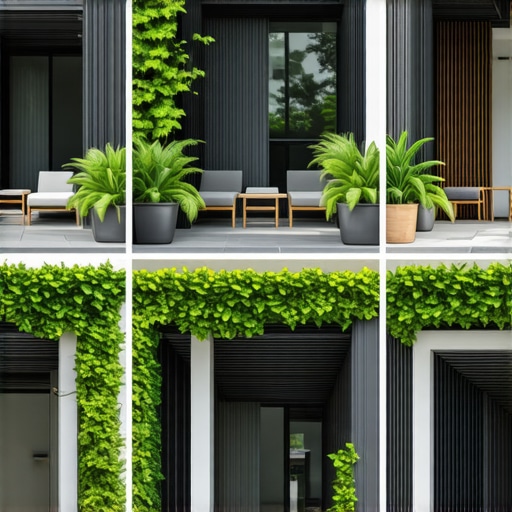
When you only have 10 feet of width, you cannot plant spreading oaks or wide shrubs. You have to think vertically. We use espalier techniques or columnar cultivars that provide privacy without eating the entire yard. Check the USDA Hardiness Zone for your specific micro-climate. Narrow lots between tall buildings often stay 5 degrees cooler and have significantly less airflow, which encourages fungal pathogens like powdery mildew. Use drip irrigation on a timer. Do not use overhead sprinklers in a narrow lot; you will just end up with water spots on your windows and root rot in your boxwoods. Ensure your mulch is not touching the root flare of your trees. Mulch volcanoes trap moisture against the bark and invite borers and fungal decay. The root flare should always be visible at the soil line.