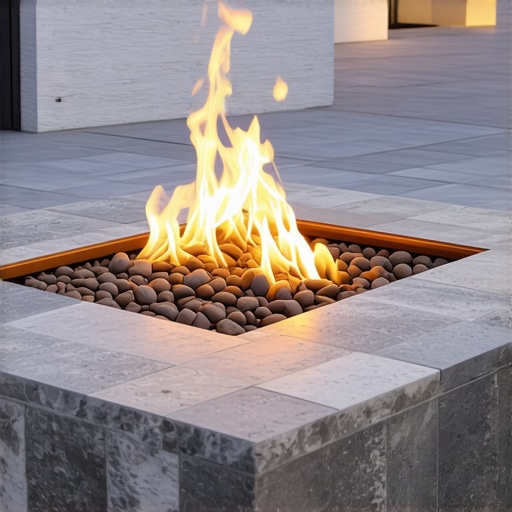
Build a Modern 2026 Fire Pit with Pavers
Build a Modern 2026 Fire Pit with Pavers: Engineering for Longevity and Heat Management
Most fire pits you see on social media are structural failures waiting to happen. They look fine for six months, then the freeze-thaw cycle hits, or the high-output heat from a weekend bonfire causes the pavers to crack and the base to shift. Building a modern 2026 fire pit with pavers requires more than just stacking stones; it is a exercise in civil engineering and thermal physics. If you want a feature that lasts decades rather than seasons, you must focus on what lies beneath the surface. In the world of high-end hardscaping, 80% of the value is buried in the ground.
Engineering the Foundation: Why 80% of Fire Pits Fail by Year Three
The foundation of a modern fire pit must consist of a six-inch compacted base of modified gravel (21A or 411) to facilitate drainage and prevent subsidence during soil expansion. Without this, your landscaping project will succumb to hydrostatic pressure and shifting. I recently got called out to tear up a $30,000 patio that was sinking because the previous contractor used rounded pea gravel instead of crushed modified stone. The round stones acted like ball bearings, causing the entire fire pit area to migrate three inches downhill. It was a mess. We had to excavate the entire site and start from zero. Do not let this happen to your garden design. You need jagged, crushed stone that interlocks under compaction. I recommend a minimum of 4,000 PSI of compaction force using a plate tamper. It should feel like concrete when you are done. If it doesn’t bounce the tamper, it isn’t ready.
How much modified gravel do I need for a fire pit base?
To calculate your gravel needs, measure the diameter of your fire pit and add 12 inches to the perimeter for a structural shoulder. For a standard 48-inch pit, you need roughly 0.5 to 0.75 tons of crushed stone to achieve a 6-inch depth. Never skimp on the base. It is the only thing keeping your project from becoming a pile of expensive rubble.
Material Selection: Why Your Pavers Explode (and How to Stop It)
Selecting materials for a hardscaping project involves understanding the coefficient of thermal expansion in various concrete and stone types. Standard concrete pavers are not designed for direct flame contact. When concrete gets too hot, the moisture trapped inside the pores turns to steam, creating internal pressure that leads to explosive spalling. This is why a fire-rated steel liner or kiln-fired fire bricks are mandatory for the interior of the pit. You must create a thermal barrier between the fire and your decorative pavers.
| Material Type | Thermal Resistance | PSI Strength | Recommended Use |
|---|---|---|---|
| Standard Concrete Paver | Low | 5,000 – 8,000 | Exterior Facade Only |
| Kiln-Fired Fire Brick | High | 3,000 – 4,000 | Interior Lining |
| Natural Granite | Medium | 15,000+ | Coping/Caps (with air gap) |
| Travertine | Low | 7,000 | Not Recommended for Heat |
Avoid using porous stones like river rock or limestone for the interior. These hold moisture and can literally pop when heated. Stick to engineered fire bricks and high-temperature refractory mortar. If you are using a modern 2026 design, you are likely looking at linear shapes and dark grey tones. Ensure these pavers are salt-resistant and have a low absorption rate.
“A retaining wall or fire pit doesn’t fail because of the stone; it fails because of the water trapped behind or beneath it.” – Hardscape Engineering Axiom
The 2026 Fire Pit Installation Protocol
Follow this checklist to ensure your installation meets professional engineering standards. This is the difference between a DIY weekend project and a professional-grade garden design feature.
- Excavation: Dig 12 inches below grade. This allows for 6 inches of stone and 6 inches of paver/base material.
- Soil Stabilization: Lay down a non-woven geotextile fabric to prevent the gravel from mixing with the native soil.
- Base Layer: Add modified stone in 2-inch lifts, wetting it slightly and compacting each layer.
- Screeding: Use 1-inch pipes to create a perfectly level bedding layer of coarse sand or #8 stone.
- Thermal Gap: Leave a 1-inch air gap between the steel liner and the interior bricks to allow for expansion.
- Drainage: Ensure the area around the pit has a 2% slope away from any nearby structures.
Do I need a steel ring for a paver fire pit?
Yes, a heavy-gauge steel fire ring is essential for a modern paver fire pit because it directs heat upward and protects the hardscaping stones from direct thermal degradation. A ring also provides a flange to hide the top edge of your fire bricks, creating a cleaner look. Don’t buy a cheap, thin ring from a big-box store. Get 10-gauge steel. It won’t warp.
Heat Management and Thermal Expansion Physics
Heat makes things grow. In a fire pit, the interior bricks will expand more than the exterior pavers. If you glue them together tightly with standard construction adhesive, the fire pit will crack within the first three burns. Use a high-heat silicone or specialized hardscape adhesive that remains flexible. You must also consider lawn care. A high-heat fire pit can scorch the roots of nearby turf grass. Ensure your pit is at least 15 feet away from any tree canopies and 10 feet away from any landscaping beds.
“Proper soil grading is the prerequisite for all successful hardscape installations; without it, saturation leads to structural compromise.” – Penn State Agricultural Extension
The biology of your yard matters here too. If you compact the soil too much around the pit, you create an anaerobic environment for nearby tree roots. Keep your heavy equipment on the designated paths.
Maintenance and Longevity: Protecting the Investment
Once your modern fire pit is built, the work isn’t over. You need to manage ash and moisture. Ash is highly alkaline. When it mixes with rainwater, it creates a lye-like substance that can etch and stain your pavers. Clean out the ash after every three uses. Use a polymeric sand in the joints of the surrounding patio to prevent weed growth and stabilize the pavers. Do not use standard play sand; it will wash away in the first rainstorm. Ensure your garden design includes a cover for the pit. Keeping the interior dry prevents the freeze-thaw cycles from breaking the mortar bonds inside. Landscaping is a game of inches and degrees. If you follow these engineering steps, your fire pit will be the center of your outdoor living space for decades. It won’t rot. It won’t sink. It will just work.
![Repairing 2026 Cracked Concrete Patios [DIY Fix]](https://lawnmajesty.com/wp-content/uploads/2026/06/Repairing-2026-Cracked-Concrete-Patios-DIY-Fix.jpeg)
![Fix a 2026 Yard Slope with This $300 Fieldstone Wall [DIY]](https://lawnmajesty.com/wp-content/uploads/2026/05/Fix-a-2026-Yard-Slope-with-This-300-Fieldstone-Wall-DIY.jpeg)