Choosing the Right Pump for a Small Backyard Waterfall
Choosing the Right Pump for a Small Backyard Waterfall
Success in water feature design is not about aesthetics; it is about the physics of fluid dynamics and the mechanical limits of centrifugal impellers. If you choose the wrong pump, you do not just get a weak flow. You get a stagnant breeding ground for mosquitoes and a burnt-out motor within a single season. I have spent two decades fixing the mistakes of DIYers and cut-rate contractors who think a pond pump is a set-it-and-forget-it purchase. It is the heart of your hardscape. If the heart is weak, the body dies.
The Hardscape Autopsy: Why Cheap Pumps Kill Custom Projects
Selecting a submersible pump for a small waterfall requires a precise calculation of Gallons Per Hour (GPH) relative to the Total Dynamic Head (TDH) and the weir width. For a standard 12-inch spillway, you typically need at least 1,500 GPH to achieve a visible, consistent sheet of water. I recently got called out to tear up a stone feature that was barely a year old. The homeowner was complaining about a burning smell and a waterfall that had turned into a pathetic trickle. Upon excavation, I found a $30,000 stone build powered by a $80 sump pump designed for occasional basement flooding, not continuous duty. The pump had literally melted its own housing because it could not handle the backpressure from the undersized 0.75-inch flexible tubing the previous guy installed. We had to rip out the capstones just to reach the plumbing. It was a total failure of engineering. Don’t skip the math. The pump should be the most researched component of your entire garden design.
The Physics of Water Movement: Why GPH Matters
The flow rate of your pump determines the visual impact and the auditory quality of the waterfall while ensuring the dissolved oxygen levels remain high enough to prevent anaerobic bacteria growth. You must size your pump based on the width of the spillway, also known as the weir. A general rule of thumb for a standard ‘sheet’ look is 100 GPH per inch of weir width. If you want a ‘rushing’ or ‘noisy’ stream, you need to bump that to 200 GPH per inch. A 12-inch waterfall needs between 1,200 and 2,400 GPH depending on the desired effect. If you undersize it, the water will cling to the rocks and disappear into the crevices rather than falling over the face. This leads to massive evaporation and unsightly algae growth on the stone face.
“A waterfall pump is the heart of the system; if the heart fails due to head pressure resistance, the entire ecosystem stagnates.” – Pond Construction Standards
How much water flow do I need for a 12-inch wide waterfall?
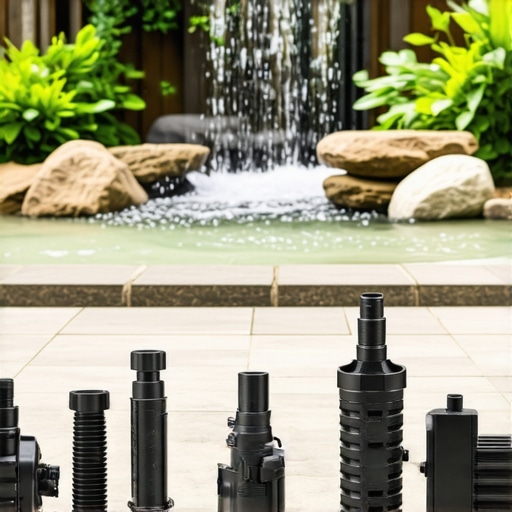
To achieve a professional-grade 12-inch waterfall, you should target a pump rated for 1,500 to 2,000 GPH at your specific head height. This ensures the water has enough velocity to break the surface tension of the weir and create a clean, audible drop into the basin below. [IMAGE_PLACEHOLDER]
Calculating Total Dynamic Head (TDH)
The Total Dynamic Head is the sum of the static head (the vertical distance the water travels) and the friction loss caused by the plumbing and fittings. Most people look at the box and see ‘2,000 GPH’ and think they are done. They aren’t. That rating is usually at zero feet of lift. As soon as you push water uphill through a 1.5-inch pipe, that number drops. For every 10 feet of horizontal pipe, you add 1 foot of head pressure. For every 90-degree elbow, you add another foot. If your waterfall is 3 feet tall and you have 20 feet of pipe, your TDH is effectively 5 to 6 feet. You must look at the pump’s flow curve chart to see what it delivers at 6 feet of head, not zero. If the chart says 800 GPH at 6 feet, that 2,000 GPH pump is useless for your 12-inch weir.
| Weir Width (Inches) | Desired Effect | Required GPH at Head | Recommended Pipe Diameter |
|---|---|---|---|
| 6 | Trickle | 300 | 1 inch |
| 12 | Smooth Sheet | 1,200 | 1.5 inch |
| 12 | Rushing Stream | 2,400 | 2 inch |
| 24 | Heavy Flow | 4,800 | 2 inch |
Does the length of my hose affect waterfall pump performance?
Yes, the length and diameter of your plumbing significantly impact the GPH output due to friction loss against the inner walls of the pipe. Increasing your pipe diameter from 1 inch to 1.5 inches can reduce friction loss by over 50 percent, allowing your pump to work more efficiently and last years longer.
Submersible vs. External Pumps: The Engineering Choice
Submersible pumps are the standard for small backyard waterfalls because they are easy to hide in a skimmer or pump vault and require no priming. They are quiet because the water muffles the motor noise. However, you must choose an asynchronous pump or a mag-drive pump. Avoid direct-drive pumps for small features; they consume too much electricity and are prone to oil leaks if a seal fails. External pumps are more efficient for massive water volumes, but for a small feature, the plumbing complexity and the need for a pump house make them overkill. Stick to a high-quality, solids-handling submersible pump that can pass small debris without clogging the impeller.
“A retaining wall doesn’t fail because of the stone; it fails because of the water trapped behind it.” – Hardscape Engineering Axiom
Installation Checklist for Maximum Longevity
- Use a Pump Vault: Never drop a pump directly onto the floor of a pond or basin. It will suck up every bit of sludge and burn out. Use a heavy-duty plastic vault surrounded by 2-inch to 3-inch river stone.
- Check Your Amperage: Ensure the circuit powering the pump can handle the continuous draw. Always use a dedicated GFI outlet.
- Level the Weir: If the spillway is off by even 1/8 of an inch, the water will channel to one side. Use a 4-foot level and shims to get it perfect.
- Install a Check Valve: This prevents the water in the pipes from rushing backward and spinning the impeller the wrong way when the power goes out.
- Oversize the Pipe: Never use the minimum diameter. A 2-inch pipe has significantly less resistance than a 1-inch pipe.
Maintenance and Winterization Protocols
The biggest enemy of a waterfall pump is mineral buildup and debris. In areas with hard water, calcium deposits will seize the impeller. Every six months, pull the pump and soak the intake in a mild citric acid or vinegar solution. If you live in a climate where the ground freezes, you must either keep the pump running 24/7 to prevent ice-over or pull the pump, clean it, and store it in a bucket of water in your garage. Never let the seals dry out over winter. A dry seal is a brittle seal, and a brittle seal is a leak waiting to happen. The earth is constantly trying to reclaim your hardscaping. Your job is to fight back with proper maintenance and superior components. Don’t be the person calling me in three years to dig up a failed system because you saved fifty dollars on a pump today. Invest in a professional-grade unit with a 3-year warranty. It’s cheaper than a rebuild.