Clearing Cloudy Pond Water Without Chemicals
Clearing Cloudy Pond Water Without Chemicals: A Biological Engineering Guide
Cloudy pond water is not a cosmetic flaw; it is a biological system in state of collapse. As a veteran with 20 years in hardscaping and garden design, I see homeowners treat their ponds like swimming pools, dumping algaecides and clarifiers into the water at the first sign of murk. This is a mistake. These chemicals provide a temporary fix while nuking the beneficial microbes that actually keep the ecosystem stable. To clear a pond without chemicals, you must understand the interplay of nitrogen cycles, mechanical filtration, and hydrostatic pressure. Stop looking for a magic bottle and start looking at the biology.
Diagnosing the Turbidity: A Forensic Autopsy of Your Pond
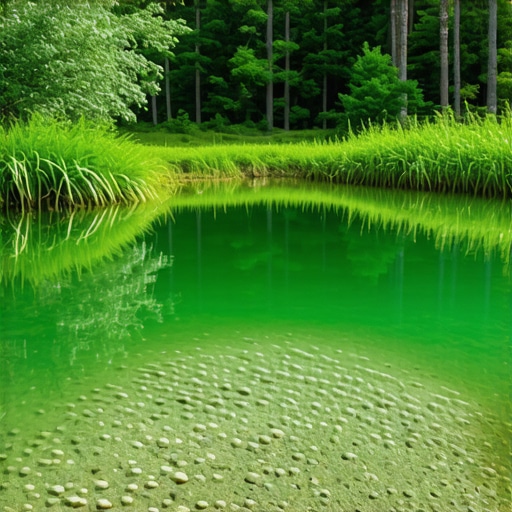
Cloudy pond water is caused by suspended organic debris, planktonic algae blooms, or excessive tannins leaching from decaying leaf matter. Identifying the specific color and consistency of the cloudiness—whether it is ‘pea soup’ green, ‘tea-colored’ brown, or ‘milky’ white—determines the exact biological or mechanical remediation required to restore clarity.
I always drill into my new crew members: if you don’t fix the soil grading first, every plant you put in the ground is just expensive compost. The same applies to ponds. I remember an apprentice, eager to prove himself, spent three days scrubbing a client’s pond stones by hand. Within 48 hours, the water was a murky mess again. Why? Because he ignored the fact that the perimeter grading allowed every rainstorm to wash nitrogen-rich lawn fertilizer directly into the basin. You can’t out-clean a bad design. If the water is brown after a storm, your hardscaping has failed. We had to excavate a 4-inch deep swale and install a French drain behind the pond’s primary edge to divert runoff. That is engineering, not gardening.
| Water Color | Primary Cause | Primary Solution |
|---|---|---|
| Green | Planktonic Algae (High Nitrogen) | UV Sterilization & Aquatic Plants |
| Brown/Tea | Tannins (Decaying Leaf Matter) | Skimmer Maintenance & Activated Carbon |
| Milky/Grey | Bacterial Bloom (New Pond Syndrome) | Beneficial Bacteria Supplementation |
| Gritty/Clay | Silt/Runoff (Hardscape Failure) | Grading & Flocculation (Crushed Stone) |
The Biological Filtration Engine and the Nitrogen Cycle
A healthy pond functions as a biological reactor where Nitrosomonas and Nitrobacter bacteria convert toxic ammonia from fish waste into nitrites and then into nitrates. These nitrates must then be consumed by higher plants or removed through water changes to prevent the algae blooms that cause green water.
“Effective pond management relies on maintaining a dissolved oxygen level above 5 mg/L to support the aerobic bacteria necessary for the nitrification process.” – Penn State Extension, Limnology Basics
The nitrogen cycle is the heartbeat of your pond. Ammonia levels as low as 0.25 ppm (parts per million) are toxic to fish and a buffet for algae. To manage this without chemicals, you need a biological filter with massive surface area. We use ceramic bio-media or 2-inch diameter bio-balls. These provide the ‘apartment complexes’ where your bacteria live. If your filter is too small for your fish load, your water will never be clear. Period. You need a flow rate that turns over the entire volume of the pond at least once every hour. If you have a 2,000-gallon pond, you need a 2,000 GPH pump. Anything less is a compromise that leads to stagnation.
How do I fix green pond water naturally?
Natural green water remediation requires starving the algae of nutrients. Install submerged oxygenators like Anacharis or Hornwort at a rate of one bunch per 10 square feet of surface area. These plants compete directly with algae for the same nitrogen and phosphorus. Additionally, floating plants like Water Lilies should cover 50% to 60% of the surface to block sunlight, which acts as the fuel for algae photosynthesis. Without light and excess nutrients, the algae dies off naturally.
Mechanical Remediation and Hydrostatic Pressure
Mechanical filtration removes the physical particles that cloud the water, using progressively finer mesh mats or pressurized sand filters to trap solids. Proper mechanical filtration prevents the buildup of ‘muck’ on the pond floor, which otherwise undergoes anaerobic decomposition and releases methane and hydrogen sulfide gases.
“Retaining walls and pond basins must account for hydrostatic pressure; improper drainage behind the structure leads to liner heaving and groundwater intrusion.” – ICPI Hardscape Standards
Many homeowners ignore the bottom of the pond. If you have more than 0.5 inches of sludge at the bottom, you have a ticking time bomb. This organic matter, known as detritus, constantly breaks down and releases nutrients. Instead of chemicals, use a pond vacuum once a season. It is manual labor, but it is the only way to remove the carbon load. Also, check your pump’s pre-filter daily during the spring. A clogged pre-filter reduces flow, lowers oxygen levels, and causes the biological filter to go anaerobic. Once that happens, your beneficial bacteria die, and the water turns gray.
- Clean the skimmer basket every 48 hours during autumn leaf fall.
- Check the UV-C bulb (254nm wavelength) every 12 months; the bulb glows even when the germicidal effectiveness is gone.
- Ensure the waterfall has a minimum 2-inch drop to maximize atmospheric oxygen exchange.
- Maintain a pH between 7.0 and 8.5 to prevent ammonia spikes.
- Test for kH (carbonate hardness); low kH leads to pH swings that kill fish and cloud water.
Why is my pond brown after it rains?
Brown water is usually a sign of tannins or silt. If it is silt, your pond’s edge is too low, and soil is washing in. You need to raise the liner edge at least 2 inches above the surrounding grade. If it is tannins, it is from leaves or mulch. Use a fine-mesh net to remove debris before it sinks. You can also use pouches of activated carbon in the filter; the carbon acts as a molecular sieve, pulling the brown pigment out of the water through adsorption. It is a physical process, not a chemical one.
The Long-Term Maintenance Protocol
Clear water is the result of consistency, not intensity. Do not overfeed your fish. Any food not eaten in 2 minutes becomes fertilizer for algae. Only feed what they can consume immediately. In the winter, stop feeding entirely once the water temperature drops below 50 degrees Fahrenheit, as the fish’s metabolism slows and they cannot digest the protein. This prevents a massive ammonia spike in the spring. Finally, use barley straw bales. As barley straw decays in the presence of oxygen, it produces low levels of hydrogen peroxide—not enough to hurt fish, but enough to inhibit algae growth at the cellular level. It takes 6 weeks to start working, so plan ahead. Stay disciplined. Keep the dirt out. Let the biology work.
![Fix a Leaky 2026 Pond Liner for Under $50 [Step-by-Step]](https://lawnmajesty.com/wp-content/uploads/2026/05/Fix-a-Leaky-2026-Pond-Liner-for-Under-50-Step-by-Step.jpeg)
![Build a $250 2026 Backyard Waterfall [Step-by-Step]](https://lawnmajesty.com/wp-content/uploads/2026/07/Build-a-250-2026-Backyard-Waterfall-Step-by-Step.jpeg)