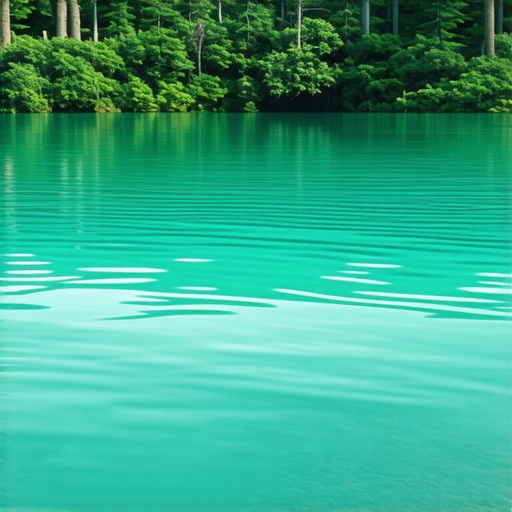
Clear Cloudy Pond Water in 24 Hours Using This Barley Straw Hack
The Forensic Autopsy of a Failing Aquatic Ecosystem
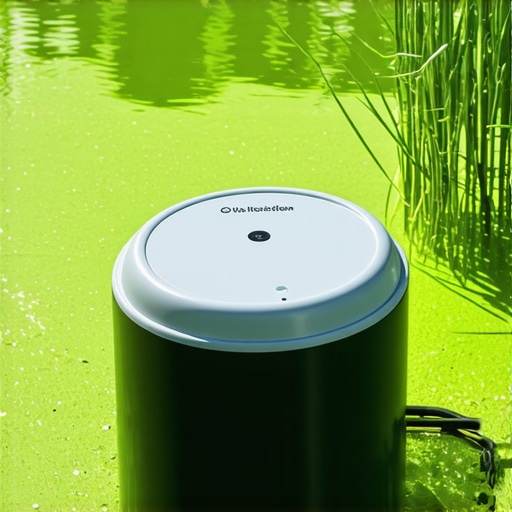
I recently got called out to tear up a $30,000 pond installation that was sinking and turned into a pea-soup nightmare because the previous contractor didn’t understand hydrostatic pressure or the nitrogen cycle. They installed a high-end liner and expensive stone but skipped the fundamental physics of water movement. When I arrived, the water was so thick with unicellular algae that you couldn’t see a koi six inches below the surface. The homeowner was desperate, pouring store-bought algaecides into the water every three days, which only exacerbated the problem by killing off the beneficial nitrifying bacteria. This is a classic case of treating symptoms instead of the biological engine. A pond is not a swimming pool; it is a living, breathing laboratory of chemistry and biology. If your water is cloudy, your ecosystem is failing. You don’t need more chemicals; you need a mechanical and biological intervention that respects the laws of limnology.
The Biology of Cloudy Water and the Nitrogen Cycle
Cloudy pond water is primarily caused by an imbalance in dissolved organic compounds (DOCs) and suspended solids that fuel phytoplankton blooms or bacterial spikes. To clear it, you must address the ammonia-to-nitrate conversion through robust biological filtration and use barley straw lignins to inhibit further algae cellular division. Most amateurs fail because they ignore the microscopic reality of the water column. They see green and think ‘poison it.’ I see green and think ‘too much phosphate and not enough dissolved oxygen.’ You have to look at the Total Suspended Solids (TSS) and the biochemical oxygen demand (BOD) of the pond.
“Maintaining high dissolved oxygen levels is critical for the aerobic bacteria necessary to break down organic sludge and prevent the accumulation of toxic ammonia.” – Water Quality Field Manual
Why the Barley Straw Hack Works for Rapid Clarity
The barley straw hack utilizes the decomposition process of hordeum vulgare to release phenolic compounds that act as a natural algaestat, preventing the growth of new algae cells. While traditional straw bales take weeks to break down, using a concentrated barley straw extract combined with a flocculant can clear water within a 24-hour window by binding particles together and stopping the bloom. When barley straw sits in oxygenated water, it undergoes a chemical reaction where lignin breaks down into vanillin and other humic acids. In the presence of sunlight, these acids react with dissolved oxygen to produce trace amounts of hydrogen peroxide. This concentration is far too low to harm fish or submerged plants, but it is high enough to oxidize the cell walls of algae. This is applied biochemistry, not magic. You are essentially creating a localized, low-level oxidation zone that makes the environment inhospitable for unicellular organisms.
How much barley straw do I need for my pond?
Calculating the correct dosage is a matter of surface area and water volume: for a standard garden pond, you need approximately 1 ounce of barley straw per 10 square feet of surface area. If you are using extract for a 24-hour turnaround, follow the manufacturer’s PSI and volume ratings strictly. Over-applying extract can lead to a sudden drop in dissolved oxygen if the algae die-off is too rapid. I always tell my crew: measure twice, pour once. You have to account for the depth of the pond as well. A shallow pond heats up faster, accelerating algae growth, which means you might need to increase the dosage by 20 percent to compensate for the higher metabolic rate of the ecosystem.
| Barley Format | Response Time | Longevity | Engineering Purpose |
|---|---|---|---|
| Barley Bales | 4 to 8 Weeks | 6 Months | Long-term preventative maintenance |
| Barley Pellets | 2 to 3 Weeks | 3 to 4 Months | Mid-season biological boost |
| Barley Extract | 12 to 24 Hours | 2 to 3 Weeks | Emergency clarity intervention |
Does barley straw kill existing algae?
Barley straw does not act as a contact killer for established filamentous algae (string algae); rather, it functions as an inhibitor that prevents new algae spores from germinating and replicating. To clear a pond in 24 hours, you must manually harvest heavy mats of string algae first, then apply the extract to prevent the secondary bloom triggered by the released nutrients. This is where most DIYers fail. They throw a bale in the water and expect it to work like bleach. It won’t. You have to clear the mechanical load first. The extract handles the microscopic suspension that causes the ‘cloudy’ look. If you don’t remove the dead organic matter, it will just rot, spike your ammonia, and start the cycle all over again.
The Step-by-Step Remediation Protocol
If you want clear water by tomorrow, you have to work. There are no shortcuts in engineering. First, check your mechanical filtration. If your pump isn’t moving the total volume of the pond at least once every hour, you’re dead in the water. Second, clean your filter pads. If they are clogged with muck, they are just a breeding ground for anaerobic bacteria. Third, apply a natural flocculant alongside the barley straw extract. The flocculant carries a positive charge that attracts negatively charged dirt and algae particles, clumping them together so they sink to the bottom or get caught in the skimmer. This combination is the ‘secret sauce’ for 24-hour results.
- Test water parameters: pH should be between 6.5 and 8.5.
- Clean the mechanical skimmer and pump intake of all debris.
- Calculate total pond volume (Length x Width x Average Depth x 7.48).
- Apply barley straw extract at the point of highest water agitation.
- Monitor fish behavior for signs of oxygen depletion.
- Add a supplemental aerator or air stone to boost gas exchange.
“A retaining wall doesn’t fail because of the stone; it fails because of the water trapped behind it, and a pond doesn’t fail because of the fish; it fails because of the waste trapped within it.” – Hardscape Engineering Axiom
Correcting the Engineering: Drainage and Grading
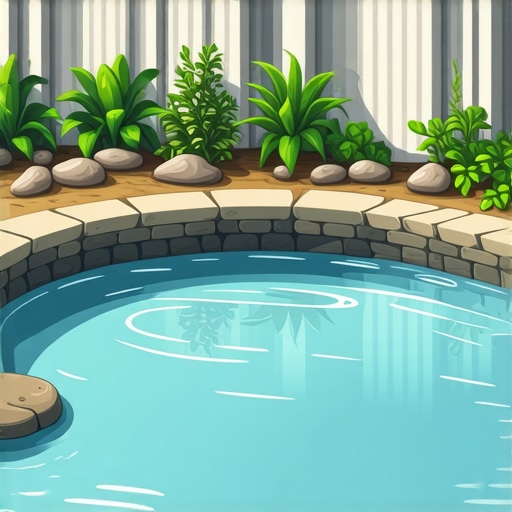
Often, cloudy water isn’t a biological failure but a structural one. If your yard isn’t graded correctly, every rainstorm washes nitrogen-rich lawn fertilizer and tannin-heavy mulch directly into your pond. This is why I insist on a raised stone coping or a French drain perimeter for every pond I build. You cannot have runoff entering the system. If you see your pond get muddy after a rain, your grade is wrong. Fix the soil first. Use a laser level to ensure the surrounding landscape slopes away at a minimum of 2 percent grade. If you don’t fix the drainage, you’ll be buying barley extract for the rest of your life. It is cheaper to move dirt once than to fight chemistry forever.
The Maintenance Schedule for Permanent Clarity
Once you achieve clarity, you have to maintain the carbon-to-nitrogen ratio. Don’t overfeed your fish. Any food they don’t eat in three minutes is just fertilizer for algae. Use high-quality beneficial bacteria weekly to consume the sludge on the bottom. Keep your pond plants (like lilies and anacharis) covering about 50 percent of the surface to provide shade and compete for nutrients. Plants are your best friends in this fight. They are the natural filtration system that never turns off. Stick to the plan. Don’t skip the cleaning. Pond care is about discipline, not quick fixes. Don’t be the guy who calls me to dig up a sinking patio or a rotting pond because you were too lazy to do the prep work.