
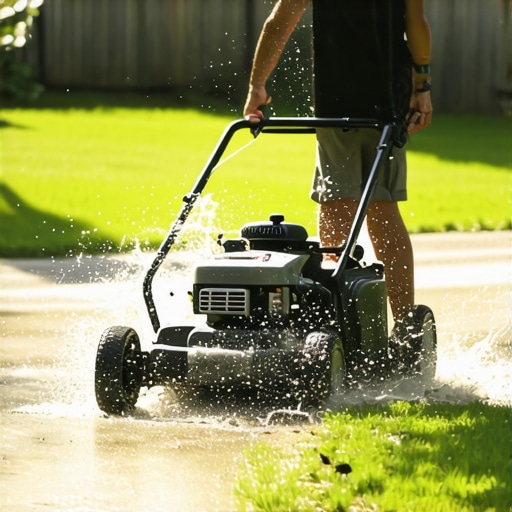
Why You Should Never Mow Wet Grass
The Forensic Autopsy of a Saturated Turf Stand
You hear it before you see it: that sickening squelch under your boots as you walk across a saturated lawn. It is not just water; it is the sound of your turf gasping for air. When you fire up a 400-pound zero-turn mower and drive it onto a rain-soaked yard, you are not performing maintenance. You are performing an execution. Most homeowners and many budget-tier contractors see grass as a green carpet that needs to be kept short. As a veteran with 20 years in the dirt, I see a complex biological system of xylem, phloem, and rhizosphere microorganisms. Mowing wet grass is a violent disruption of this system that leads to structural collapse and long-term soil degradation.
Why is mowing wet grass bad for your lawn?
Mowing wet grass leads to soil compaction, uneven cutting, and fungal pathogens. When blades are saturated, they tear rather than slice, creating open wounds for diseases like Pythium blight and Brown Patch to invade, while heavy mower weight collapses critical soil pore spaces and prevents oxygen exchange.
A homeowner called me in a panic after they completely torched their front lawn by applying a high-nitrogen fertilizer directly onto a waterlogged turf stand. They thought they were giving the grass a boost to grow through the moisture. Instead, they created a saline-heavy environment that sucked the remaining moisture out of the roots, leading to massive physiological burn. This was compounded by their decision to mow while the ground was still soft. The result? Deep, muddy ruts that destroyed the soil grading I had spent three days perfecting the previous spring. This is the Chemical Nightmare I see too often. People try to solve biological problems with chemical shortcuts, and when those fail, they reach for the mower deck.
“Soil compaction occurs when soil particles are pressed together, reducing pore space between them. This is significantly exacerbated when soil moisture is high, as water acts as a lubricant, allowing particles to slide into a tighter configuration.” – Agronomy Extension Standards
The Physics of the Tattered Blade
When grass is dry, the blades stand upright, turgid with internal pressure. This allows the mower blade to make a clean, horizontal cut. When grass is wet, the weight of the water droplets causes the blades to lean or mat down. The mower deck cannot generate enough lift to pull these blades upright. Consequently, the mower cuts at irregular angles. Instead of a clean slice, you get a ragged tear. These frayed ends turn brown within 48 hours, giving the entire lawn a tan, sickly hue. This is not just an aesthetic issue; it is a metabolic one. A ragged tear takes three times longer to heal than a clean cut, diverting the plant’s energy away from root development and into tissue repair.
Soil Compaction: The Invisible Structural Failure
The real damage happens beneath the surface. Your soil is a lattice of mineral particles, organic matter, and air pockets. These air pockets are vital for the survival of aerobic bacteria that break down nutrients. When you run heavy equipment over wet soil, you crush these pockets. This is called compaction. Compacted soil becomes anaerobic. Roots cannot penetrate the hard-packed earth, and water can no longer infiltrate the surface, leading to increased runoff and hydrostatic pressure issues near your home’s foundation or hardscape. [image_placeholder_1]
The Fungal Pipeline: Creating a Pathogen Paradise
Wet grass clippings are heavy and sticky. Instead of being dispersed back into the turf as nitrogen-rich mulch, they clump together. These clumps, often called ‘clump-rot’ in the industry, sit on top of the living grass and create a dark, humid micro-climate. This is the perfect incubator for fungal spores. By the time you notice the yellowing patch under a clump of clippings, the mycelium has already begun to digest the healthy grass blades. You are literally composting your lawn while it is still trying to grow.
“Tearing of the leaf blade through improper mowing practices provides entry points for various fungal pathogens, specifically those responsible for necrotic ring spot and large patch.” – Agricultural Extension Research
The Mechanical Toll on Your Equipment
I have seen more mower engines seized and belts snapped due to wet grass than any other cause. Wet grass sticks to the underside of the mower deck like wet concrete. It hardens, restricting the airflow necessary for the blades to spin at their designated RPM. This puts immense strain on the drive belts and the engine. Furthermore, moisture promotes rust on the blade spindles and deck housing. If you are not scraping your deck clean after every wet mow, you are shortening the life of your equipment by 50 percent.
The Critical Comparison: Wet vs. Dry Mowing Impact
| Metric | Mowing Wet Grass | Mowing Dry Grass |
|---|---|---|
| Cut Quality | Ragged, Tattered Ends | Clean, Sharp Slice |
| Soil Compaction | Severe (High Risk) | Minimal to None |
| Disease Risk | High (Fungal Proliferation) | Low |
| Clipping Distribution | Heavy Clumping | Fine Mulching |
| Equipment Strain | High (Engine & Belts) | Low (Standard) |
How long should I wait to mow after it rains?
You should wait until the grass is dry to the touch and the soil is firm enough that your boots do not leave an indentation. This typically takes 12 to 24 hours of sunshine and wind. If you can walk across the lawn and your shoes stay dry, it is safe to mow. Do not rush the process. Your lawn is a living organism, not a chore to be checked off the list regardless of the weather.
Does a sharp blade make mowing wet grass okay?
While a sharp blade is always better than a dull one, it cannot overcome the physics of soil compaction and leaf matting. Even the sharpest blade will struggle to lift and cut saturated grass evenly. Furthermore, the sharpest blade in the world will not prevent your mower’s tires from rutting the soft, wet mud underneath. You are still causing structural damage to the landscape.
The Recovery Protocol: What to do if you messed up
If you have already mowed your wet lawn and are seeing the damage, follow this remediation checklist. It is not an overnight fix, but it will help the turf recover before the next growing cycle.
- Remove the Clumps: Immediately rake up any clumps of wet grass to prevent them from smothering the turf and breeding fungus.
- Manual Aeration: If you see ruts, use a core aerator to relieve compaction in the affected areas once the soil has dried out.
- Sharpen Your Blades: The wet mow likely dulled your blades. Sharpen them before the next dry mow to ensure clean recovery.
- Adjust the Height: Raise your mower deck to its highest setting for the next two mows to allow more leaf surface for photosynthesis.
- Fungicide Application: If you see orange or white fuzzy growth, apply a curative fungicide specifically labeled for your grass type.
Landscaping is about working with the biological clock of the earth, not fighting it. The next time you see the clouds break and reach for the mower key, stop. Look at the soil. If it is wet, go back inside. Your lawn will thank you with deeper roots and a stronger immune system. Cheap contractors mow on a schedule; professionals mow on a condition. Choose to be a professional.
![Stop Overwatering Your Fescue Lawn [2026 Summer Fix]](https://lawnmajesty.com/wp-content/uploads/2026/10/Stop-Overwatering-Your-Fescue-Lawn-2026-Summer-Fix.jpeg)