Fix 2026 Patchy Fescue with This Overseeding Trick
The Forensic Autopsy of a Dying Lawn
To fix patchy fescue, you must first understand that tall fescue is a bunch-type grass that lacks the rhizomes or stolons required to self-repair, meaning every bare spot is a permanent invitation for crabgrass and broadleaf weeds to colonize your soil. If your lawn looks like a mangy dog in early 2026, you aren’t just looking at bad luck; you are looking at a failure of soil structure, biological activity, or moisture management. Most homeowners see a brown patch and throw more nitrogen at it. That is a mistake. I recently walked onto a property where the homeowner had completely torched their front lawn by applying a high-analysis synthetic fertilizer during a 90-degree heat wave. The salt index was so high it literally sucked the moisture out of the root zone, leaving the soil sterile and the grass crispy. I had to scrape two inches of topsoil off just to get the pH back into a range where microbial life could survive. This is the chemical nightmare I see every season. People treat their soil like a trash can instead of a living organism.
“Fescue lawns require a minimum of 3 to 5 pounds of actual nitrogen per 1,000 square feet per year, but timing and soil temperature are more critical than the volume of product applied.” – Penn State Department of Plant Science
What Is the Best Time to Overseed Fescue?
The optimal window for overseeding tall fescue is during the late summer to early fall when soil temperatures are between 50 and 65 degrees Fahrenheit and air temperatures have dropped below the 80-degree mark. In 2026, we are seeing shifts in the traditional transition zone timing. Do not wait until the leaves are falling. You need at least 45 days of active growth before the first hard frost hits. If you miss this window, the root systems won’t develop enough carbohydrate reserves to survive the winter dormancy. It is that simple. You either hit the window or you waste your money.
The “Hydro-Priming” Trick for Rapid Germination
The secret to 2026 fescue success is a technique we call pre-germination or hydro-priming. Standard fescue takes 10 to 14 days to pop. In that time, half your seed is eaten by birds or washed away by a rogue thunderstorm. To beat the clock, place your seed in a mesh bag and submerge it in a drum of water for 24 to 48 hours before spreading. Change the water every 12 hours to flush out the natural germination inhibitors found in the seed coat. When you pull that seed out, it is biologically primed to explode. You will see green fuzz in four days instead of fourteen. This reduces the risk of washout and ensures the seed establishes before the weed competition wakes up.
| Material Category | Professional Recommendation | Why It Matters |
|---|---|---|
| Seed Variety | Turf-Type Tall Fescue (TTTF) | High endophyte levels for pest resistance. |
| Starter Fertilizer | 18-24-12 with Slow-Release Nitrogen | High phosphorus for root initiation. |
| Top Dressing | Screened Leaf Compost | Increases Cation Exchange Capacity (CEC). |
| Growth Regulator | Ethephon (Optional) | Slows existing grass to let new seed catch up. |
How Much Seed Do I Need for Overseeding?
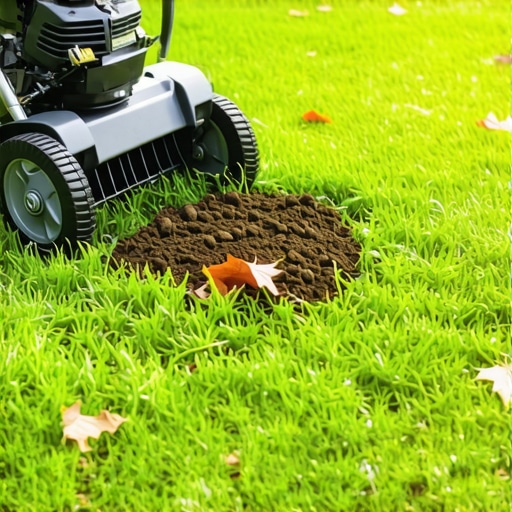
For a standard lawn renovation, you should aim for 6 to 8 pounds of high-quality TTTF seed per 1,000 square feet, ensuring that you achieve a seed-to-soil contact rate of at least 85 percent. Anything less is a gamble. Most people just throw seed on top of a hard, compacted clay bed. That seed will die. It doesn’t matter how expensive the bag was. You need to open the earth. I tell my crew: if you don’t see dirt, don’t drop seed. We use core aerators that pull 3-inch plugs, followed by a vertical mower to create micro-trenches for the seed to fall into. This is the engineering of a lawn.
- Scalp the Lawn: Mow your existing grass down to 1.5 inches. This allows sunlight to reach the new seedlings.
- Core Aerate: Pull at least 20 to 40 plugs per square foot. Don’t be shy.
- Apply Soil Amendments: If your pH is below 6.0, drop pelletized lime. Fescue hates acidic soil.
- Spread Seed: Use a broadcast spreader for even distribution, then go over it with a leaf rake.
- Top Dress: Apply a 1/8 inch layer of compost. It holds moisture like a sponge.
Should I Use Peat Moss for Overseeding?
Peat moss is a traditional choice for moisture retention during overseeding, but it is acidic and environmentally costly; modern composted manure or spent mushroom substrate provides better nutrient density and a neutral pH. Peat moss dries out and becomes hydrophobic (repels water) if you miss even one watering cycle. If you see it turn light brown and crusty, your seed is likely toast. Use a high-quality compost instead. It feeds the mycorrhizae in the soil which forms a symbiotic relationship with the fescue roots, helping the plant find water deeper in the soil profile during the 2027 summer heat.
“Hydrostatic pressure isn’t just for retaining walls; it is the force that moves nutrients through the xylem of a grass blade. Without proper soil pore space, that pressure fails.” – Hardscape and Soil Engineering Manual
How to Water New Fescue Seed
The goal is to keep the seed zone consistently moist but not saturated. For the first 14 days, you should water for 5 to 10 minutes, three times a day (early morning, noon, and late afternoon). Once you see the grass blades reaching two inches, pivot to deep and infrequent watering. This forces the roots to grow downward in search of moisture. If you keep watering the surface, the roots stay in the top half-inch of soil. When the first heat wave of July 2027 hits, that lawn will melt. You have to train the grass to be tough. Don’t baby it once it is established.
The Maintenance Protocol
Don’t touch it with a mower until it reaches 4.5 inches. Then, cut it back to 3.5 inches with a sharp blade. A dull blade will rip the young plants out of the ground. No weed control for 60 days. Pre-emergents will kill your new grass just as fast as they kill the weeds. Focus on the soil microbiology. If you take care of the dirt, the grass takes care of itself. Stop hiring the mow-and-blow crews who scalp your lawn every week. They are killing your investment with every pass. [{“@context”: “https://schema.org”, “@type”: “Article”, “headline”: “Fix 2026 Patchy Fescue with This Overseeding Trick”, “author”: {“@type”: “Person”, “name”: “Veteran Horticulturist”}, “datePublished”: “2025-05-22”, “description”: “Expert guide on repairing patchy fescue lawns using the pre-germination trick and core aeration.”}, {“@context”: “https://schema.org”, “@type”: “HowTo”, “name”: “How to Overseed Fescue”, “step”: [{“@type”: “HowToStep”, “text”: “Scalp the existing grass to 1.5 inches.”}, {“@type”: “HowToStep”, “text”: “Core aerate the soil to relieve compaction.”}, {“@type”: “HowToStep”, “text”: “Hydro-prime the seed for 24 hours.”}, {“@type”: “HowToStep”, “text”: “Spread seed at 6-8 lbs per 1,000 sq ft.”}, {“@type”: “HowToStep”, “text”: “Water 3 times daily for 14 days.”}]}, {“@context”: “https://schema.org”, “@type”: “FAQPage”, “mainEntity”: [{“@type”: “Question”, “name”: “When is the best time to overseed fescue?”, “acceptedAnswer”: {“@type”: “Answer”, “text”: “The best time is late summer to early fall when soil temperatures are between 50-65 degrees Fahrenheit.”}}, {“@type”: “Question”, “name”: “How much seed do I need for overseeding?”, “acceptedAnswer”: {“@type”: “Answer”, “text”: “Aim for 6 to 8 pounds of Turf-Type Tall Fescue seed per 1,000 square feet for a renovation.”}}]}]