
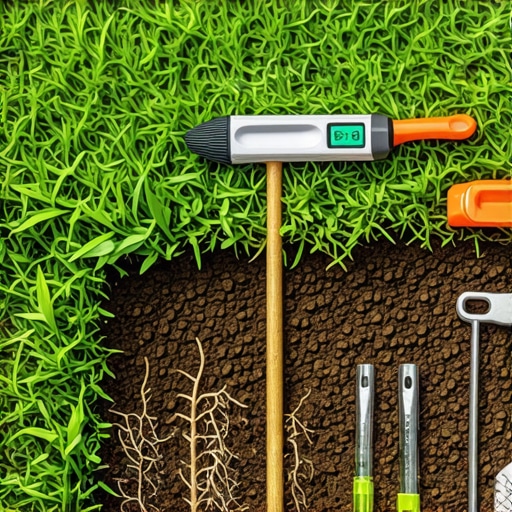
Why Your 2026 Fescue Lawn is Thinning (3 Soil Hacks)
The Forensic Autopsy of a Dying Lawn
Your fescue is thinning because the soil biology has collapsed. I see it every season: homeowners staring at a patchy, pale-green mess that looks more like a desert floor than a high-end estate lawn. Tall Fescue (Festuca arundinacea) is a bunch-type grass, not a creeping variety. It doesn’t have rhizomes to fill in the gaps. If a plant dies, a hole remains. Most people try to fix this by throwing more nitrogen at the problem, but they are just accelerating the rot.
A homeowner called me in a panic last September after they completely torched their front lawn by applying a high-salt, synthetic 30-0-4 fertilizer during a heat spike. They thought they were feeding the grass. In reality, they were dehydrating the cellular structure of the roots and killing the mycorrhizal fungi that actually sustain the plant. The soil was literally crunchy under my boots. This isn’t just about ‘lawn care’; it’s about the chemistry of the root zone. If you don’t respect the soil’s cation exchange capacity, you’re just wasting money on seed that won’t survive the first frost.
The Anatomy of Fescue Failure in 2026
Fescue thinning is primarily caused by soil compaction, improper pH levels, and anaerobic root conditions that prevent oxygen from reaching the plant’s metabolic engine. Because fescue is a cool-season grass, it enters a semi-dormant state in heat, and any structural soil deficiency during this period leads to permanent crown death and thinning.
“Tall fescue performs best in soils with a pH between 6.0 and 7.0, but when the pH drops below 5.5, aluminum toxicity can severely limit root development and water uptake.” – Penn State Center for Turfgrass Science
Hack 1: Core Aeration and the Liquid Aeration Myth
Compaction is the silent killer. When soil bulk density exceeds 1.5 grams per cubic centimeter, roots stop moving. You can see it yourself: take a screwdriver and try to push it six inches into your lawn. If it stops at two inches, your lawn is suffocating. I tell my crew that every fescue lawn needs a double-pass core aeration every fall. We aren’t just making holes; we are relieving the lateral pressure on the root system. Don’t fall for the ‘liquid aeration’ gimmicks sold in big-box stores. They are mostly surfactants that break surface tension for a week. You need physical extraction of soil cores to allow gas exchange. The oxygen must reach the rhizosphere for the microbes to process nutrients. It’s basic physics.
How much nitrogen does fescue need per year?
Fescue requires approximately 2 to 4 pounds of actual nitrogen per 1,000 square feet annually. This should be split, with 75% applied in the fall and early winter. Over-applying nitrogen in the spring leads to ‘succulent growth’ which is thin-walled and highly susceptible to Brown Patch fungus (Rhizoctonia solani) when the humidity spikes in June. Stop pushing growth when the grass wants to rest.
| Nutrient/Metric | Target Range | Reasoning |
|---|---|---|
| Soil pH | 6.2 – 6.8 | Optimal nutrient bioavailability | Organic Matter | 5% – 8% | Water retention and microbial habitat | Nitrogen (N) | 3 lbs/1000 sq ft | Annual total for bunch-type density | Phosphorus (P) | 25 – 50 ppm | Root establishment and cellular energy |
Hack 2: The Biochar and Compost Top-Dress
If your soil is heavy clay, it’s holding too much water or none at all. Clay has high surface area but low pore space. To fix this without tilling the whole yard, we use a 50/50 blend of screened leaf compost and biochar. Biochar is essentially permanent carbon that acts like a sponge for nutrients. When you top-dress after aeration, those nutrients fall into the holes and stay there for decades. It changes the soil structure at a molecular level. This isn’t ‘gardening’; it’s engineering a habitat. You want to see the soil turn dark and crumbly. That’s how you get fescue roots to dive 8 inches deep.
“Soil compaction reduces the macropore space available for air and water movement, which directly correlates to a decrease in root mass and overall plant vigor.” – Texas A&M AgriLife Extension
What is the best soil pH for Tall Fescue?
The ideal soil pH for Tall Fescue is 6.5. At this level, macro and micronutrients are most soluble. If your pH is 5.5, your grass is only using about 50% of the fertilizer you apply. You are literally throwing 50 cents of every dollar into the gutter because the chemical bonds in the soil are holding the nutrients hostage. Apply pelletized calcitic lime to move the needle, but do it based on a lab test, not a guess.
Hack 3: The 4-Inch Mowing Rule
I see people scalping their fescue at 2 inches because they want it to look like a golf course. Fescue is not Bentgrass. When you cut it short, you reduce the surface area for photosynthesis and expose the soil to direct sunlight. This spikes the soil temperature and evaporates the moisture your roots need. Keep your deck at 4 inches. This shades the soil, prevents weed seeds from germinating, and allows the plant to maintain a larger root system. Higher top growth equals deeper roots. It’s a 1-to-1 ratio. If you want a dense lawn, put the mower height up and leave it there.
- Test your soil: Use a reputable lab, not a $10 probe.
- Calibrate your spreader: Most ‘thinning’ is actually uneven nutrient distribution.
- Sharpen your blades: Ragged edges lead to moisture loss and disease.
- Water deep and infrequent: One inch, once a week, at 4:00 AM.
- Overseed every September: Since it doesn’t spread, you must replace the dying 20% every year.
Landscaping isn’t about the surface. It’s about the foundation. If you spend $2,000 on seed and zero on soil remediation, you will be calling me next year to ask why your lawn is thinning again. Fix the dirt, and the grass will follow. Skip the shortcuts. Use the measurements. Get it right the first time.
![Why Your 2026 Grass Seed Isn't Growing [3 Critical Mistakes]](https://lawnmajesty.com/wp-content/uploads/2026/05/Why-Your-2026-Grass-Seed-Isnt-Growing-3-Critical-Mistakes.jpeg)