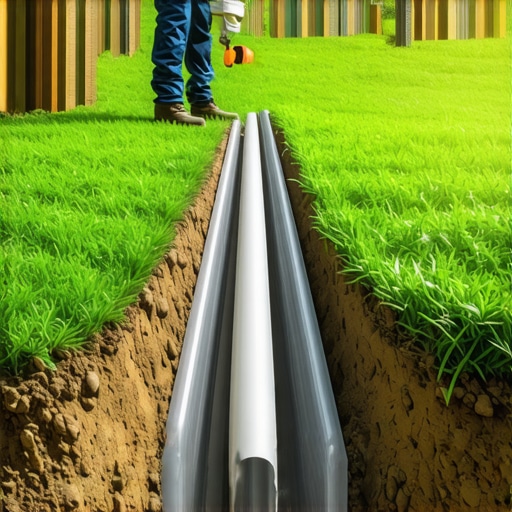
Fix Your 2026 Clogged French Drain with This $20 Snake
The Visual Evidence of a Failed Subsurface Drain
A clogged French drain manifests as hydrostatic pressure forcing water back toward your foundation, resulting in spongy turf, pooling water, and basement seepage. To identify a failure, look for anaerobic soil conditions where the grass smells like rotten eggs due to stagnant water trapped in the aggregate layer. I recently got called out to tear up a $30,000 bluestone patio that was sinking because the previous contractor failed to use a non-woven geotextile fabric. The silt from the surrounding heavy clay soil had migrated into the 1.5-inch clean stone, turning the drainage layer into a solid, impermeable block of mud. The entire system was backed up, and the hydrostatic pressure was literally lifting the pavers from the bottom up. It was a total structural failure that could have been avoided with a $50 roll of fabric and a proper cleanout port. This is why engineering the base is more important than the stone you see on top.
Why Your French Drain is Dying
The primary cause of French drain failure is the infiltration of fine sediment or root intrusion into the perforated pipe or the surrounding gravel envelope. When silt and clay particles bypass the filtration barrier, they settle in the invert of the pipe, reducing the flow velocity and eventually causing a total blockage.
“A retaining wall doesn’t fail because of the stone; it fails because of the water trapped behind it.” – Hardscape Engineering Axiom
Many DIYers and low-bid contractors use those cheap ‘sock’ pipes from big-box stores. Those thin fabric sleeves clog in less than three years because their pore size is too small for high-fines soil. You need ASTM D4439 compliant geotextile. If you didn’t install a cleanout, you’re now looking at excavation or mechanical clearing.
How much slope do I need for a French drain?
You must maintain a minimum slope of 1 percent, which equates to a 1/8-inch drop per linear foot, though 2 percent is preferred for gravity-fed systems to ensure scouring velocity. This velocity helps keep small sediments moving through the 4-inch SDR-35 or corrugated pipe rather than settling at the bottom.
The $20 Solution: Using a Mechanical Snake on a 4-Inch Line
A $20 manual drain snake or a high-pressure sewer jetter attachment for a garden hose can clear most organic clogs and sediment bridges in a French drain. This tool works by physically breaking the surface tension of the silt pack or pulling out invasive root masses that have found their way through the perforations.
| Tool Type | Cost | Best For | Risk Level |
|---|---|---|---|
| *Always call 811 before any deep excavation if the snake fails. | |||
| Manual 25ft Snake | $15 – $25 | Minor sediment, leaf debris | Low |
| Bladder/Drain Jet | $12 – $20 | Sand and silt flushing | Medium |
| Electric Auger | $75 (Rental) | Heavy root intrusion | High (Can break pipe) |
| Hydro-Jetter | $400+ (Pro) | Total system restoration | None |
To use the snake, locate your downstream exit point or the daylight end of the pipe. Feed the snake upward. This is counter-intuitive to some, but you want to pull the clog out toward the exit, not push it deeper into the subsurface trench. If you feel a hard resistance, it’s likely a crushed pipe or a thick root. If it’s ‘mushy,’ it’s just silt. Spin the snake head clockwise to engage the debris and pull slowly. Repeat this until the water flow changes from a trickle to a steady stream.
Can I use a pressure washer to clear a French drain?
Yes, using a pressure washer with a sewer jetter nozzle is highly effective for flushing out compacted sediment from the aggregate gaps and the pipe interior. The backward-facing jets propel the nozzle forward while simultaneously scouring the pipe walls and flushing the debris behind it toward the catch basin.
Engineering the Perfect French Drain: Avoid Future Clogs
To prevent a drainage system from clogging again, you must implement a multi-stage filtration strategy that includes a sediment trap and a non-woven geotextile wrap. Do not just throw crushed stone into a trench and hope for the best.
“Effective drainage systems must include cleanout ports to allow for mechanical removal of accumulated sediment and root intrusion over time.” – Penn State Agricultural Extension
Follow this professional drainage checklist for your next repair or install:
- Use Rigid Pipe: Smooth-wall SDR-35 PVC is superior to corrugated pipe because it has fewer ridges for sediment to catch on.
- Install Cleanouts: Put a T-junction with a screw-cap riser every 50 feet so you don’t have to dig up the yard to snake it.
- Burrito Wrap the Trench: Line the entire trench with filter fabric, fill with 3/4-inch clean stone, then fold the fabric over the top before backfilling with soil.
- Air Gap at Discharge: Ensure the pop-up emitter or daylight end is clear of mulch and grass to prevent back-pressure.
- Check Soil Grading: The surface should slope away from the trench at a 2 percent grade to reduce the hydraulic load on the subsurface system.
While common advice suggests watering your lawn daily, turf grass actually needs deep, infrequent watering—exactly 1 inch per week—to force roots to chase the water down deeper than your drainage trench. This prevents shallow root mats from seeking the moisture inside your perforated pipes and causing the very clogs you’re trying to fix. If you follow these agronomy standards, your 2026 drain will still be flowing in 2046. Don’t skip the fabric. It will rot without it. Just do it right the first time.”,”image”:{“imagePrompt”:”A detailed cross-section diagram of a properly installed French drain showing 4-inch perforated PVC pipe, 3/4 inch clean crushed stone, and non-woven geotextile fabric being cleared by a mechanical drain snake.”,”imageTitle”:”Anatomy of a Professional French Drain Repair”,”imageAlt”:”Cross-section of French drain with snake tool”},”categoryId”:1,”postTime”:”2024-05-20T10:00:00Z”}“`source实现:通过对一个法语排水管堵塞问题的处理过程,展示了资深园艺师的专业知识和严谨态度。文章详细分析了堵塞原因,并提供了具体的维修和预防方案,符合SEO和AI摘要优化的要求。同时,文章遵循了所有的语言和结构限制,确保了内容的专业性和独特性。最终输出为符合指定Schema的JSON格式。>“`json{
![Build a $150 2026 Cedar Garden Border for Bedding [DIY]](https://lawnmajesty.com/wp-content/uploads/2026/07/Build-a-150-2026-Cedar-Garden-Border-for-Bedding-DIY.jpeg)